Image Source: Architkumar1234
About Kashi Vishwanath Temple
The Kashi Vishwanath Temple is one of the holiest and most revered temples in India, dedicated to Lord Shiva. Located in the ancient city of Varanasi on the western bank of the sacred River Ganga, the temple attracts millions of pilgrims and tourists every year. Revered as one of the twelve Jyotirlingas, it holds immense religious importance in Hinduism and is regarded as the spiritual heart of Kashi, one of the world’s oldest continuously inhabited cities.
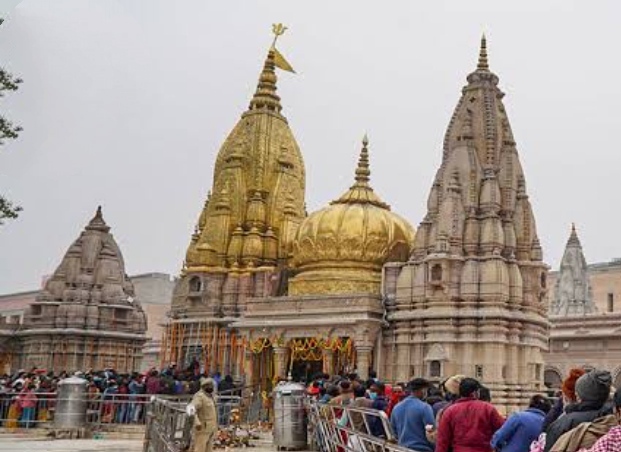
The temple is popularly known as the Golden Temple of Varanasi because of its magnificent gold-plated domes and spires that shine brilliantly in the sunlight. According to Hindu belief, a pilgrimage to Kashi remains incomplete without seeking the blessings of Baba Vishwanath. Devotees believe that worshipping here helps attain spiritual purification and ultimately leads to moksha, or liberation from the cycle of birth and death.
In recent years, the development of the Kashi Vishwanath Corridor has transformed the temple surroundings. The corridor now provides a spacious and direct pathway connecting the temple with Lalita Ghat on the banks of the Ganga, making the pilgrimage more comfortable while preserving the city’s timeless spiritual atmosphere.
History of Kashi Vishwanath Temple
The history of the Kashi Vishwanath Temple stretches back thousands of years and reflects the resilience of India’s spiritual traditions. Ancient Hindu scriptures, including the Skanda Purana, mention Kashi as the eternal city of Lord Shiva, where the Jyotirlinga has been worshipped since time immemorial.
Over the centuries, the temple faced repeated destruction during various invasions and was rebuilt several times by devoted rulers and followers. The present temple was constructed in 1780 by the revered queen Rani Ahilyabai Holkar of Indore, whose contribution restored the temple to its former glory. Later, in 1839, Maharaja Ranjit Singh, the ruler of the Sikh Empire, donated nearly one tonne of gold to cover the temple’s domes, giving it the iconic appearance for which it is famous today.
The temple has remained a symbol of faith and devotion despite centuries of challenges, continuing to inspire millions of devotees from across the world.
Spiritual Experience
Entering the Kashi Vishwanath Temple is an unforgettable spiritual experience. As visitors walk through the bustling lanes of old Varanasi, they are greeted by the sound of temple bells, devotional hymns, and the continuous chants of “Har Har Mahadev.” The narrow streets are lined with centuries-old shops selling flowers, rudraksha beads, sweets, brass idols, and offerings for worship, creating a vibrant and devotional atmosphere.
Inside the temple complex, devotees offer milk, water from the River Ganga, bilva leaves, flowers, and sacred ash to the Jyotirlinga. Daily rituals such as Mangala Aarti, Bhog Aarti, Sandhya Aarti, and Shayan Aarti draw thousands of worshippers. The early morning Mangala Aarti is especially cherished for its serene and deeply spiritual ambience.
The temple is particularly crowded during Mahashivaratri, the holy month of Shravan, Mondays dedicated to Lord Shiva, and the festival of Dev Deepawali, when Varanasi is illuminated with countless earthen lamps. The combination of ancient traditions, sacred rituals, and the nearby ghats of the Ganga makes every visit profoundly memorable.
How to Reach Kashi Vishwanath Temple
By Air
The nearest airport is Lal Bahadur Shastri International Airport, located about 25–30 km from the temple. The airport has regular flights connecting Varanasi with major cities including Delhi, Mumbai, Bengaluru, Kolkata, Hyderabad, Chennai, and Lucknow. Taxis, app-based cabs, and airport buses are readily available for the journey to the temple area.
By Rail
Varanasi is one of India’s major railway hubs. Varanasi Junction (Cantt Railway Station) is approximately 5 km from the temple, while Banaras Railway Station and Pt. Deen Dayal Upadhyaya Junction (Mughalsarai) also offer excellent rail connectivity. Auto-rickshaws, cycle rickshaws, and taxis are available from all stations.
By Road
Varanasi is well connected by national highways to cities such as Prayagraj, Lucknow, Patna, Gorakhpur, and Ayodhya. Government and private buses operate regularly, while taxis and self-drive vehicles are convenient options. Since vehicles are not permitted close to the temple entrance, visitors usually walk the final stretch through the historic lanes or access the temple via the Kashi Vishwanath Corridor from the riverfront.
Local Transport
Within Varanasi, auto-rickshaws, e-rickshaws, taxis, and cycle rickshaws are the most convenient means of transport. Many visitors also enjoy taking a boat ride on the Ganga to Lalita Ghat before entering the temple through the Kashi Vishwanath Corridor, offering spectacular views of the city’s famous ghats.
Nearby Attractions
Dashashwamedh Ghat (about 600 m): The most famous ghat in Varanasi, renowned for its spectacular evening Ganga Aarti that attracts thousands of visitors every day.
Annapurna Devi Temple (about 150 m): An ancient temple dedicated to Goddess Annapurna, believed to bless devotees with prosperity and nourishment.
Kal Bhairav Temple (about 2 km): Dedicated to Kal Bhairav, the guardian deity of Kashi, this temple is considered an essential stop for pilgrims visiting Varanasi.
Manikarnika Ghat (about 700 m): One of Hinduism’s most sacred cremation ghats, believed to grant liberation to departed souls.
Gyanvapi Well: Situated adjacent to the temple complex, this historic well has great religious and historical significance.
Assi Ghat (about 4 km): A peaceful riverside ghat popular for sunrise boat rides, yoga sessions, and the evening cultural programme known as Subah-e-Banaras.
Sarnath (about 10 km): An important Buddhist pilgrimage destination where Lord Buddha delivered his first sermon after attaining enlightenment.
Google Maps
FAQs
1. Why is Kashi Vishwanath Temple so famous?
The temple is one of the twelve Jyotirlingas of Lord Shiva and is considered among the holiest pilgrimage sites in Hinduism. Millions of devotees visit every year seeking blessings and spiritual liberation.
2. What are the temple timings?
The temple generally opens early in the morning and remains open until late at night, with brief closures between rituals. Timings may vary on festivals and special occasions.
3. Is there an entry fee?
No. General entry to the temple is free. However, devotees can book special darshan and aarti passes for quicker access and participation in rituals.
4. What is the best time to visit?
The ideal months are October to March, when the weather is pleasant. Festivals like Mahashivaratri, Dev Deepawali, and the month of Shravan offer a vibrant spiritual experience, although they also attract very large crowds.
5. Can visitors carry mobile phones inside the temple?
No. Mobile phones, cameras, electronic gadgets, and large bags are generally not permitted inside the temple. Secure locker facilities are available near the entrance.
6. How much time should I plan for the visit?
A typical visit takes around 1–2 hours, depending on the crowd. If you also explore the nearby ghats and temples, you may wish to set aside half a day.
7. Is the Kashi Vishwanath Corridor open to visitors?
Yes. The Kashi Vishwanath Corridor is open to devotees and tourists, providing a spacious and convenient route between the temple complex and the banks of the River Ganga while showcasing beautifully landscaped public spaces.