Image Source: Ssanyal18
Chapramari Wildlife Sanctuary is one of the oldest protected forest areas in West Bengal and a quiet yet rich pocket of wilderness in the Dooars region of Jalpaiguri district. Often overshadowed by nearby parks, it still remains a favorite among travelers who prefer fewer crowds, raw forest landscapes, and authentic wildlife experiences. The sanctuary also shares ecological continuity with the nearby Gorumara National Park, forming an important wildlife corridor in the region.
Overview of Chapramari Wildlife Sanctuary
Chapramari is known for its dense sal forests, open grasslands, and riverine ecosystems that support a wide variety of flora and fauna. The name “Chapramari” is believed to come from local words—“Chapra,” a small fish commonly found in nearby rivers, and “Mari,” meaning abundance—reflecting the area’s rich natural resources.
What makes this sanctuary special is its compact size combined with high biodiversity, making wildlife sightings relatively frequent compared to larger forest reserves.
Wildlife and Biodiversity
The sanctuary is best known for its strong elephant population. Herds of elephants are often seen moving across forest trails, especially during early morning and late afternoon hours.
Apart from elephants, the forest is home to:
- Indian gaur (bison), often seen in open clearings.
- Sambar deer and barking deer.
- Leopards, though extremely elusive.
- Wild boar and smaller mammals.
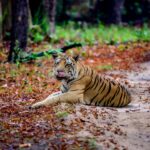
Occasionally, the Royal Bengal tiger is reported in the deeper forest zones, although sightings are rare.
Birdlife is another highlight of Chapramari. The sanctuary is a paradise for birdwatchers, hosting species such as:
- Hornbills.
- Indian treepie.
- Scarlet minivet.
- Green magpie.
- Kingfishers and various migratory birds.
The mix of forest canopy and river edges makes it an ideal habitat for both resident and seasonal birds.
Landscape and Natural Beauty
Chapramari’s landscape is shaped by the nearby Teesta and Murti river systems, which bring moisture, nutrients, and life to the forest. These rivers also contribute to the sanctuary’s scenic beauty, especially during sunrise when mist rises over the treetops.
The vegetation is dominated by sal and teak trees, interspersed with grasslands and riverine patches. This variety of habitats supports diverse wildlife and creates excellent conditions for photography and nature observation.
Watchtowers inside and around the sanctuary offer elevated viewpoints where visitors can quietly observe animal movement without disturbing their natural behavior.
Activities and Experiences
Chapramari offers simple but immersive wildlife experiences rather than commercial tourism activities. Some of the best things to do include:
- Jungle safaris through forest edges and buffer zones.
- Birdwatching walks during early mornings.
- Wildlife photography, especially elephants and gaur herds.
- Watchtower visits, particularly at sunrise and sunset.
Unlike more crowded parks, Chapramari gives a more peaceful and undisturbed forest experience, which many nature lovers appreciate.
Best Time to Visit
The best time to visit Chapramari Wildlife Sanctuary is between October and March, when the weather is cool, dry, and comfortable for forest exploration.
During this season, visibility is better and wildlife sightings are more frequent as animals often gather near water sources.
The sanctuary usually remains closed during the monsoon months due to heavy rainfall, slippery terrain, and flood risks from nearby rivers.
How to Reach Chapramari Wildlife Sanctuary
Chapramari is well connected by road and rail, making it easily accessible for travelers visiting the Dooars region.
- Nearest towns: Lataguri (12 km) and Chalsa (10 km).
- Nearest railway station: Malbazar (about 20 km).
- Nearest airport: Bagdogra Airport (around 75 km).
From these points, taxis and local transport are readily available to reach the sanctuary.
Travel Tips
- Carry binoculars for better wildlife viewing.
- Visit early morning or late afternoon for best sightings.
- Wear earthy-colored clothing to blend into the forest environment.
- Avoid loud noise to prevent disturbing wildlife.
- Hire local guides for a more informative experience.
Nearby Attractions
- Chapramari WatchTower (Within the Sanctuary)
The main wildlife viewing point in the sanctuary, offering excellent opportunities to spot elephants, gaur (Indian bison), deer, and a variety of resident and migratory birds. - Murti (Approx. 8 km)
A scenic riverside destination nestled between Chapramari Wildlife Sanctuary and Gorumara National Park. It is famous for its tranquil surroundings, picnic spots, birdwatching, and beautiful views of the Murti River. - Gorumara National Park (Approx. 12 km)
One of West Bengal’s premier wildlife destinations, renowned for Indian one-horned rhinoceroses, elephants, gaur, leopards, jeep safaris, and watchtowers. - Lataguri Nature Interpretation Centre (Approx. 18 km)
An informative centre showcasing the rich flora, fauna, and biodiversity of the Dooars region through exhibits and educational displays. - Jhalong (Approx. 40 km)
A picturesque hill destination on the Jaldhaka River near the India–Bhutan border, known for its hydel project, birdwatching, and scenic landscapes. - Bindu (Approx. 50 km)
A peaceful Himalayan village famous for the Bindu Dam, cardamom plantations, and breathtaking views of the Bhutan hills.
Google Maps
FAQs
1. What is Chapramari Wildlife Sanctuary famous for?
It is especially known for its elephant population, rich birdlife, and dense sal forests.
2. Is Chapramari good for tiger sightings?
Tiger sightings are very rare, but leopards and other wildlife are occasionally seen in deeper forest areas.
3. How much time is needed to explore Chapramari?
A half-day to one-day visit is usually enough for safaris and watchtower visits.
4. Is Chapramari safe for tourists?
Yes, it is generally safe when visited with authorized guides and following forest rules.
5. Which is the best nearby national park to combine with Chapramari?
Gorumara National Park is the most popular nearby park often combined in the same itinerary.