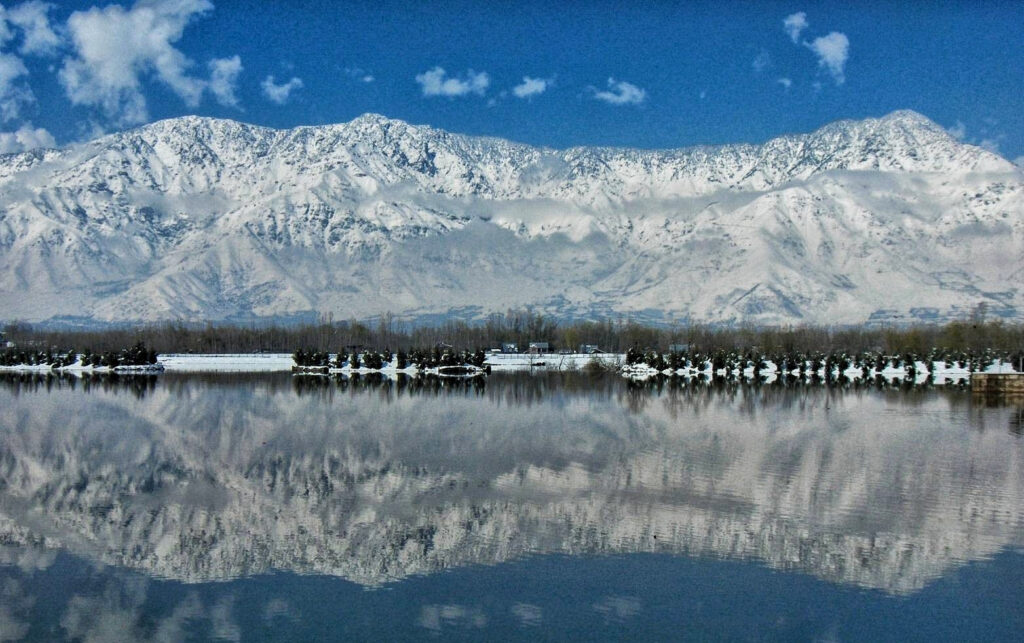
Where Mountains Shape a City’s Soul
Rising quietly along the eastern edge of Srinagar, the Zabarwan Range is more than a line of hills—it is the natural stage on which much of the city’s beauty performs. These forested slopes form the dramatic backdrop to Dal Lake and cradle many of Srinagar’s most loved viewpoints, gardens, and heritage sites. For travelers, the Zabarwan Range is not a destination in isolation but a constant companion, visible from houseboats, boulevards, and hilltop shrines, shaping the mood of the entire valley.
Geography of the Zabarwan Range
Physical Setting and Extent
The Zabarwan Range is a sub-range of the western Himalayas, stretching roughly from the Shankaracharya hill in the north to the margins of Dachigam in the south. It runs parallel to Dal Lake and the city of Srinagar, creating a natural wall between the urban basin and the wild highlands beyond.
Topography and Climate Influence
These mountains rise gently compared to the higher Pir Panjal or Great Himalayan ranges, but their forested slopes play a crucial role in local climate. They trap moisture-laden winds, helping sustain Srinagar’s cool summers and snowy winters. Numerous small springs emerge from the limestone and shale layers of the range, feeding historic water channels that once supplied Mughal gardens and old settlements.
Significance in Srinagar’s Tourism
A Natural Frame for Dal Lake
One of the Zabarwan Range’s greatest contributions to tourism is visual. From almost anywhere on Dal Lake, the green-blue silhouette of the range forms a painterly horizon. At sunrise and sunset, the mountains glow pink and amber, creating the postcard image that defines Srinagar worldwide.
Blending Spirituality, Nature, and Leisure
The range hosts sacred sites, landscaped gardens, and wildlife areas within a compact distance. This unique layering—pilgrimage above pleasure gardens, wilderness beyond city roads—allows tourists to experience Kashmir’s spiritual, cultural, and ecological sides in a single day’s journey.
What to See from a Traveler’s Perspective
Viewpoints and Panoramas
The slopes of the Zabarwan offer some of the finest vantage points in the Kashmir Valley. From higher ridges, travelers can see the entire Dal Lake basin, Srinagar’s old city, and on clear days, distant snow peaks. These views feel especially magical after rain, when clouds cling to the forested hillsides and the city below sparkles.
Forests and Walking Trails
Pine, deodar, and mixed broadleaf forests cloak much of the range. Walking trails—some formal, some used by locals for generations—wind through these woods. For travelers seeking slow tourism, these paths provide a chance to experience birdsong, mountain air, and quiet far from houseboat crowds.
Places to See Around the Zabarwan Range
Shankaracharya Hill and Temple
At the northern end stands the iconic Shankaracharya Temple, perched high above the city. The climb itself is scenic, but the reward is the sweeping 360-degree view of Srinagar and Dal Lake. For many visitors, this is their first true encounter with the Zabarwan Range’s scale and presence.
Mughal Gardens on the Lower Slopes
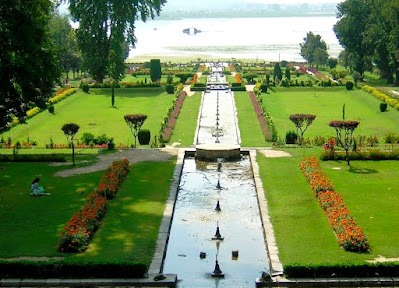
The foothills of the range host some of Kashmir’s most famous terraced gardens. Chashme Shahi is built around a natural spring emerging from the Zabarwan rocks, while Nishat Bagh spreads out along Dal Lake’s edge with the mountains rising behind it. These gardens show how human design once worked in harmony with the geography of the range.
Pari Mahal: Where History Meets Horizon
Higher up the slope lies Pari Mahal, a historic terraced structure that feels suspended between city and sky. From here, the Zabarwan Range reveals its layered character—urban below, forest in between, and wilderness beyond.
Dachigam National Park (Southern Reach)
Toward the southern extension of the range begins Dachigam National Park. This protected area marks the transition from tourism landscapes to true mountain wilderness. For travelers, it offers a chance to glimpse Kashmir’s red deer (Hangul), Himalayan black bear, and diverse birdlife, all within reach of Srinagar.
Cultural and Emotional Landscape
Mountains in Kashmiri Memory
For locals, the Zabarwan Range is not just scenery; it is woven into daily life and memory. It signals seasons—snow crowning its peaks in winter, wildflowers dotting its slopes in spring. In Kashmiri poetry and folklore, these hills often symbolize protection, endurance, and silent witness to history.
Tourism Beyond Sightseeing
Travelers who linger discover that the Zabarwan Range invites contemplation. Whether sitting in a garden terrace, hiking a forest trail, or watching the lake reflect its outline, the mountains create a sense of pause. Tourism here is less about ticking landmarks and more about absorbing atmosphere.
The Quiet Guardian of Srinagar
The Zabarwan Range may not be as famous as Kashmir’s towering passes, but its importance to Srinagar is unmatched. It shapes the city’s climate, defines its skyline, shelters its gardens, and hosts its sacred and wild spaces. For tourists, it is the unseen thread connecting Dal Lake, Mughal gardens, hilltop shrines, and forest parks into one coherent experience. To understand Srinagar fully, one must not only walk its streets and float on its waters but also look up—toward the calm, green presence of the Zabarwan Range.