Image Source: Kothanda Srinivasan
About Pemayangtse Gompa
Nestled in the peaceful hills near Pelling in West Sikkim, Pemayangtse Gompa is one of the oldest and most revered monasteries in the state. Surrounded by pine forests, mist-covered mountains, and sweeping Himalayan landscapes, the monastery is not only a sacred spiritual center but also an important symbol of Sikkim’s rich Buddhist heritage. The name “Pemayangtse” translates to “Perfect Sublime Lotus,” reflecting purity and spiritual enlightenment in Tibetan Buddhism.
Perched on a hilltop at an altitude of around 2,085 meters, the monastery offers mesmerizing views of the mighty Kangchenjunga range. The calm atmosphere, fluttering prayer flags, and soft chants of monks create an experience that feels both spiritual and deeply connected to nature. Whether you are a pilgrim, history enthusiast, photographer, or traveler seeking peace, Pemayangtse Gompa leaves a lasting impression.
Historical and Religious Importance
Established in 1705 by Lama Lhatsun Chempo, Pemayangtse Gompa belongs to the Nyingma sect, the oldest school of Tibetan Buddhism. The monastery played a significant role in the religious and political history of Sikkim and was closely associated with the former royal family of the kingdom. Historically, many royal ceremonies and important religious events were conducted here, giving the monastery immense cultural significance.
Over the centuries, Pemayangtse became a major center for Buddhist learning, meditation, and monastic training. Young monks continue to study scriptures, rituals, philosophy, and traditional practices within its walls. The monastery also preserves ancient manuscripts, sacred relics, ritual objects, and priceless Buddhist artworks that reflect the deep spiritual traditions of the Himalayas.
One of the most fascinating aspects of the monastery is its connection to Guru Padmasambhava, also known as Guru Rinpoche, who is revered for spreading Buddhism across the Himalayan region. His teachings continue to influence the spiritual life of the monastery even today.
Architecture and Artistic Beauty
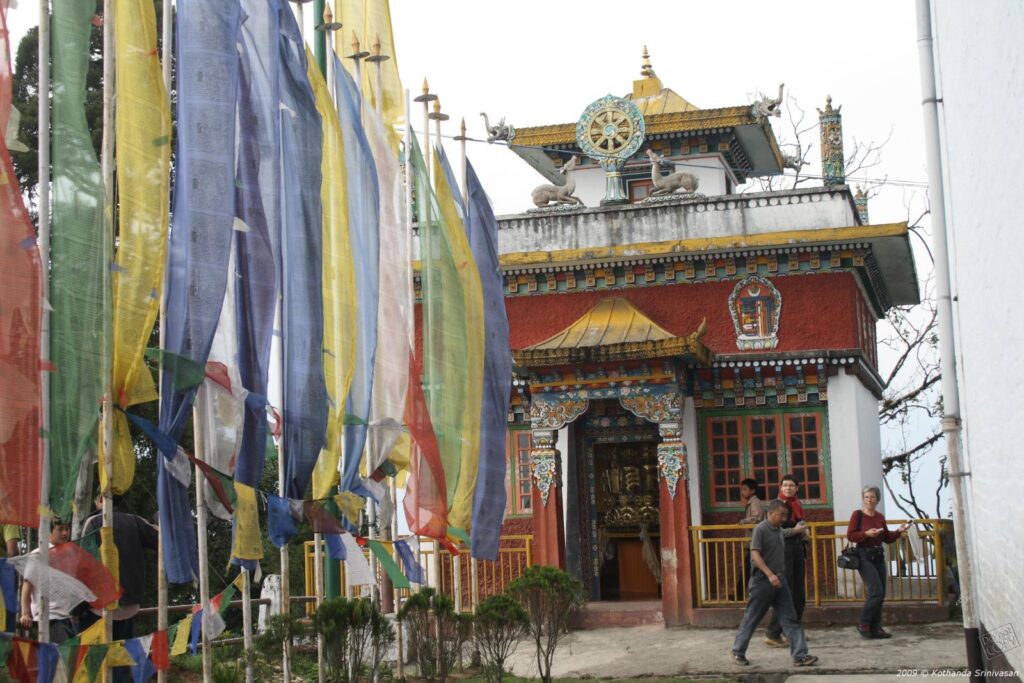
Pemayangtse Gompa is admired for its traditional Tibetan-style architecture and intricate craftsmanship. The multi-storied monastery features beautifully painted walls, colorful murals, carved wooden windows, and elaborate prayer halls filled with spiritual symbolism. Every corner of the monastery reflects devotion, artistry, and centuries-old Himalayan traditions.
Inside the main prayer hall, visitors can see magnificent statues of Buddha, Guru Padmasambhava, and various Buddhist deities. The monastery also houses sacred thangkas, ancient scriptures, ceremonial drums, and prayer wheels that add to its spiritual ambiance.
One of the monastery’s most remarkable treasures is the seven-tiered wooden sculpture called “Zangdok Palri,” a detailed representation of Guru Rinpoche’s celestial palace. Crafted entirely from wood by a monk over several years, this masterpiece is considered one of the finest examples of traditional Buddhist artistry in Sikkim.
Outside the monastery, the peaceful surroundings of terraced hills, dense forests, and distant snow-covered peaks make the experience even more magical.
Festivals and Cultural Celebrations
Pemayangtse Gompa comes alive during major Buddhist festivals, especially Losar and the annual Cham dance festival. These celebrations attract monks, devotees, and tourists from different parts of the country.
During the Cham festival, monks perform sacred masked dances dressed in vibrant silk robes and elaborate costumes. These ritual dances symbolize the triumph of good over evil and narrate stories from Buddhist teachings and folklore. The sound of traditional horns, cymbals, and drums creates an atmosphere that feels both festive and spiritual.
Losar, the Tibetan New Year, is another important celebration marked by prayers, rituals, cultural performances, and gatherings of local communities. Visiting the monastery during these festivals offers travelers a rare glimpse into the living traditions of Himalayan Buddhism.
Visitor Experience at Pemayangtse Gompa
A visit to Pemayangtse Gompa is more than just sightseeing—it is an experience of silence, spirituality, and Himalayan culture. Visitors can walk through the monastery complex, observe monks during prayers, spin prayer wheels, and spend time admiring the stunning mountain scenery.
The peaceful environment makes it an ideal place for meditation, photography, and quiet reflection. Early mornings are especially beautiful, when the first rays of sunlight illuminate the peaks of Kangchenjunga and the monastery surroundings remain wrapped in mist.
Travelers often enjoy interacting with the resident monks, who are sometimes willing to share insights about Buddhist rituals, meditation practices, and monastery life. The calm and welcoming atmosphere makes the experience enriching even for those unfamiliar with Buddhism.
Best Time to Visit
The best time to visit Pemayangtse Gompa is between March and May and from September to November. During these months, the weather remains pleasant, skies are generally clear, and the views of the Himalayan peaks are spectacular.
Winter visits can also be beautiful, especially for those who enjoy cold mountain weather and peaceful surroundings. Monsoon months, however, may bring heavy rainfall and occasional road disruptions in the region.
How to Reach Pemayangtse Gompa
Pemayangtse Gompa is located around 5 kilometers from Pelling and approximately 135 kilometers from Gangtok. The monastery is well connected by road, and taxis or shared jeeps are easily available from nearby towns.
The nearest airport is Pakyong Airport, located about 120 kilometers away. Many travelers also use Bagdogra Airport, which serves as the main air gateway for Sikkim and lies roughly 150 kilometers from the monastery.
For railway connectivity, the nearest major station is New Jalpaiguri Railway Station. From there, visitors can hire taxis or take shared vehicles to reach Pelling and then continue onward to the monastery.
Nearby Attractions
While visiting Pemayangtse Gompa, travelers can also explore several nearby attractions in West Sikkim. Popular places include the historic Rabdentse Ruins, which was once the second capital of the Kingdom of Sikkim, and the scenic Khecheopalri Lake, considered sacred by both Buddhists and Hindus.
Adventure lovers and nature enthusiasts can also enjoy short hikes, village walks, and panoramic viewpoints around Pelling.
Google Maps
FAQs
1. Why is Pemayangtse Gompa famous?
Pemayangtse Gompa is famous for its historical importance, spiritual significance, beautiful Tibetan architecture, and breathtaking views of the Kangchenjunga range. It is one of the oldest and most important monasteries in Sikkim.
2. Which Buddhist sect does the monastery belong to?
The monastery belongs to the Nyingma sect, which is the oldest school of Tibetan Buddhism.
3. What is the best time to visit Pemayangtse Gompa?
The ideal time to visit is from March to May and September to November when the weather is pleasant and mountain views are clear.
4. Are visitors allowed inside the monastery?
Yes, visitors are generally allowed inside certain areas of the monastery, including the prayer halls, provided they maintain silence and respect local customs.
5. How far is Pemayangtse Gompa from Pelling?
The monastery is located approximately 5 kilometers from Pelling and can be reached easily by taxi or local transport.
6. What are the major festivals celebrated here?
Losar and the annual Cham dance festival are among the major celebrations observed at Pemayangtse Gompa.
7. Can tourists attend meditation sessions?
In some cases, visitors may observe or participate in meditation sessions or prayers, depending on monastery schedules and permissions.
8. Is photography allowed inside the monastery?
Photography is usually allowed in outdoor areas, but restrictions may apply inside prayer halls and sacred sections. It is always best to ask permission before taking photographs.