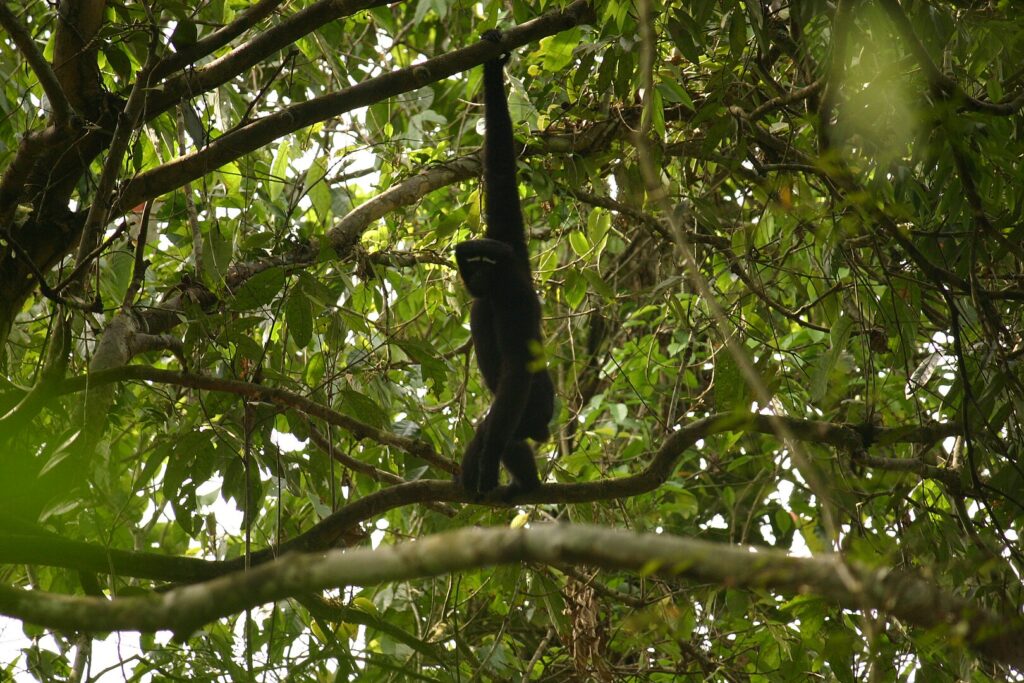
Image Source: Davidvraju
About Yangoupokpi-Lokchao Wildlife Sanctuary
Yangoupokpi-Lokchao Wildlife Sanctuary is a rich ecological treasure located in the Chandel district of Manipur, near the Indo-Myanmar border. Spanning over 185 square kilometres, the sanctuary lies at the junction of the Indo-Burma biodiversity hotspot, making it one of the most biologically diverse regions in Northeast India.
With its lush tropical and subtropical forests, rolling hills, and varied wildlife, it offers travellers a rare glimpse into Manipur’s natural heritage and unique ecosystem.
Biodiversity and Wildlife
The sanctuary is home to an incredible range of flora and fauna. Its dense forests nurture tropical evergreen and semi-evergreen vegetation, bamboo brakes, and canebrakes. Rare and endangered animal species can be spotted here, such as the Hoolock Gibbon—the only ape found in India—along with clouded leopards, stump-tailed macaques, Himalayan black bears, and wild boars.
Bird enthusiasts can enjoy sightings of hornbills, pheasants, partridges, and migratory species during certain seasons. The rivers and streams flowing through the sanctuary also sustain rich aquatic life.
Ecotourism and Activities
Yangoupokpi-Lokchao Wildlife Sanctuary offers opportunities for nature trails, birdwatching, and wildlife photography. Travellers can explore forested paths with the guidance of local eco-guides, learning about medicinal plants, tribal forest practices, and animal tracking. The serene ambience makes it ideal for those seeking a quiet, immersive nature experience far from urban distractions.
Cultural and Geographical Significance
Located close to Moreh, Manipur’s gateway town to Myanmar, the sanctuary is not only a natural wonder but also culturally significant. The surrounding areas are inhabited by diverse tribal communities, including the Anal, Thadou, and Zou tribes, who have deep connections with the forest for livelihood and traditional practices. The Indo-Myanmar border proximity also gives the sanctuary a unique cross-cultural flavour, blending influences from both sides.
Best time
The best time to visit Yangoupokpi-Lokchao Wildlife Sanctuary is between November and March, when the weather is pleasant, and visibility is high for spotting wildlife.
Travel Tips
Visitors should obtain necessary entry permissions from the Forest Department. Accommodation options are limited in the immediate vicinity, so staying in nearby Chandel or Moreh is advisable. Carry essentials like sturdy shoes, insect repellent, and binoculars for an enriched experience.
How to Reach
Located in the border district of Chandel (now partly under Tengnoupal district administration), Yangoupokpi–Lokchao Wildlife Sanctuary is one of Manipur’s most important protected areas. Spread across nearly 185 sq. km along the Indo-Myanmar border, the sanctuary represents the rich Indo-Burma biodiversity hotspot and is home to rare species such as the Hoolock Gibbon, Slow Loris, Serow, Pangolin, Himalayan Black Bear, and several hornbill species. It was established in 1989 and remains one of the best destinations in Manipur for wildlife enthusiasts and birdwatchers.
By Air
The nearest airport is Bir Tikendrajit International Airport, Imphal, located about 100–110 km away. From Imphal, visitors can hire taxis or private vehicles to reach the sanctuary via NH-102 towards Moreh.
By Rail
The nearest railway station is Jiribam Railway Station, while Dimapur Railway Station in Nagaland is another major railhead connected to the region. From either station, travelers can continue their journey to Imphal and then proceed by road to the sanctuary.
By Road
The sanctuary is accessible via National Highway 102 connecting Imphal and Moreh. Regular buses, shared taxis, and private vehicles operate on this route. The drive passes through scenic hills, forests, and border settlements, making the journey itself an enjoyable experience.
Nearby Attractions
Moreh Border Town
Located near the India–Myanmar border, Moreh is a bustling trade town known for its international market, cultural diversity, and cross-border commerce.
Indo–Myanmar Friendship Gate
One of the most visited landmarks near Moreh, this gateway symbolizes the connection between India and Myanmar and offers visitors a glimpse into cross-border life.
Lokchao River
Flowing through the sanctuary, the Lokchao River enhances the area’s ecological richness and provides excellent opportunities for nature photography and birdwatching.
Khudengthabi Memorial
Situated along the Imphal–Moreh highway, this memorial commemorates Manipuri soldiers and is an important historical site in the region.
Tengnoupal Viewpoint
A scenic stop offering panoramic views of the surrounding hills and valleys. The viewpoint is particularly popular during sunrise and sunset.
Shirui Hills
Located farther north in Ukhrul district, the hills are famous for the rare Shirui Lily and offer excellent trekking opportunities.
Keibul Lamjao National Park
About a day’s journey from the sanctuary, this unique floating national park on Loktak Lake is home to the endangered Sangai deer.
Google Maps
FAQs
1. What is Yangoupokpi–Lokchao Wildlife Sanctuary famous for?
The sanctuary is known for its rich biodiversity, rare wildlife, bird species, and its location within the Indo-Burma biodiversity hotspot.
2. Where is the sanctuary located?
It is situated along the Indo–Myanmar border in Manipur, approximately 110 km from Imphal.
3. What is the best time to visit?
The best time to visit is from October to April, when the weather is pleasant and wildlife viewing conditions are favorable.
4. Which animals can be spotted here?
Visitors may encounter Hoolock Gibbons, Slow Lorises, Pangolins, Serows, Himalayan Black Bears, Malayan Sun Bears, Civet Cats, Otters, and various bird species including hornbills.
5. Is the sanctuary good for birdwatching?
Yes. It is recognized as one of Manipur’s important bird habitats and attracts numerous resident and migratory bird species.
6. Are guided tours available?
Local guides and forest officials may assist visitors, especially for trekking, wildlife observation, and birdwatching activities.
7. Can visitors stay near the sanctuary?
Yes. Accommodation options include rest houses and lodges in Moreh, including forest rest houses and transit facilities managed by local authorities.
8. What activities can visitors enjoy?
Popular activities include wildlife observation, birdwatching, trekking, hiking, nature photography, and exploring the sanctuary’s diverse ecosystems.
9. Is photography allowed?
Yes. Wildlife and landscape photography are popular activities, though visitors should check for any permit requirements before carrying professional equipment.
10. Why should I visit Yangoupokpi–Lokchao Wildlife Sanctuary?
The sanctuary offers a rare opportunity to experience Manipur’s wilderness, observe unique wildlife, explore pristine forests, and witness the remarkable biodiversity of the Indo–Myanmar border region. Its remote location and rich natural heritage make it one of Northeast India’s most rewarding eco-tourism destinations.