INTRODUCTION
India is home to an extraordinary diversity of tribal and Indigenous communities, each with its own languages, oral traditions, festivals, belief systems, food practices, artistic expressions, and relationships with the natural environment. From the forested hills of central India and the northeastern Himalayan region to the islands of the Bay of Bengal and the desert landscapes of western India, Indigenous cultures form an important part of the country’s social and cultural geography.
The term Adivasi is widely used by many communities and in public discourse, particularly in central and eastern India. In official Indian administration, the constitutional category Scheduled Tribes identifies communities that receive specific protections and recognition. However, India does not have one single Indigenous culture. Its tribal communities differ substantially in language, history, social organisation, religious practices, livelihoods, and relationships with land.
For travellers, exploring tribal and Indigenous culture offers an opportunity to understand India beyond its major cities, famous temples, and historic monuments. Visitors can learn about traditional architecture, agricultural practices, weaving, music, community festivals, forest knowledge, and the historical connections between communities and their landscapes.
Cultural travel also requires sensitivity. Many communities have experienced displacement, restrictions on traditional land use, and pressure on their languages and livelihoods. Some groups have limited or protected access to their territories, and certain ceremonies, settlements, or cultural practices are not intended for public viewing. Responsible travel should prioritise community consent, local guidance, fair economic benefits, and respect for privacy.
This guide explores major tribal and Indigenous cultural regions of India, their distinctive traditions, important destinations, and practical ways to experience them responsibly.
CENTRAL INDIA: THE ADIVASI HEARTLAND
Central India contains some of the country’s largest concentrations of Scheduled Tribe communities. Forests, plateaus, river valleys, and agricultural settlements across Madhya Pradesh, Chhattisgarh, Maharashtra, and adjoining states have shaped distinctive Indigenous histories and cultural practices.
Among the communities found across this broad region are the Gond, Baiga, Bhil, Korku, Maria, and Muria, although their geographical distribution and traditions vary considerably. Many communities maintain strong connections with agriculture, forest resources, village institutions, ancestral traditions, and regional markets.
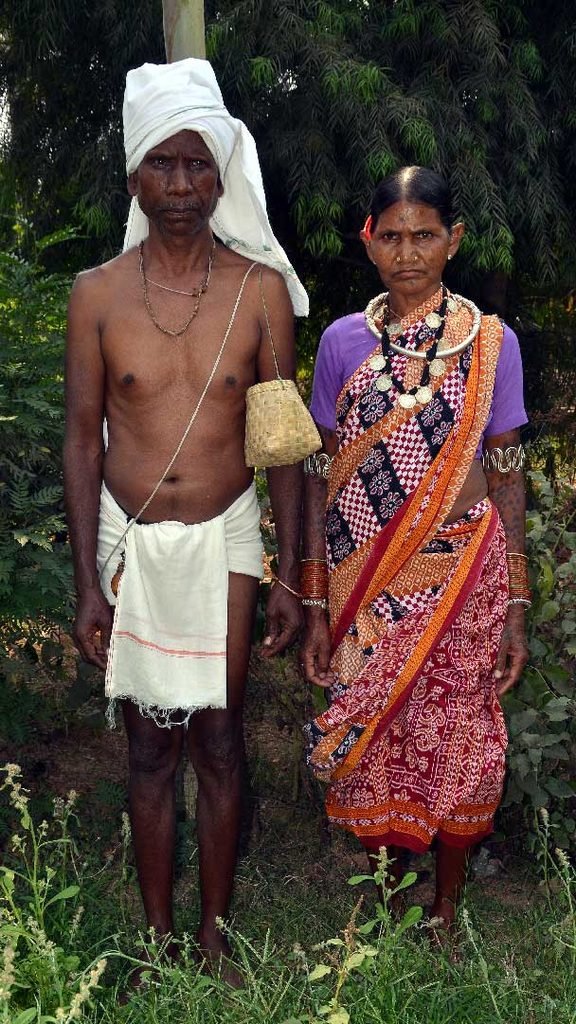
Gond Culture in Madhya Pradesh and Chhattisgarh
The Gond are one of India’s major Adivasi communities, with populations distributed across several central Indian states. Their histories are associated with forested landscapes, farming settlements, regional kingdoms, and diverse local traditions.
Gond art is particularly well known for its distinctive patterns, rhythmic lines, and depictions of animals, plants, spirits, and everyday life. Contemporary Gond artists have adapted these traditions to paper and canvas, helping bring their work to wider audiences while maintaining links with community knowledge.
Travellers interested in Gond culture can explore museums, cultural centres, and exhibitions in Madhya Pradesh and Chhattisgarh. Carefully selected art workshops or community-led experiences can offer a deeper understanding of artistic techniques and their cultural context.
Baiga Communities of Madhya Pradesh and Chhattisgarh
The Baiga are associated with forested areas of central India, particularly parts of Madhya Pradesh and Chhattisgarh. Their cultural knowledge includes traditional medicine, ecological practices, oral traditions, and relationships with forest landscapes.
Some Baiga communities historically practised shifting cultivation, although livelihoods have changed in response to forest policies, conservation measures, land access, and economic pressures. It is important not to portray these communities as unchanged or isolated from modern life.
Travellers should seek authorised, community-led cultural experiences rather than independently entering settlements or treating traditional knowledge as a tourist attraction.
Best Places to Explore Central Indian Tribal Culture
Mandla, Dindori, and parts of the wider eastern Madhya Pradesh region provide opportunities to learn about Gond and Baiga histories. Bastar in southern Chhattisgarh is particularly associated with the cultural traditions of several communities, including Muria and Maria groups.
Travel in some parts of central India requires additional attention to local security conditions, road access, forest regulations, and community permissions. Check current official advice before planning remote excursions.
Best for: Indigenous art, forest cultures, oral histories, traditional crafts, and regional festivals.
Ideal duration: 4 to 7 days for a focused regional journey.
Best time to visit: October to March is generally more comfortable for travel, subject to local conditions and event dates.
BASTAR, CHHATTISGARH: TRIBAL ART, MARKETS, AND COMMUNITY TRADITIONS
Bastar is one of India’s most culturally distinctive regions, located in southern Chhattisgarh. Its landscape includes forests, plateaus, waterfalls, villages, and river systems. The region is home to diverse Adivasi communities whose traditions have developed through long relationships with agriculture, forest environments, local deities, and village institutions.
Bastar’s cultural identity is expressed through metalwork, woodcraft, terracotta, ironwork, music, dance, weekly markets, and religious festivals. However, these practices are not identical across the region, and different communities have their own ceremonies and social structures.
Bastar Dussehra
Bastar Dussehra is among the region’s best known cultural events. Unlike the widely familiar Dussehra narrative centred on Rama’s victory over Ravana, Bastar Dussehra is closely associated with the worship of local deities, particularly Maa Danteshwari, and the traditions of the former Bastar royal region.
The festival extends over many days and involves a range of rituals and community participation. Its exact programme varies, so travellers should confirm current dates and access arrangements locally.
Visitors should remember that this is a living religious tradition, not simply a performance organised for tourists. Photography, access to ceremonial areas, and participation may be restricted.
Bastar’s Traditional Crafts
The region is known for Dhokra metalwork, wood carving, ironwork, and other craft traditions. Dhokra is a metal-casting technique associated with several communities and craft regions in India. In Bastar, artisans create figures, animals, ritual objects, and decorative pieces using locally developed artistic styles.
Buying directly from recognised artisan cooperatives or community-supported craft outlets can help ensure that income reaches producers. Travellers should ask about the maker, materials, and production process rather than assuming that every item marketed as tribal craft is locally made.
Best for: Cultural festivals, crafts, community markets, and regional history.
Ideal duration: 3 to 5 days.
Best time to visit: October to February for generally comfortable weather, with festival dates checked separately.
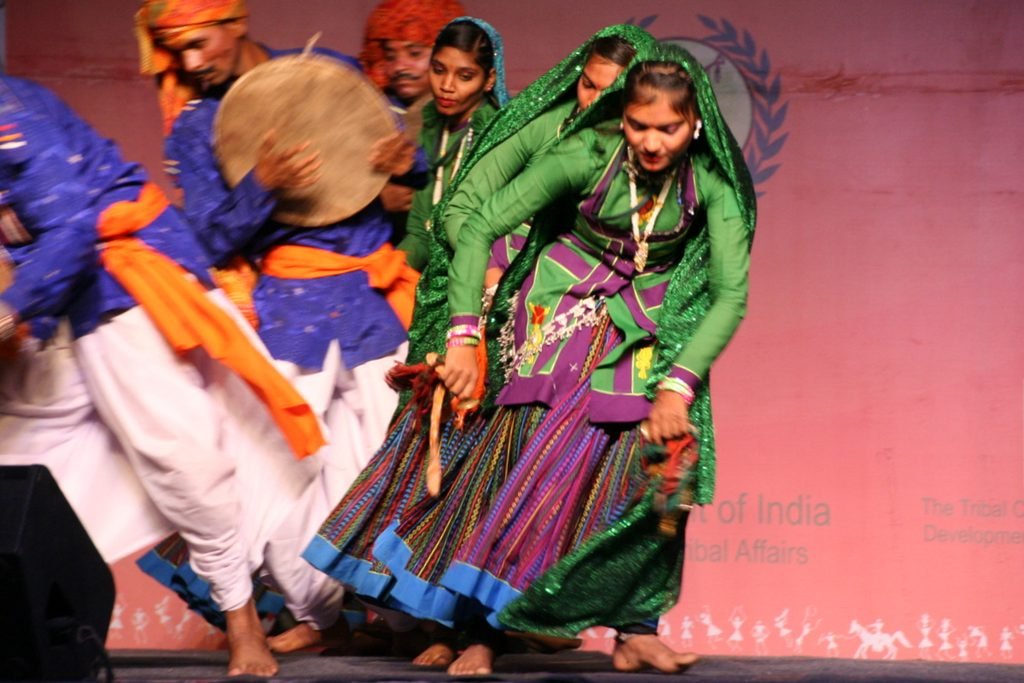
Image Source: Ramesh Lalwani / Wikipedia
THE BHIL: WESTERN AND CENTRAL INDIA’S INDIGENOUS COMMUNITIES
The Bhil are one of India’s major Scheduled Tribe communities, with populations across Rajasthan, Gujarat, Madhya Pradesh, and Maharashtra. Their cultural traditions differ between regions and villages, reflecting varied languages, religious practices, histories, and social environments.
Historically, Bhil communities have been associated with the Aravalli hills, western India’s forests and agricultural areas, and the uplands of central India. Farming, wage labour, animal husbandry, forest-based livelihoods, and migration all contribute to the varied contemporary experiences of Bhil communities.
Bhil Art and Pithora Traditions
Bhil painting is known for expressive representations of animals, plants, people, and elements of the natural world. Some artistic traditions associated with Bhil and related communities use dense patterns of dots and vivid colours.
Pithora painting, practised particularly among Rathwa and related communities in parts of Gujarat and Madhya Pradesh, is a distinct ritual art tradition. It is associated with ceremonial wall paintings and religious practices, and should not be treated as interchangeable with every form of Bhil painting.
Travellers can learn about these traditions through museums, exhibitions, artist-led workshops, and responsible craft initiatives. Where paintings are created for a household ritual, visitors should seek permission before viewing or photographing them.
Where to Explore Bhil Cultural Heritage
Southern Rajasthan, including parts of Banswara and Dungarpur districts, and tribal areas of Gujarat and western Madhya Pradesh offer different perspectives on Bhil cultural life. Local museums and cultural institutions can provide useful introductions before visiting rural areas.
Best for: Folk art, traditional music, cultural landscapes, and craft traditions.
Ideal duration: 2 to 4 days for a focused regional visit.
Best time to visit: October to March for generally comfortable travel.

Image Source: Shiv’s fotografia/ Wikipedia
ODISHA: DONGRIA KONDH, SAORA, AND OTHER INDIGENOUS COMMUNITIES
Odisha has a rich diversity of Indigenous communities, including the Kondh, Dongria Kondh, Saora, Juang, Bonda, and several others. Their cultural traditions are closely connected with the state’s hills, forests, agricultural areas, and village environments.
Tribal communities in Odisha have diverse languages, religious traditions, farming practices, art forms, and systems of community life. Their experiences also reflect contemporary challenges involving land rights, mining, forest access, education, healthcare, and economic change.
Dongria Kondh and the Niyamgiri Hills
The Dongria Kondh are associated with the Niyamgiri hill region of southern Odisha. The hills are central to their cultural and spiritual identity, as well as their agricultural and ecological relationships.
The Dongria Kondh have become internationally known through debates about mining, Indigenous rights, and the protection of sacred landscapes. Their relationship with Niyam Raja, a revered mountain deity, illustrates how cultural identity, spirituality, land, and environmental stewardship can be closely linked.
This region should not be approached as a destination for casual village visits. Travellers should use appropriate local guidance, respect community decisions about access, and avoid seeking out households or sacred locations without permission.
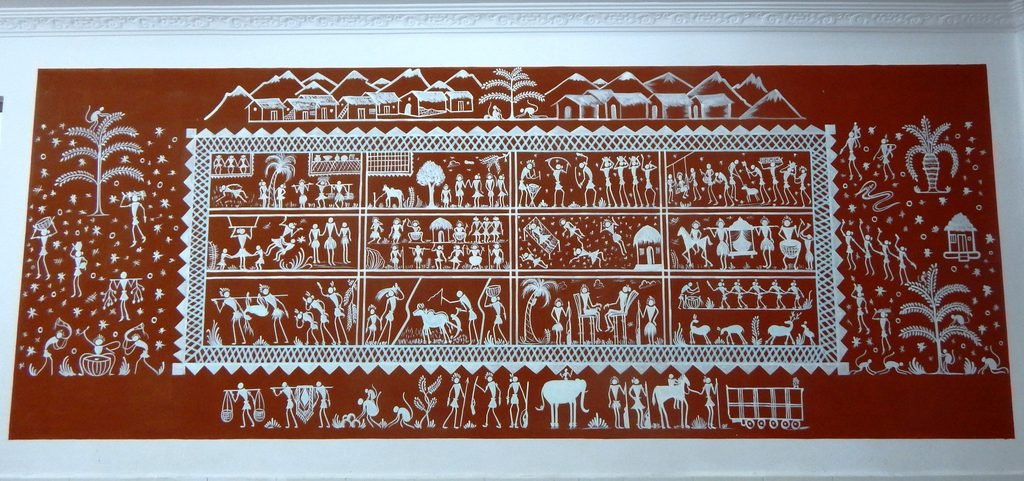
Image Source: Hpsatapathy/ Wikipedia
Saora Art
Saora communities in Odisha are known for traditional wall paintings associated with religious and cultural life. These paintings can depict human figures, animals, plants, and symbolic relationships between people and the world around them.
Saora painting has also entered contemporary art and craft markets. Learning about the meaning and context of the paintings is more valuable than viewing them simply as decorative patterns.
Where to Learn About Odisha’s Tribal Cultures
Bhubaneswar can serve as an introduction through museums and cultural institutions, while Koraput and other parts of southern Odisha provide broader regional context. Specific village visits should be arranged through responsible local organisations and only where community access is welcomed.
Best for: Indigenous art, sacred landscapes, agricultural traditions, and cultural history.
Ideal duration: 4 to 6 days for a carefully planned regional journey.
Best time to visit: October to February for generally more comfortable travel.
THE NORTHEAST: A MOSAIC OF INDIGENOUS PEOPLES
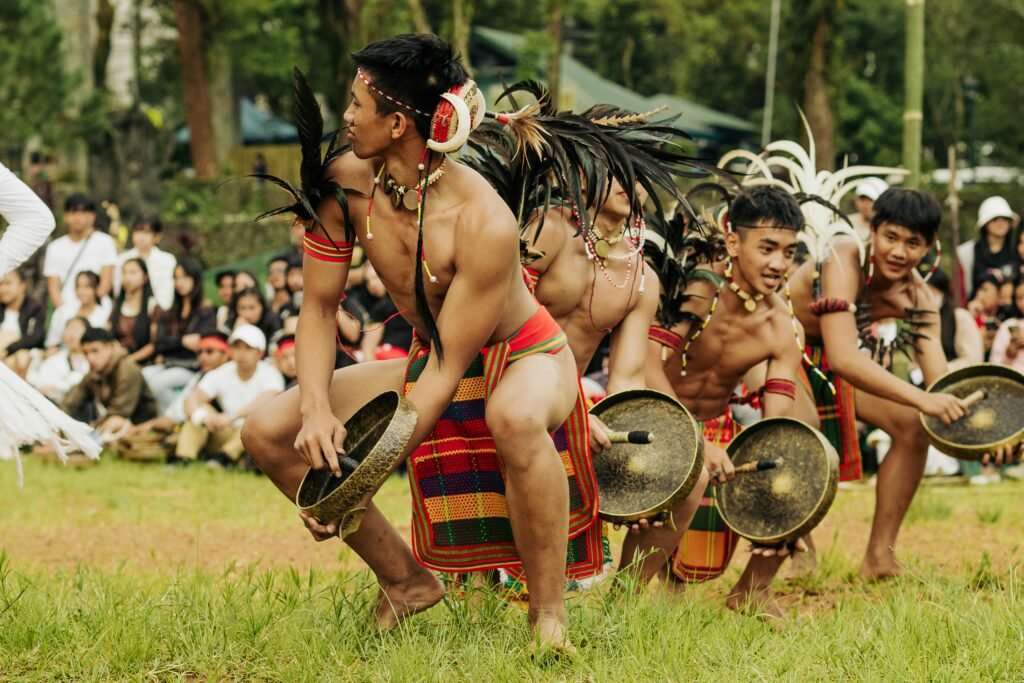
Northeastern India has an exceptional diversity of Indigenous peoples and languages. The region includes Assam, Arunachal Pradesh, Manipur, Meghalaya, Mizoram, Nagaland, Tripura, and Sikkim, each with its own cultural and historical characteristics.
The terms tribal and Indigenous encompass many different communities in this region. Naga peoples, Khasi and Garo communities, Mizo communities, Bodo communities, Adi, Apatani, Nyishi, and many others have distinct traditions and cannot be understood as one cultural group.
The region’s Indigenous histories have been shaped by mountain geography, river valleys, shifting and settled agriculture, trade, migration, religious change, colonial administration, and modern political developments.
Nagaland and Naga Cultures
Nagaland is home to multiple Naga communities, each with distinct languages, customary traditions, clothing, oral histories, and village identities. Traditional architecture, weaving, wood carving, music, and community festivals are important expressions of cultural heritage.
The Hornbill Festival, held annually in Nagaland, brings together cultural presentations from different Naga communities. It is a useful introduction for visitors, but it cannot represent the full diversity of Naga societies or replace learning about individual communities and their contemporary lives.
Kohima and nearby areas provide a practical base for cultural exploration. Visitors should check festival schedules, entry requirements, and current travel guidance before making arrangements.
Best for: Traditional crafts, music, community festivals, and cultural history.
Ideal duration: 4 to 6 days.
Best time to visit: November to March for many travel itineraries. The Hornbill Festival is typically held in December, but dates should be confirmed for the relevant year.
Meghalaya: Khasi, Garo, and Jaintia Cultures
Meghalaya is associated with several Indigenous peoples, particularly the Khasi, Garo, and Jaintia. Their languages, customary institutions, festivals, and relationships with land differ across communities and locations.
Khasi society is widely known for matrilineal traditions, in which descent and certain forms of inheritance are traced through the female line. However, matriliny does not mean that every social role or decision is controlled by women; family, customary, and community institutions vary.
Travellers can explore local markets, museums, traditional architecture, music, and community-led experiences around Shillong and other accessible areas. Living root bridges and village landscapes also illustrate relationships between communities and the environment, although they should not be reduced to tourist scenery alone.
Best for: Cultural landscapes, traditional architecture, local food, and community history.
Ideal duration: 4 to 6 days.
Best time to visit: October to April for many sightseeing itineraries.

Mizoram and Mizo Culture
Mizoram’s cultural identity is closely associated with Mizo communities, their languages, music, dances, weaving, and community traditions. The Chapchar Kut festival is a well known celebration involving traditional dance, music, and cultural gatherings.
Aizawl offers an introduction to Mizo life through its markets, museums, churches, and surrounding hills. Visitors can learn about the region’s history and contemporary society while exploring the landscape at a measured pace.
Because access rules and travel requirements can differ for Indian and foreign visitors, confirm current entry conditions before travelling.
Best for: Music, dance, weaving, regional history, and hill landscapes.
Ideal duration: 3 to 5 days.
Best time to visit: November to April for many common travel plans, subject to local conditions and festival dates.

ARUNACHAL PRADESH: APATANI AND OTHER INDIGENOUS CULTURES
Arunachal Pradesh is one of India’s most culturally diverse states, with numerous Indigenous communities distributed across valleys, foothills, and high mountain regions. Among them are the Apatani, Nyishi, Adi, Monpa, Mishmi, and many others.
The state’s rugged terrain has contributed to distinctive local traditions, but it is important not to assume that every community shares the same language, belief system, or agricultural practices.
Apatani Culture in Ziro Valley
The Apatani people are particularly associated with Ziro Valley, where settlements and agricultural landscapes form an important part of cultural identity.
The valley is known for its carefully managed rice cultivation systems, including traditional rice and fish farming practices in some fields. These systems demonstrate how local agricultural knowledge has developed in response to the valley’s terrain and water resources.
Apatani cultural life also includes traditional house forms, oral histories, community institutions, and festivals. Their contemporary lives combine customary knowledge with education, public services, modern occupations, and wider connections beyond the valley.
Visitors should approach villages with respect, use local guides where appropriate, and seek consent before photographing residents or entering private spaces.
Monpa Culture in Tawang
The Monpa people are associated with parts of western Arunachal Pradesh, including the Tawang region. Tibetan Buddhist traditions have played an important role in the area’s cultural landscape, particularly around Tawang Monastery.
Tawang’s monasteries, mountain settlements, local food, and traditional crafts provide a different cultural experience from the agricultural valley landscapes of Ziro.
The region is mountainous, and weather and road conditions can affect travel. Entry permits and border area requirements should be checked before departure.
Best for: Indigenous agricultural knowledge, village landscapes, monasteries, and mountain culture.
Ideal duration: 5 to 8 days, depending on which region is visited.
Best time to visit: October to April for many itineraries, with conditions varying significantly by altitude.
SIKKIM: LEPCHA, BHUTIA, AND NEPALI CULTURAL TRADITIONS

Sikkim’s cultural landscape reflects the histories and interactions of Lepcha, Bhutia, Nepali, and other communities. Its location in the eastern Himalayas has connected it with Tibetan cultural traditions, Himalayan trade routes, and the wider social history of the region.
Lepcha Cultural Heritage
The Lepcha are recognised as one of Sikkim’s Indigenous communities, with historical connections to the eastern Himalayan landscape. Their cultural traditions include a distinctive language, oral literature, environmental knowledge, and spiritual relationships with mountains, rivers, and forests.
Learning about Lepcha culture offers insight into the relationship between Indigenous identity and the natural landscape. Travellers can begin with cultural institutions and local heritage initiatives rather than assuming that sacred places or traditional settlements are open to unrestricted tourism.
Bhutia and Tibetan Buddhist Heritage
Bhutia communities have contributed significantly to Sikkim’s cultural history, including its Buddhist institutions, festivals, architecture, and artistic traditions. Monasteries such as Rumtek and other religious sites provide opportunities to understand the region’s Buddhist heritage.
Visitors should dress respectfully, follow monastery rules, and ask before photographing religious ceremonies or individuals.
Best for: Himalayan cultural history, monasteries, local food, and Indigenous heritage.
Ideal duration: 4 to 6 days.
Best time to visit: March to May and October to November for many sightseeing routes.
THE ANDAMAN AND NICOBAR ISLANDS: INDIGENOUS PEOPLES AND PROTECTED CULTURES
The Andaman and Nicobar Islands are home to several Indigenous peoples whose histories, languages, and relationships with the islands differ markedly from those of mainland communities. These include the Great Andamanese, Onge, Jarawa, Sentinelese, and Nicobarese, among others.
Their histories are closely connected with island environments, marine resources, forests, and long periods of relative geographical isolation. Colonial rule, disease, displacement, outside contact, and changing land access have profoundly affected many communities.
This region requires particular ethical care. Some Indigenous peoples are highly vulnerable, and their territories and contact with outsiders are subject to legal protections and restrictions.
Why Responsible Travel Matters Here
The Sentinelese are protected from outside contact, and travellers must not attempt to approach North Sentinel Island or establish contact. The Jarawa Reserve is also subject to specific legal restrictions intended to protect the community. Tourists must not seek close encounters, photograph people in prohibited circumstances, or treat Indigenous residents as attractions.
The appropriate way to learn about the region is through authorised museums, historical interpretation, conservation education, and information provided by recognised institutions. Travellers should follow current government rules and avoid tour operators that advertise prohibited encounters.
Best for: Island geography, Indigenous history through authorised educational resources, and environmental understanding.
Ideal duration: 3 to 5 days for general Andaman sightseeing, without attempting contact with protected communities.
Best time to visit: Generally October to April for many island tourism activities, subject to weather and transport conditions.
WARLI CULTURE IN MAHARASHTRA AND GUJARAT
Image Source: Abhishekjoshi/ Wikipedia
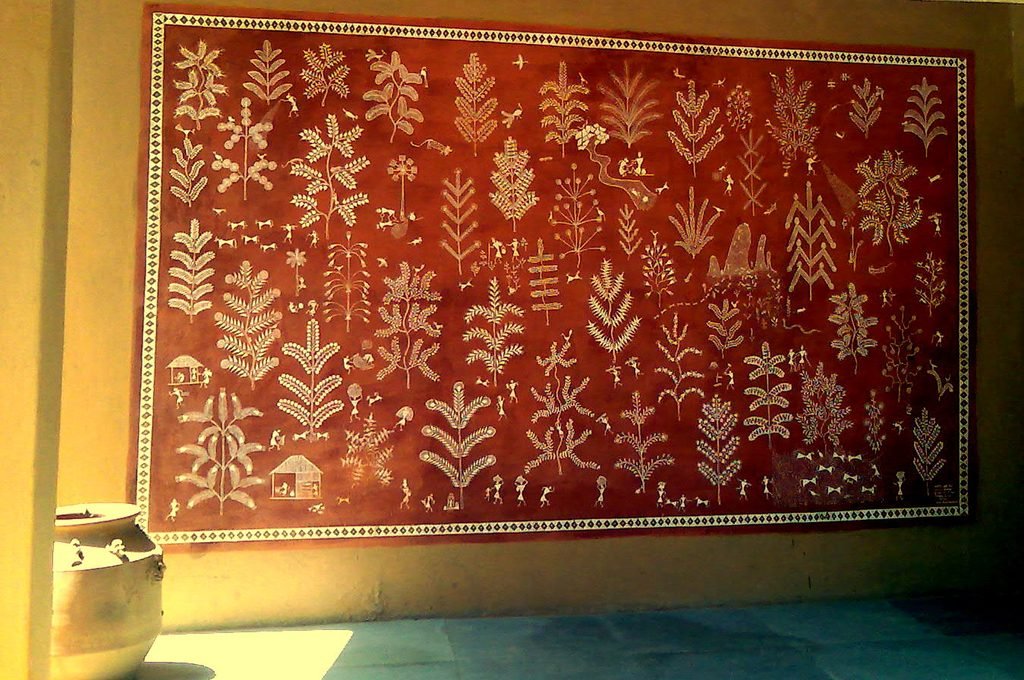
Warli art is one of India’s most recognisable Indigenous art traditions. It is associated particularly with Warli communities in parts of Maharashtra and neighbouring Gujarat.
Traditionally, Warli paintings use simple geometric forms to depict human figures, animals, farming, dancing, and community life. The circular dance motif, for example, often represents collective movement and social relationships. Traditional wall paintings have religious and ceremonial contexts, while contemporary artists also produce works for galleries, textiles, and commercial markets.
Warli culture is not limited to painting. Community life, agricultural practices, oral traditions, and changing economic conditions all form part of the wider cultural picture.
Travellers can learn about Warli art through exhibitions, artisan workshops, cultural organisations, and ethically sourced craft products. A workshop led by a practicing artist is generally more informative than simply purchasing a mass produced souvenir marketed as tribal art.
Best for: Indigenous art, craft workshops, and cultural learning.
Ideal duration: 1 to 3 days as part of a Maharashtra or Gujarat itinerary.
Best time to visit: October to March for generally comfortable travel.

Image Source: Prof. Mohamed Shareef/ Wikipedia
TODA CULTURE IN THE NILGIRI HILLS, TAMIL NADU
The Toda are an Indigenous community associated with the Nilgiri Hills of Tamil Nadu. Their cultural traditions have historically included buffalo pastoralism, distinctive architecture, ceremonial practices, and embroidery.
Toda traditional huts are known for their curved, barrel like appearance and small entrances. Their construction reflects local materials, cultural preferences, and the mountain environment. Toda embroidery is also a recognised textile tradition, featuring geometric patterns on a contrasting background.
The Toda have experienced substantial social and economic change, and their contemporary lives should be understood alongside their historical practices. Cultural visits should be organised respectfully, with permission from the relevant community members.
Travellers can learn about Toda heritage through recognised cultural initiatives and authorised visits around the Nilgiri region. It is important not to assume that all traditional settlements are public attractions.
Best for: Traditional architecture, embroidery, pastoral heritage, and mountain culture.
Ideal duration: 2 to 4 days as part of a Nilgiri Hills trip.
Best time to visit: October to March for many outdoor sightseeing activities.
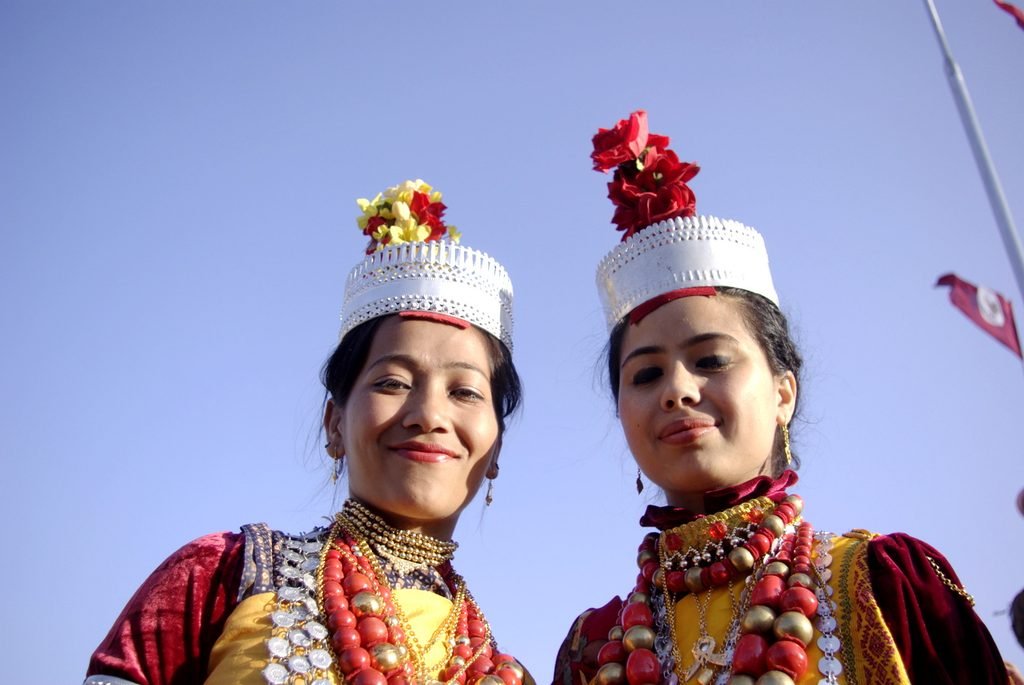
Image Source: Bogman/ Wikipedia
THE KHASI, GARO, AND JAINTIA: MATRILINEAL TRADITIONS IN MEGHALAYA
The Indigenous communities of Meghalaya provide an important example of how family organisation, inheritance, customary institutions, and community identity can differ from dominant social patterns elsewhere in India.
Khasi, Garo, and Jaintia communities have matrilineal traditions in various forms. Matrilineality generally refers to descent or inheritance being traced through the maternal line. It should not be confused with a system in which women necessarily hold all political or household authority.
These communities have their own languages, customary institutions, religious histories, and festivals. Christianity has also played a significant role in the modern cultural life of many communities, alongside the continuation or transformation of older traditions.
Travellers can learn about these histories through local museums, cultural events, community guided walks, and conversations with knowledgeable residents who choose to share their experiences.
Best for: Social history, family traditions, community institutions, and cultural landscapes.
Ideal duration: 3 to 5 days within a broader Meghalaya itinerary.
TRIBAL MARKETS AND WEEKLY HAATS
Weekly markets, commonly called haats in many parts of India, are important economic and social institutions across several tribal regions. They bring together farmers, craftspeople, traders, and residents from surrounding villages.
A haat may sell vegetables, grains, forest produce where legally collected and traded, household goods, tools, clothing, food, and handmade products. Markets also provide opportunities for social exchange and the circulation of local news.
For travellers, a market can offer a more grounded view of regional life than a staged cultural performance. It is possible to observe local foods, trading practices, clothing, and crafts without treating community members as performers.
However, markets are primarily working spaces. Ask permission before taking photographs, avoid blocking trading areas, and pay fair prices. Do not buy protected wildlife products, illegally collected forest materials, or cultural objects whose sale may be restricted.
Useful regions for learning about haat culture include Bastar in Chhattisgarh, tribal areas of Odisha, parts of Rajasthan and Gujarat, and several northeastern states. Market days vary by location, so ask locally before travelling.
INDIGENOUS FOOD TRADITIONS ACROSS INDIA
Food is one of the most accessible ways to understand the diversity of India’s tribal and Indigenous cultures. Ingredients, cooking methods, fermentation practices, seasonal foods, and food sharing traditions vary according to climate, agriculture, local ecology, religious customs, and community history.
In northeastern India, rice, vegetables, fermented foods, herbs, and locally available proteins feature prominently in many regional cuisines, though dietary traditions differ between communities. In central India, millet, maize, rice, pulses, leafy greens, and seasonal forest foods have all played roles in different local food systems. In Himalayan regions, local grains, dairy products, vegetables, and regionally adapted preservation methods are important.
No single dish represents all tribal communities. Similarly, foods described as traditional may now be combined with ingredients and cooking methods introduced through trade, migration, and modern markets.
Travellers interested in Indigenous food traditions can join community hosted meals or cooking workshops where these are offered voluntarily. Ask about ingredients and preparation, respect dietary and religious preferences, and avoid requesting access to food resources that are protected or culturally restricted.
TRIBAL MUSIC, DANCE, FESTIVALS, AND ORAL TRADITIONS
Music, dance, storytelling, and oral history play important roles in many Indigenous cultures, but their meanings vary widely. Some performances are linked to agricultural cycles, religious ceremonies, community gatherings, or the remembrance of historical events. Others are now presented in public cultural festivals and contemporary artistic settings.
The Hornbill Festival in Nagaland, Bastar Dussehra in Chhattisgarh, and regional festivals in Meghalaya, Mizoram, Arunachal Pradesh, and other states provide opportunities to encounter selected traditions in public settings.
Travellers should distinguish between a public festival and a private or sacred ceremony. A tradition being described as ancient does not automatically make it available for public viewing or photography.
Oral traditions are particularly important because they may preserve histories and ecological knowledge that are not fully represented in written archives. When a community member shares a story, ask whether it may be recorded or published, especially if the material is intended for a travel blog or social media.
TRIBAL ARCHITECTURE AND TRADITIONAL ECOLOGICAL KNOWLEDGE
Traditional architecture reflects the relationship between communities and their environments. Building materials, house shapes, ventilation, roof design, and settlement patterns respond to local rainfall, temperature, terrain, available resources, and cultural preferences.
In parts of Arunachal Pradesh, traditional houses reflect the use of locally available materials and adaptations to mountain environments. Toda architecture in the Nilgiris has distinctive curved forms, while houses across Nagaland and other northeastern states vary by community and location. Central Indian settlements also demonstrate regional adaptations to forest and agricultural landscapes.
Traditional ecological knowledge can include farming systems, soil management, seed selection, medicinal plant knowledge, water management, and the seasonal use of landscapes. Such knowledge is neither uniform nor static; it changes as communities respond to education, markets, climate change, conservation rules, and new technologies.
Visitors should not assume that knowledge shared in a cultural demonstration can be copied, commercialised, or published without permission. Community ownership and consent matter, especially where knowledge has religious, medicinal, or economic significance.
RESPONSIBLE TRAVEL IN TRIBAL AND INDIGENOUS REGIONS
Cultural tourism can support local livelihoods and help sustain traditional crafts, but it can also create problems when communities lose control over how their lives and traditions are represented.
Responsible travel starts with recognising that tribal communities are contemporary societies, not remnants of an earlier era. People have different occupations, ambitions, religious beliefs, and views about tourism. Some welcome visitors, while others prefer privacy or restricted access.
Before visiting a community, research local customs and current access rules. Use recognised local guides or community organisations when appropriate, pay fairly for crafts and services, and ask before photographing people, homes, religious spaces, or ceremonies.
Avoid tours that promise access to protected communities, portray people as exotic attractions, or encourage intrusive photography. Never enter a private home, sacred site, or restricted forest area without permission.
When buying handicrafts, seek information about the artist and the place of production. Purchasing directly from makers or reputable cooperatives can help ensure that income reaches the people responsible for the work.
Travellers should also be careful when publishing cultural material online. A photograph or description may reveal sensitive locations or expose a community to unwanted visitors. Consent should extend beyond taking a photograph to how it will be used and shared.
TRAVEL PLANNING FOR TRIBAL REGIONS OF INDIA
Permits and Access Restrictions
Some parts of northeastern India require permits, and rules can differ by state, nationality, and location. Protected areas, border regions, wildlife reserves, and Indigenous territories may have additional restrictions. Verify the current requirements through official sources before travelling.
Transport and Accommodation
Transport can be limited in rural and mountainous regions. Plan journeys around realistic travel times, and confirm bus schedules, road access, and accommodation availability. In remote destinations, a locally knowledgeable guide can improve both logistics and cultural understanding.
Weather and Seasons
Monsoon rainfall may affect roads and trails, while mountain regions can experience cold weather, landslides, or sudden changes in visibility. Festival dates and agricultural calendars also influence the best time to visit.
Language and Communication
India’s linguistic diversity is substantial. Hindi or English may be useful in some tourist centres but less widely spoken in certain villages. Local guides and community organisations can help with communication while providing context about customs and history.
Health and Basic Preparation
Carry essential medication, drinking water, suitable clothing, and a reliable way to communicate. In remote areas, medical facilities may be limited. Travellers planning strenuous walks or high altitude journeys should assess their fitness and preparation carefully.
TRIBAL AND INDIGENOUS CULTURE ITINERARIES
Itinerary 1: Central India, 6 Days
Day 1: Arrive in Raipur or another suitable regional gateway and learn about Chhattisgarh’s cultural geography.
Day 2: Travel towards Bastar and explore local crafts through recognised cultural centres.
Day 3: Learn about regional metalwork, woodcraft, and the history of Bastar.
Day 4: Visit accessible natural or cultural attractions, subject to current conditions.
Day 5: Explore a local market if one is operating, observing respectfully and asking before taking photographs.
Day 6: Return to the gateway city.
This itinerary should be adapted to current security advice, road conditions, festival dates, and community permissions.
Itinerary 2: Meghalaya and Nagaland, 8 to 10 Days
Days 1 to 3: Explore Shillong and selected parts of Meghalaya, learning about Khasi, Garo, or Jaintia cultural traditions through authorised institutions and community experiences.
Days 4 to 5: Visit accessible natural and cultural sites around Sohra, allowing flexibility for weather.
Days 6 to 8: Travel towards Nagaland if transport connections allow, and explore Kohima and its cultural institutions.
Days 9 to 10: Attend a scheduled cultural event if dates align, or extend the trip to explore the region at a slower pace.
Because the states are geographically separate, intercity travel may require flights or lengthy road journeys. A longer trip is preferable to rushing between destinations.
Itinerary 3: Arunachal Pradesh, 6 to 8 Days
Days 1 to 2: Travel to Ziro Valley and become familiar with the local landscape.
Days 3 to 4: Learn about Apatani culture and agricultural traditions through authorised local experiences.
Days 5 to 6: Explore nearby landscapes and community heritage where access is welcomed.
Days 7 to 8: Return through the relevant transport gateway, allowing extra time for road conditions.
This route focuses on one region. Tawang and other parts of Arunachal Pradesh are better treated as separate itineraries because travel distances can be substantial.
Itinerary 4: Nilgiri Hills, 3 to 4 Days
Day 1: Arrive in the Nilgiri region and explore the landscape around Ooty or another suitable base.
Day 2: Learn about Toda heritage through recognised cultural initiatives.
Day 3: Explore the region’s textile traditions, local markets, and mountain environment.
Day 4: Continue to another Nilgiri destination or return to your starting point.
Traditional settlements should only be visited when access is permitted and residents are willing to receive visitors.
FREQUENTLY ASKED QUESTIONS
What Is the Difference Between Adivasi and Scheduled Tribe?
Adivasi is a widely used term for many Indigenous or tribal communities, especially in central and eastern India. Scheduled Tribe is an official constitutional and administrative category in India. The terms overlap in many contexts, but they are not identical in every usage, and individual communities may prefer specific names for themselves.
Which Indian States Have Significant Tribal Cultural Diversity?
Madhya Pradesh, Chhattisgarh, Odisha, Jharkhand, Gujarat, Rajasthan, Maharashtra, and the northeastern states all have significant tribal populations and diverse cultural traditions. The distribution and characteristics of communities differ substantially between states.
Which Is the Best Destination to Learn About Tribal Culture in India?
There is no single best destination. Bastar offers opportunities to learn about regional crafts and festival traditions; Odisha provides insight into diverse Indigenous cultures and sacred landscapes; Nagaland and Meghalaya offer distinct northeastern cultural histories; and Ziro Valley is known for Apatani agricultural traditions.
Can Tourists Visit Tribal Villages in India?
Some communities welcome visitors through authorised cultural programmes, local guides, craft initiatives, or community based tourism. Others may have restrictions or prefer privacy. Always verify access arrangements and obtain permission rather than arriving unannounced.
Are the Andaman and Nicobar Islands Suitable for Indigenous Cultural Tourism?
The islands have important Indigenous histories, but several communities are protected from outside contact. Travellers must not attempt to approach protected communities or enter restricted territories. Learn through authorised educational resources and follow current government regulations.
What Is the Best Time to Explore Tribal Regions in India?
October to March is suitable for many central Indian and western Indian destinations, while some northeastern and Himalayan regions have different seasonal patterns. Festival dates vary annually, and monsoon conditions can affect road access. Check local conditions before finalising travel plans.
What Should Travellers Buy From Tribal Regions?
Where available, travellers can consider locally made textiles, paintings, metalwork, baskets, pottery, and other crafts sold by recognised artisans or cooperatives. Ask about the maker and production process, pay a fair price, and avoid wildlife products or items whose collection or sale may be illegal.
How Can Tourists Support Indigenous Communities Responsibly?
Use community-led services, purchase authentic crafts, respect cultural protocols, ask for consent before photography, and follow access restrictions. Avoid tours that promise intrusive encounters or present communities as spectacles.
FINAL THOUGHTS
Tribal and Indigenous cultures are an essential part of India’s cultural diversity, but they cannot be reduced to a single identity, lifestyle, or tourist experience. The communities of Bastar, the hills of Odisha, the western Indian tribal belt, the northeastern states, the Nilgiris, and the Himalayan regions have distinct histories, languages, artistic traditions, and relationships with their environments.
For travellers, the most meaningful experiences often come from learning about a particular community’s history, food, architecture, agricultural practices, and contemporary life rather than trying to visit as many tribal destinations as possible.
Begin with recognised cultural institutions, community-led activities, and locally guided experiences. Respect restrictions around sacred places and protected territories, and remember that the right to share or withhold cultural knowledge belongs to the people concerned.
Approached thoughtfully, travel through India’s tribal regions can deepen an understanding of the country’s cultural geography and the many ways communities sustain their identities while navigating a rapidly changing world.