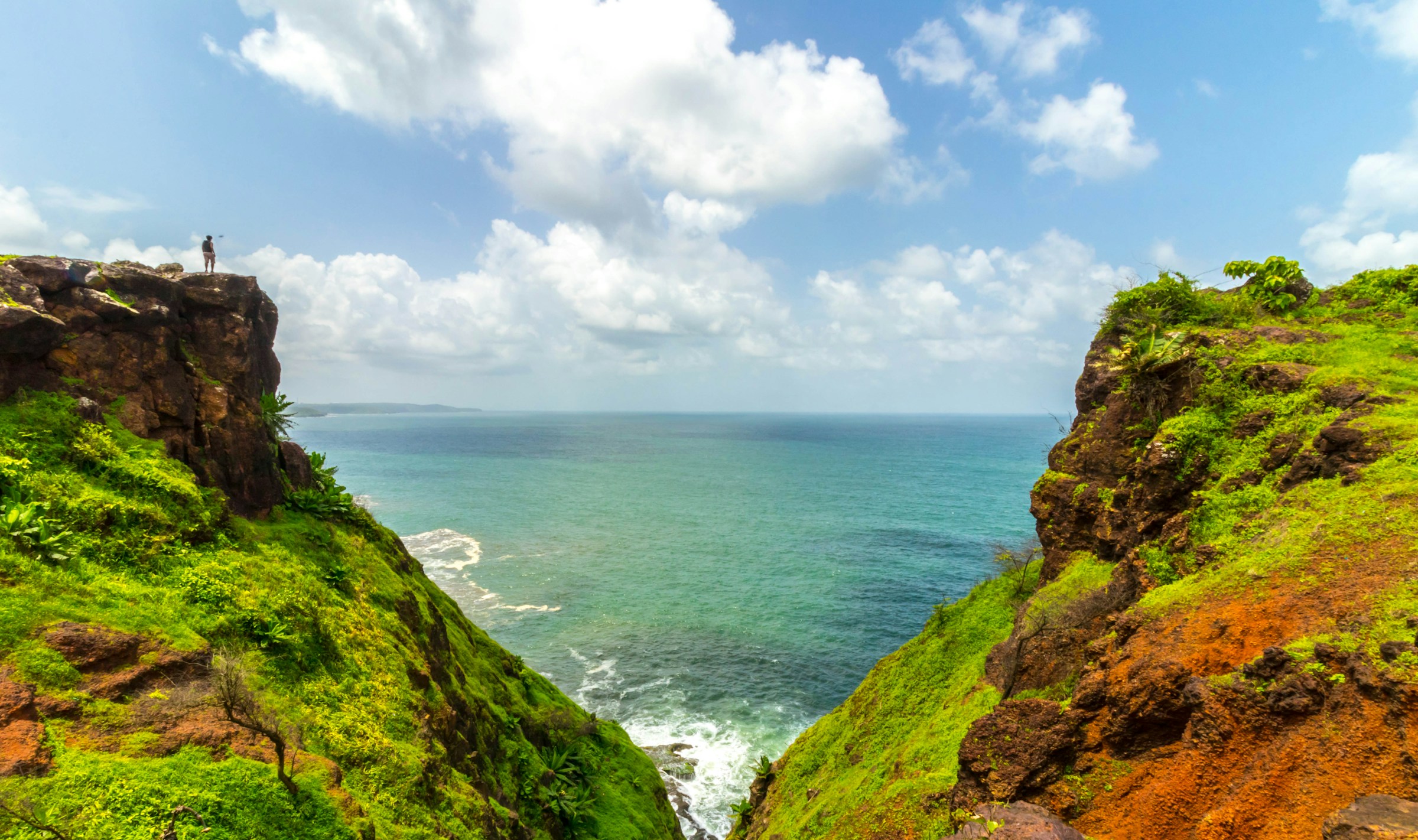
Image Source: Somnath Mengade
About Mahipatgad Fort
Mahipatgad Fort is not just a historical structure—it’s a land of leopards, wild pigs, and barking deer! Don’t worry, they won’t bite… unless you’re a piece of juicy bacon. Positioned to the east of Khed, Mahipatgad is one of the largest forts in Maharashtra, covering a massive 120 acres. That’s huge—almost like a mini kingdom in itself!
The forts are all located on the same spur that runs parallel to the Western Ghats. Mahipatgad, sitting on the northernmost end, is like the cherry on top of the sundae. Its altitude is so high that even birds look up to it, giving it a strategic advantage with an extensive field of vision over surrounding valleys.
Part of a trio—Mahipatgad, Sumargad, and Rasalgad—Mahipatgad is one of the largest forts in Maharashtra, covering a massive 120 acres. It is situated on the same spur that runs parallel to the Western Ghats. A mini-kingdom itself is a land of leopards, wild pigs, and barking deer!
Defensive Architecture
Following the contours of the hills, the thick stone wall beautifully blends with the rugged terrain. It was originally built by Adilshah of Bijapur in the 15th century. Later, Chhatrapati Shivaji Maharaj was captured in 1661, passing on to the Peshwas. In 1818, finally, the British took over the control of the fort.
Bastions & Lookout Points
Mahipatgad was built for heavy defence with six battlements and six gateways. Although gateways are in ruins, their location can still be identified.
Laldevdi (North-East)
Pusati (East, formerly entered by a ladder)
Yeshwant (South-East)
Khed (South, still in use, connecting Beldarwadi village to the fort)
Shivganga (West)
Kotwal (North)
Water Management & Storage
To sustain a larger population, the fort required careful water management. Two large wells—one near the Khed entrance and another near the Pareshwar Temple—fulfilled those needs. It’s still used by villages for drinking purposes so don’t think of using it as a swimming pool. Additionally, the fort likely had rock-cut cisterns and tanks for rainwater harvesting, a common feature in Maratha fortifications.
Internal Structures and Layout
Horse Stables & Storage: At the southern side, the presence of a large number of stables indicates that Mahipatgad was an important military base. When you walk inside, remnants of 350–700 horse stables are enough to make you feel like you’ve walked into a mediaeval battlefield!
Unused Mortars: The fort also has two heaps of unused mortars—perhaps abandoned due to a lack of conflict or because the villagers were too busy drinking water from the wells instead!
Beldarwadi Village
An interesting thing connects the peoples of Beldarwadi Village to the fort. The village is located at the foothills of the fort and consists of ten houses. It’s said that villagers were descendants of the bricklayers who were brought by Shivaji for the fort’s construction.
Architectural Influences
Maratha & Deccan Style: Locally available basalt stone helped in providing durability and easy maintenance of the fort. Like those seen in most Maratha forts, the fort follows the functional and no-frills military design.
Islamic & Hindu Influence
The traces of Islamic architectural elements are visible since it was originally built by the Adilshahi dynasty. Later, some architectural elements were modified under Shivaji’s rule, like incorporating Hindu temple architecture.
How To Reach Mahipatgad Fort
As a part of a defensive network, Mahipatgad forms an effective network with Sumargad and Rasalgad. On the same spur, these forts worked together to have effective military coordination along the western ghats. Signal communication via fire beacons or messengers took place during that time, ensuring the security of the region.
By Road
The fort is east of Khed, a town in Ratnagiri district, Maharashtra.
From Mumbai/Pune
Drive via NH66 (Mumbai-Goa Highway) towards Khed.
From Khed, take the road towards Beldarwadi village, the base village of Mahipatgad.
The road is mostly good but may have rough patches near the village.
From Satara/Mahabaleshwar:
Travel via Poladpur to Khed and then proceed towards the fort.
By Rail
The nearest railway station is Khed Railway Station (on Konkan Railway).
From Khed, you can hire a local jeep or taxi to Beldarwadi village.
By Trek
There are multiple trekking routes to Mahipatgad Fort:
From Beldarwadi Village (Most Popular)
A moderate trek of about 2-3 hours through dense forests and rocky terrain.
The trail passes through remnants of the fort walls and old gateways.
From Rasalgad or Sumargad (For Experienced Trekkers)
A longer trek covering multiple forts in a single route.
Requires proper navigation and endurance.
Nearby Attractions to Mahipatgad Fort
1. Rasalgad Fort
Located a short distance from Mahipatgad, Rasalgad is a small but historically significant hill fort known for its well-preserved fortifications, ancient cannons, rock-cut water tanks, and panoramic views of the Sahyadri ranges.
2. Sumargad Fort
Often explored along with Mahipatgad and Rasalgad, Sumargad is a lesser-known fort that attracts trekking enthusiasts seeking solitude, adventure, and spectacular mountain scenery.
3. Khed
The nearby town of Khed serves as the main gateway to Mahipatgad. Visitors can explore local markets, temples, and authentic Konkani culture while passing through the town.
4. Parshuram Temple
Situated near Chiplun, this ancient temple dedicated to Lord Parshuram is an important pilgrimage site known for its beautiful architecture and spiritual significance.
5. Gowalkot Fort
Located on the banks of the Vashishti River near Chiplun, Gowalkot Fort offers scenic river views and a glimpse into the military history of the Konkan region.
6. Chiplun
One of the major towns in Ratnagiri district, Chiplun is known for its natural beauty, temples, and access to several forts and tourist attractions in the Western Ghats.
7. Koyna Wildlife Sanctuary
Nature lovers can visit this protected sanctuary, home to diverse wildlife, dense forests, and rich biodiversity within the Sahyadri mountain range.
8. Vasota Fort
Situated deep within the forests near the Koyna backwaters, Vasota Fort is a popular trekking destination known for its wilderness experience and stunning viewpoints.
Best Time to Visit
Post-Monsoon (September to February) – Lush green surroundings, cooler temperatures.
Winter (November to March) – Ideal for trekking with clear visibility.
Avoid Monsoon (June to August) – Heavy rains make the trails slippery and difficult to navigate.
Maps
FAQs
1. Where is Mahipatgad Fort located?
Mahipatgad Fort is located near Khed in Ratnagiri district of Maharashtra, within the Sahyadri mountain range.
2. Why is Mahipatgad Fort famous?
The fort is known for its massive plateau, extensive fort walls, ancient gateways, and historical significance during the Maratha period.
3. Is trekking required to reach Mahipatgad Fort?
Yes, visitors need to undertake a moderate trek from the base village to reach the fort.
4. What is the best time to visit Mahipatgad Fort?
The ideal time to visit is from October to February when the weather is pleasant and trekking conditions are favorable.
5. How difficult is the trek to Mahipatgad Fort?
The trek is generally considered easy to moderate and is suitable for beginners with basic fitness.
6. Can Mahipatgad, Rasalgad, and Sumargad be visited together?
Yes, many trekkers combine these three forts in a single trekking circuit known as the “Rasal-Sumar-Mahipat” trek.
7. Are there water sources on the fort?
There are a few water tanks on the fort, but visitors should carry sufficient drinking water, especially during summer.
8. Is camping allowed on Mahipatgad Fort?
Camping is possible in some areas of the fort, but visitors should check local guidelines and weather conditions before planning an overnight stay.
9. Are guides available for the trek?
Local guides are often available in nearby villages and can help visitors navigate the trails and learn about the fort’s history.
10. What should visitors carry for the trek?
Comfortable trekking shoes, water, snacks, a first-aid kit, sun protection, and rain gear during the monsoon season are recommended.