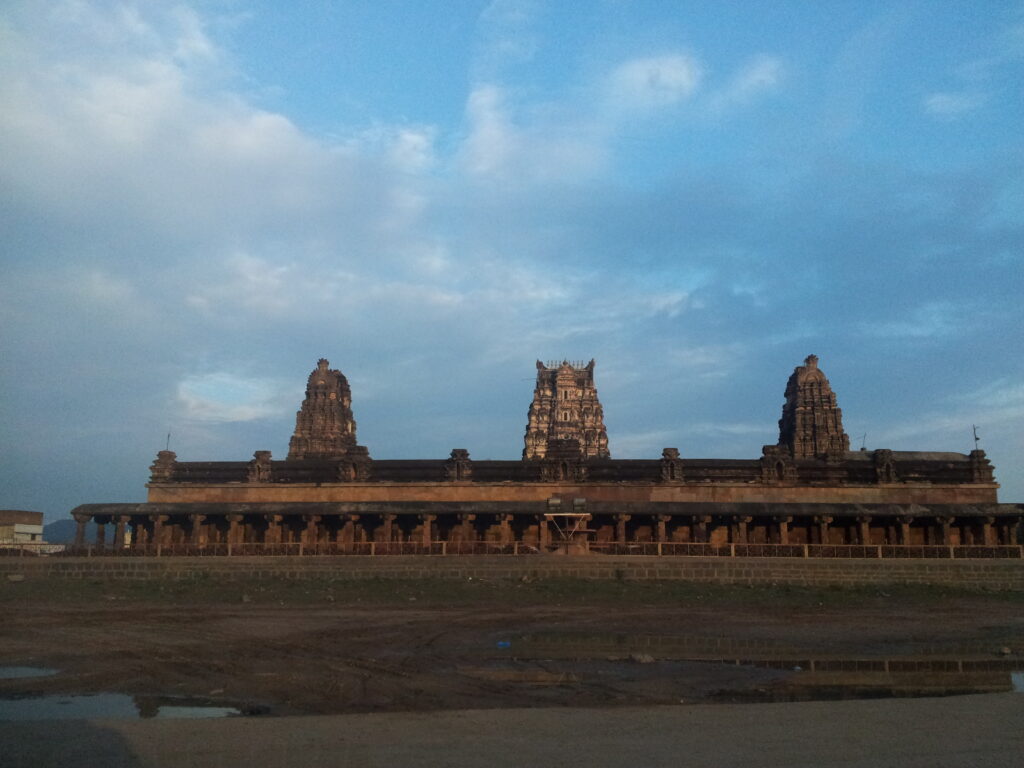
Image Source: Kashyap Kondamudi
About Kodandarama Temple
The Kodandarama Temple at Vontimitta, popularly known as the Kodanda Rama Swamy Temple, is one of the most celebrated temples dedicated to Lord Rama in Andhra Pradesh. Revered for its deep spiritual significance and breathtaking architecture, the temple stands as a remarkable symbol of devotion, history, and artistic excellence. Located in the Kadapa district, this grand temple is widely regarded as the largest Rama temple in the region and one of the finest surviving examples of Vijayanagara-style temple architecture.
Recognized as a centrally protected monument of national importance by the Archaeological Survey of India (ASI), the temple attracts thousands of pilgrims, history enthusiasts, and architecture lovers every year. Its massive stone structures, beautifully carved pillars, and serene atmosphere make it not only a sacred pilgrimage site but also a masterpiece of South Indian heritage.
Location and Surroundings
The temple is situated in the peaceful town of Vontimitta in Vontimitta Mandal of Kadapa district, Andhra Pradesh. It lies around 25 kilometers from Kadapa city and is located near Rajampet, making it easily accessible by road. The temple is also connected to Siddhout through Bakarapeta, which lies approximately 16 kilometers away.
Surrounded by a calm and traditional setting, the temple complex creates a deeply spiritual ambiance. Within the premises are two sacred temple tanks known as Rama Theertham and Lakshmana Theertham. Devotees believe that these holy water tanks possess spiritual purity, and many pilgrims offer prayers here before entering the main shrine.
History and Sacred Legends
The history of the Kodandarama Temple dates back to the 16th century and is closely associated with the Vijayanagara Empire, though local traditions also connect it to earlier Chola rulers. Over the centuries, the temple became an important center of Rama worship in the Rayalaseema region.
One of the most fascinating legends associated with the temple tells the story of two robbers named Vontudu and Mittudu. According to local belief, the two men underwent a spiritual transformation after becoming ardent devotees of Lord Rama. Out of devotion, they constructed the temple and dedicated their lives to serving the deity. After completing the temple, they are said to have turned into stone, and the place eventually came to be known as Vontimitta, derived from their names.
This blend of folklore, faith, and history gives the temple a mystical charm that continues to captivate visitors even today.
Magnificent Vijayanagara Architecture
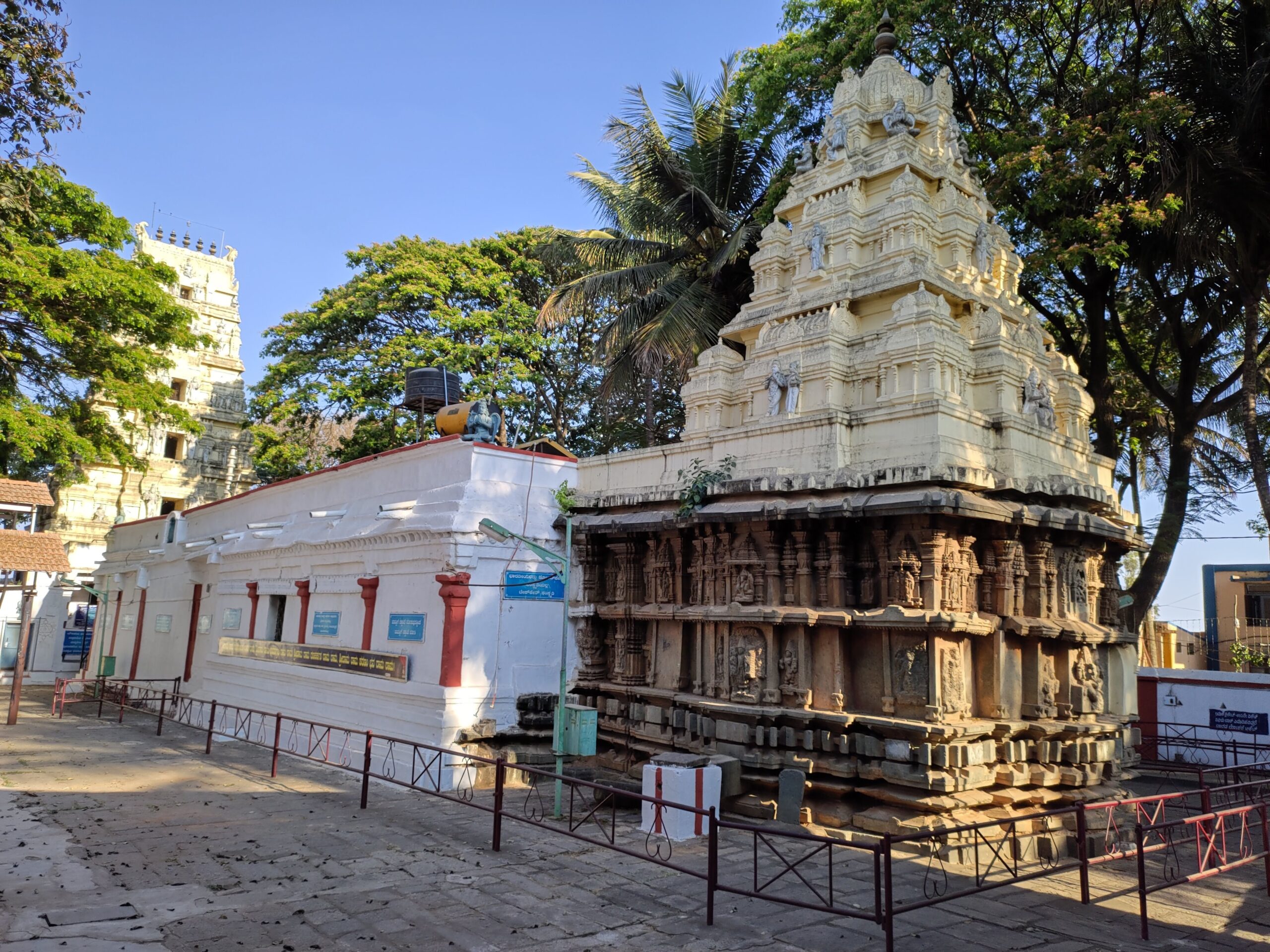
The Kodandarama Temple is renowned for its extraordinary Vijayanagara-style architecture, which reflects the artistic brilliance and engineering skills of medieval South Indian craftsmen. Constructed in the Sandhara architectural style, the temple complex is enclosed within massive rectangular walls that create a grand and imposing appearance.
Impressive Gopurams
The temple complex features three beautifully designed gopurams or gateway towers. The most striking among them is the eastern five-tiered rajagopuram, which serves as the main entrance. Decorated with detailed carvings and traditional motifs, the towering gateway immediately captures the attention of visitors entering the complex.
The Grand Mandapa
One of the architectural highlights of the temple is the magnificent open mandapa, popularly called the Madhyarangaradapam or Rangamantapam. Supported by 32 exquisitely carved stone pillars, this hall showcases stunning sculptures of apsaras, gods, celestial beings, yali figures, and scenes from Hindu mythology.
The intricate detailing on the pillars reflects the remarkable craftsmanship of Vijayanagara artisans. The beautifully carved brackets, decorative ceilings, and sculpted corbels further enhance the grandeur of the mandapa.
Sanctum Sanctorum
The sanctum sanctorum, or garbhagriha, is accessed through an elegantly carved antaralayam. Inside the sanctum is the temple’s most unique feature — a single monolithic stone sculpture of Lord Rama, Goddess Sita, and Lakshmana carved from one rock.
The idols radiate grace and serenity, and devotees consider them highly sacred. Interestingly, unlike most Rama temples, Lord Hanuman is not present beside the main trio within the sanctum. Instead, he has a separate shrine within the temple complex.
The temple also houses a rare and beautifully sculpted dancing Ganesha idol, which adds to its artistic and cultural significance.
Deities and Sculptural Excellence
The sculptures within the Kodandarama Temple are admired for their elegance, symbolism, and intricate detailing. Each deity is depicted with unique iconographic features that reflect traditional Hindu artistic conventions.
Lord Rama is portrayed in a graceful standing posture, holding a bow and arrow while adorned with sacred ornaments including kundalas, armlets, and the yagnopavita.
Lakshmana stands beside Rama in a tribhanga posture, carrying a bow and wearing an ornate crown and sacred thread.
The temple also features impressive sculptures of Lord Krishna lifting Govardhan Hill, depicted in the dvibhanga posture with cows surrounding him, symbolizing his role as the divine protector of nature and cattle.
These detailed carvings demonstrate the extraordinary skill of Vijayanagara sculptors and their deep devotion to epic traditions.
Religious Importance and Administration
The Kodandarama Temple occupies a highly important place in the spiritual life of Andhra Pradesh. In 2015, the administration of the temple was transferred from the Archaeological Survey of India to the Tirumala Tirupati Devasthanams (TTD) following a decision by the Andhra Pradesh government.
Since then, the temple has witnessed improved maintenance, better facilities for devotees, and increased religious activities. After the bifurcation of Andhra Pradesh and Telangana, the temple was officially declared the state-level venue for Sri Rama Navami celebrations in Andhra Pradesh, replacing the earlier association with Bhadrachalam Temple.
Festivals and Celebrations
The most important festival celebrated at the temple is the Sri Rama Navami Brahmotsavam, which is observed with immense grandeur and devotion. During this annual festival, the temple comes alive with colorful decorations, Vedic rituals, religious processions, devotional music, and cultural performances.
Thousands of devotees from different parts of Andhra Pradesh and neighboring states visit the temple to witness the celestial wedding ceremony of Lord Rama and Sita, known as Sita Rama Kalyanam. The atmosphere during the festival is deeply spiritual and vibrant.
Literary and Historical Connections
The temple also enjoys a special place in Telugu literary and devotional history. Several renowned poets and saints are believed to have been associated with this sacred site.
The famous Telugu poet Bammera Potana is believed to have lived in Vontimitta and dedicated his celebrated work, the Maha Bhagavatham, to Lord Rama here.
Another noted scholar, Vavilakolanu Subba Rao, translated Valmiki’s Ramayana into Telugu while worshipping at the temple.
The saint-poet Annamacharya, renowned for his devotional compositions dedicated to Lord Venkateswara, is also believed to have visited this temple.
Even foreign travelers admired the temple’s beauty. The French traveler Jean-Baptiste Tavernier visited the site in 1652 and praised its remarkable artistic splendor and architectural magnificence.
Best Time to Visit
The ideal time to visit the Kodandarama Temple is between October and March, when the weather remains pleasant and suitable for sightseeing. Visiting during Sri Rama Navami offers a unique opportunity to experience the temple’s vibrant spiritual celebrations and cultural traditions.
How to Reach
By Air
- Nearest airport: Kadapa Airport (about 25–30 km)
- Alternative: Tirupati Airport (about 110 km)
By Train
- Nearest station: Vontimitta Railway Station
- Major railhead: Kadapa Railway Station (about 25 km away)
By Road
- Located on the Kadapa–Tirupati route.
- Frequent APSRTC buses and taxis are available from Kadapa and Tirupati.
Nearby Attractions
1. Rama Theertham
A sacred pond within the temple complex associated with Lord Rama.
2. Lakshmana Theertham
Another holy water tank located inside the temple premises.
3. Chintakunta Caves
Natural caves and rock formations popular among history and nature enthusiasts.
4. Brahmam Sagar Reservoir
A scenic reservoir ideal for photography and peaceful outings.
5. Gandikota
Known as the “Grand Canyon of India,” featuring spectacular gorges carved by the Pennar River.
A must-visit destination about 75–80 km from Vontimitta.
Suggested Half-Day Trip
Vontimitta Kodandarama Temple → Rama Theertham → Lakshmana Theertham → Chintakunta Caves
Suggested Full-Day Trip
Vontimitta Kodandarama Temple → Gandikota → Brahmam Sagar Reservoir
Google Maps
FAQs
1. Where is Kodandarama Temple located?
Kodandarama Temple is located in Vontimitta town in Kadapa district of Andhra Pradesh.
2. Who built the Kodandarama Temple?
The temple was mainly constructed during the Vijayanagara period, though some traditions also associate it with the Chola rulers.
3. Why is the temple famous?
The temple is famous for its magnificent Vijayanagara architecture, monolithic idols of Rama, Sita, and Lakshmana, and its spiritual importance in Andhra Pradesh.
4. What is unique about the temple idols?
The idols of Rama, Sita, and Lakshmana are carved from a single stone, making them exceptionally unique.
5. Is Hanuman present in the main sanctum?
No, Hanuman is not present beside the main idols in the sanctum. He has a separate shrine within the temple complex.
6. Which festival is most important here?
Sri Rama Navami Brahmotsavam is the most significant festival celebrated at the temple.
7. Who manages the temple now?
The temple is currently administered by the Tirumala Tirupati Devasthanams (TTD).
8. What architectural style does the temple follow?
The temple is built in the Vijayanagara architectural style with impressive gopurams, carved pillars, and ornate mandapas.
9. Are there sacred water tanks in the temple?
Yes, the temple has two sacred tanks known as Rama Theertham and Lakshmana Theertham.
10. Which famous poets are associated with the temple?
Poets and saints such as Bammera Potana, Vavilakolanu Subba Rao, and Annamacharya are associated with the temple.