Image Source: IM3847
About Kolleru Lake
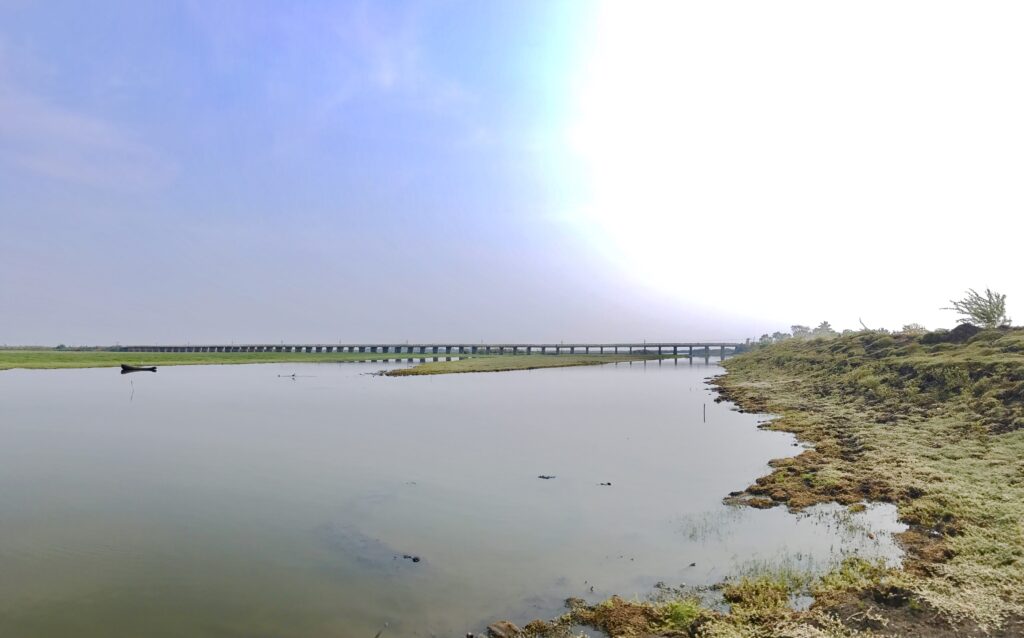
Kolleru Lake is one of India’s largest freshwater lakes—and notably the largest shallow freshwater lake in Asia. Tucked between the fertile deltas of the Krishna River and the Godavari River, it spreads across the regions of Eluru and Kaikaluru.
The lake lies roughly 15 km from Eluru and about 65 km from Rajamahendravaram (Rajahmundry). Covering nearly 245 sq. km, its protected wetland area extends even further under the Ramsar Convention, making it a globally recognized ecological hotspot. Despite its vast spread, the lake is surprisingly shallow, with an average depth of just about one meter. At its center sits Kolletikota Island, often referred to as the “heart” of the lake.
Hydrology & Geography
Kolleru Lake is fed by seasonal streams like the Budameru and Tammileru, along with a network of irrigation canals that connect it to both the Krishna and Godavari river systems. Altogether, nearly 67 canals contribute to maintaining its water levels.
The lake drains into the Upputeru, which eventually carries excess water into the Bay of Bengal. Interestingly, scientists believe the lake occupies a natural depression—possibly formed by ancient seismic activity—which gives it its unique shape and hydrological behavior.
Ecology & Biodiversity
Kolleru isn’t just a lake—it’s a thriving ecosystem. Declared a wildlife sanctuary in 1999 and later recognized as a Ramsar wetland in 2002, it plays a crucial role in supporting biodiversity.
Every winter, the lake transforms into a spectacular bird haven, hosting millions of resident and migratory birds. Species like grey pelicans, painted storks, Asian open-bills, glossy ibises, and white ibises are commonly seen here.
During migration season (October to March), birds arrive from as far as Northern Asia and Eastern Europe. Flamingos, northern pintails, shovelers, avocets, and black-winged stilts are among the many visitors. The lake is especially famous for its large colonies of spot-billed pelican, which nest here in impressive numbers.
Environmental Challenges & Conservation
Like many natural ecosystems, Kolleru has faced its share of challenges. Over the years, pollution, encroachment, and unregulated fish farming have significantly impacted the lake. Large areas were converted into aquaculture ponds, disrupting natural water flow and shrinking the lake’s size.
To address this, the Andhra Pradesh government launched Operation Kolleru in 2006 to remove illegal encroachments and restore the lake. More recently, renewed conservation drives have aimed to continue this effort and improve the lake’s ecological balance.
While challenges remain, ongoing conservation work is helping protect this vital wetland for future generations.
Historical Significance
Beyond its natural beauty, Kolleru Lake has a fascinating past. Historical records, including copper plates, trace its importance back to the rule of Kapilendra Deva in the 15th century, when the region formed part of the Kalinga Empire.
Local legends also add a sense of mystery, suggesting that ancient settlements once existed here and were later submerged due to floods or geological changes.
Tourism & Attractions
Kolleru Lake is a dream destination for birdwatchers and nature lovers.
- Atapaka Bird Sanctuary
The most popular spot around the lake, especially during winter when thousands of pelicans and storks gather here. - Murthyraju Tanks & Gudivakalanka
Great for spotting a variety of migratory birds in quieter surroundings. - Kolletikota & Kovvada Lanka
Scenic lake islands offering peaceful views and birdwatching opportunities. - Bhujabalapatnam & Pallevada
Lesser-known yet rewarding locations for nature enthusiasts. - East Chodavaram
Particularly famous for large nesting colonies of openbill storks between July and December.
Observation towers at key locations like Atapaka make birdwatching even more enjoyable.
How to Reach Kolleru Lake
- By Road:
Well-connected via Eluru–Kaikaluru roads. You can easily reach the lake from Eluru, Kaikaluru, Vijayawada, Bhimavaram, and Machilipatnam by bus or taxi. - By Rail:
The nearest railway stations are Kaikaluru and Eluru, both located on the busy Vijayawada–Visakhapatnam rail route. - By Air:
The closest airport is Vijayawada International Airport (Gannavaram), about 65 km away.
Google Maps
FAQs
1. Why is Kolleru Lake important?
Kolleru Lake is one of India’s largest freshwater lakes and a vital wetland that supports millions of birds and a rich ecosystem.
2. What is the best time to visit Kolleru Lake?
The best time is between October and March, when migratory birds arrive in large numbers.
3. Is Kolleru Lake a Ramsar site?
Yes, it was designated as a Ramsar wetland of international importance in 2002.
4. Which birds can be seen at Kolleru Lake?
You can spot pelicans, flamingos, painted storks, ibises, avocets, and many migratory species from Europe and Asia.
5. Are there boating or tourism activities available?
While large-scale boating is limited to protect the ecosystem, birdwatching and nature photography are the main attractions.
6. How far is Kolleru Lake from Vijayawada?
It is approximately 65 km from Vijayawada and can be reached easily by road.