Beijing is not simply China’s capital—it is one of the world’s great historic cities. For more than 800 years, Beijing served as the political center of imperial China, leaving behind an extraordinary concentration of palaces, temples, gates, hutongs, gardens, city walls and monumental public spaces .
At the same time, modern Beijing is a huge contemporary metropolis of museums, technology, universities, business districts and modern architecture.
Quick Facts
| Feature | Details |
| —————- | ——————————————– |
| Chinese Name | 北京 |
| Pinyin | Běijīng |
| Meaning | “Northern Capital” |
| Country | China |
| Role | National capital |
| Famous For | Imperial history, Forbidden City, Great Wall |
| Major River | Yongding River system |
| Historic Core | Beijing Old City |
| Best For | History, architecture, culture, museums |
| Recommended Stay | 4–6 days |
| Ideal Extension | Great Wall + Ming Tombs |
—
Why Visit Beijing?
Beijing offers something unusual: China’s imperial history can be understood spatially by walking through the city .
You can follow a historical sequence:
Temple of Heaven
↓
Qianmen
↓
Tiananmen Square
↓
Forbidden City
↓
Jingshan
↓
Drum Tower & Bell Tower
↓
Hutongs
This creates a much stronger travel experience than simply visiting isolated attractions.
—
Beijing’s Geography
Beijing lies in northern China, on the northern edge of the North China Plain .
Its geography is divided roughly into:
Western & northern mountains
↓
Beijing basin
↓
North China Plain
The mountains north and west of the city were historically important for defense.
This geography helps explain why the Great Wall developed so extensively around northern Beijing.
—
Beijing and the Great Wall
The mountains north of Beijing contain some of China’s most famous sections of the Great Wall .
Important sections include:
* Badaling.
* Mutianyu.
* Jinshanling.
* Simatai.
* Jiankou.
These should not be treated as one attraction.
Each section has a different character.
Badaling
Best for:
* First-time visitors.
* Accessibility.
* Infrastructure.
* Classic Great Wall experience.
Mutianyu
Best for:
* Scenery.
* Mountain landscapes.
* Families.
* A more relaxed experience.
Jinshanling
Best for:
* Hiking.
* Photography.
* Less urbanized surroundings.
Simatai
Best for:
* Dramatic mountain scenery.
* More adventurous experiences.
For your website, I would create separate travel guides for each major Great Wall section rather than putting everything under one page.
—
Forbidden City
Forbidden City is Beijing’s most important historical attraction.
It served as the imperial palace of the Ming and Qing dynasties .
The complex contains thousands of historic buildings and forms the architectural heart of imperial Beijing.
Its importance isn’t simply its size.
The Forbidden City was designed according to a highly structured hierarchy:
Outer Court
→ imperial ceremonies and government
Inner Court
→ emperor’s family and private life
This organization reflects traditional Chinese ideas about:
* Hierarchy.
* Cosmology.
* Power.
* Symmetry.
* Imperial authority.
—
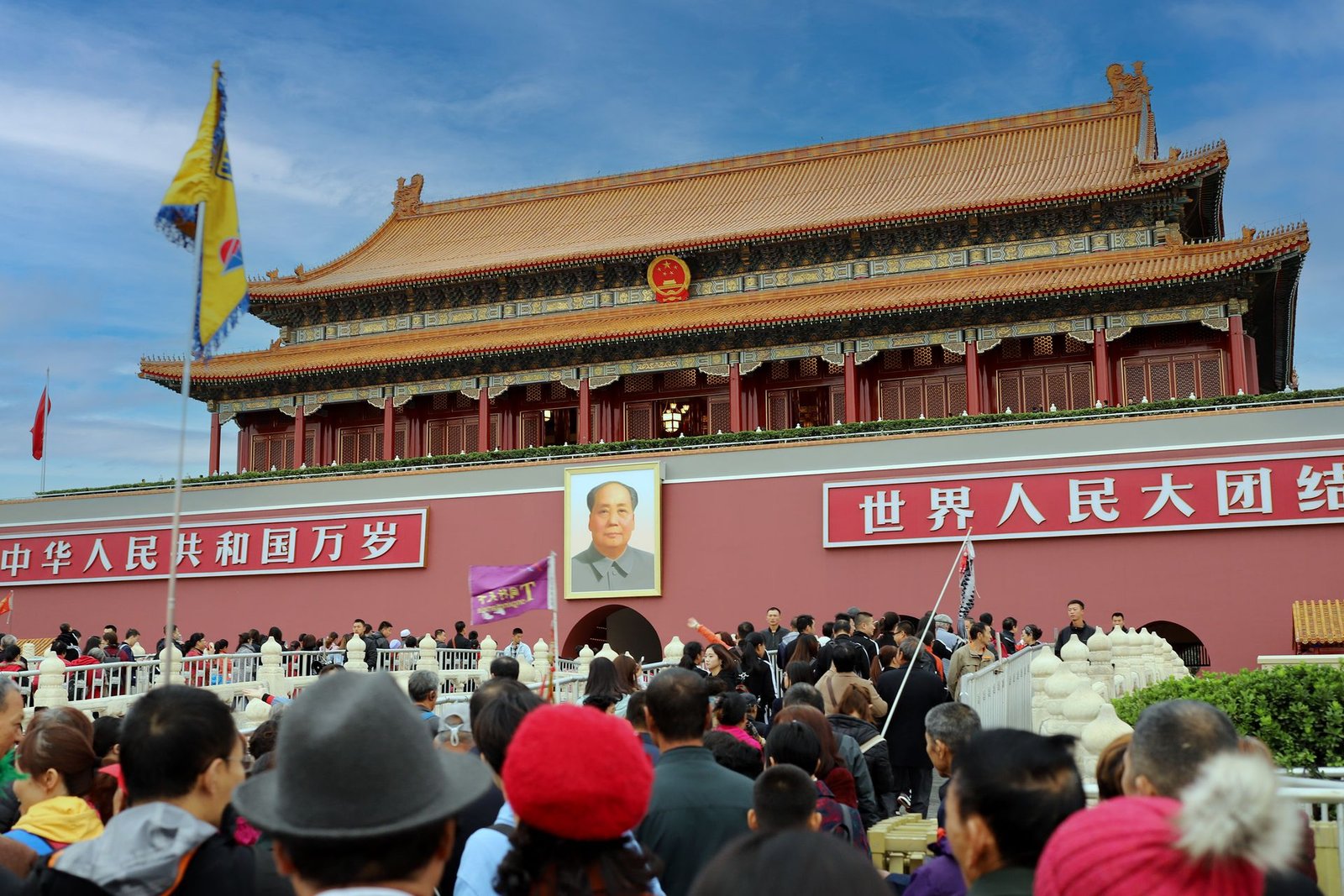
Tiananmen Square
Tiananmen Square lies directly south of the Forbidden City.
It is one of the world’s largest public squares and has enormous political and historical significance.
The surrounding area contains major national institutions and monuments.
A useful historical sequence for your website is:
Imperial Beijing
→ Republican period .
→ People’s Republic .
→ Modern Beijing .
Tiananmen Square represents an important transition between the imperial and modern city.
—
Jingshan Park
Jingshan Park sits immediately north of the Forbidden City.
Its hill provides one of the classic elevated views over the imperial palace.
This is particularly useful for understanding the urban planning of old Beijing .
From above, the Forbidden City reveals its remarkable symmetry.
—
Temple of Heaven
Temple of Heaven is one of Beijing’s greatest architectural landmarks.
Unlike the Forbidden City, it was primarily associated with religious and ceremonial functions .
Imperial rulers came here to perform ceremonies connected with Heaven and agricultural prosperity.
The architecture is particularly interesting because of its symbolism.
The complex uses:
* Circular forms.
* Square forms.
* Axial planning.
* Symbolic colors.
* Numerological patterns.
Traditional Chinese cosmology strongly influenced the design.
—
Summer Palace
Summer Palace lies northwest of central Beijing.
It was an imperial retreat centered around:
* Kunming Lake.
* Longevity Hill.
* Pavilions.
* Gardens.
* Palaces.
* Covered walkways.
The Summer Palace demonstrates a very different aspect of imperial architecture.
Instead of monumental political power, the emphasis is on:
Landscape + architecture + water + gardens
This makes it an essential contrast with the Forbidden City.
—
Beijing Hutongs
The hutongs are among the most atmospheric parts of old Beijing.
They are narrow lanes traditionally lined with siheyuan , or courtyard residences.
Important hutong areas include those around:
* Shichahai.
* Nanluoguxiang.
* Drum Tower.
* Qianmen.
The hutongs are important because they reveal how ordinary urban life functioned alongside the enormous imperial complex.
—
Siheyuan Architecture
A siheyuan is a traditional courtyard house organized around an enclosed central courtyard.
A simplified arrangement is:
Building
↓
Courtyard
↓
Building
with additional structures around the sides.
The courtyard creates:
* Privacy.
* Family hierarchy.
* Light.
* Ventilation.
* Social space.
Beijing’s traditional neighborhood structure can therefore be understood as:
Siheyuan
↓
Hutong
↓
Neighborhood
↓
Imperial city
This is an excellent architectural story for your website.
—
Shichahai
Shichahai is a historic lake district surrounded by hutongs, traditional buildings, restaurants and cafés.
The area is particularly pleasant for an evening walk.
It combines:
* Water.
* Traditional neighborhoods.
* Historic residences.
* Restaurants.
* Nightlife.
—
Drum Tower and Bell Tower
Drum Tower and Bell Tower stand near the northern end of the historic central axis.
These towers were once important components of Beijing’s traditional timekeeping system.
Their location also helps explain the structure of the old city.
—
Qianmen
Qianmen lies south of Tiananmen Square.
The area has been associated with commerce and transportation for centuries.
Today it combines:
* Historic architecture.
* Shopping.
* Restaurants.
* Traditional businesses.
* Tourist streets.
It is useful for understanding the commercial side of historic Beijing.
—
Beijing’s Central Axis
One of the most important concepts to explain in a Beijing travel guide is the Beijing Central Axis .
The historic city was organized around a powerful north–south axis.
A simplified sequence is:
Bell Tower
↓
Drum Tower
↓
Jingshan
↓
Forbidden City
↓
Tiananmen
↓
Qianmen
↓
Temple of Heaven
The axis reflects traditional ideas of:
* Political hierarchy.
* Symmetry.
* Order.
* Cosmology.
This is one of the best ways to explain why Beijing’s historic center feels unusually formal and geometrically organized .
—
Ming Tombs
Ming Tombs lie north of Beijing in a mountain valley.
The complex contains tombs associated with several Ming emperors.
The landscape is important because the tombs were deliberately positioned according to principles of feng shui and geomancy .
Mountains surround the site, creating a protected valley landscape.
—
Lama Temple
Lama Temple is one of Beijing’s most important Tibetan Buddhist temples.
It provides a contrast with the imperial Confucian and state traditions found elsewhere in the city.
The temple is particularly notable for its:
* Buddhist halls.
* Statues.
* Incense
* Decorative architecture.
* Religious atmosphere
—
Beihai Park
Beihai Park is one of China’s oldest imperial garden complexes.
Its central lake and White Dagoba create one of the most recognizable landscapes in historic Beijing.
It can be combined with:
Forbidden City → Jingshan → Beihai.
for an excellent walking route through the historic core.
—
Beijing’s Museums
Beijing has an enormous concentration of museums.
Important examples include:
* National Museum of China.
* Palace Museum.
* National Art Museum of China.
* Beijing Capital Museum.
* Beijing Ancient Architecture Museum.
* China Science and Technology Museum.
For a first visit, the National Museum of China is particularly useful for understanding the broader history of China.
—
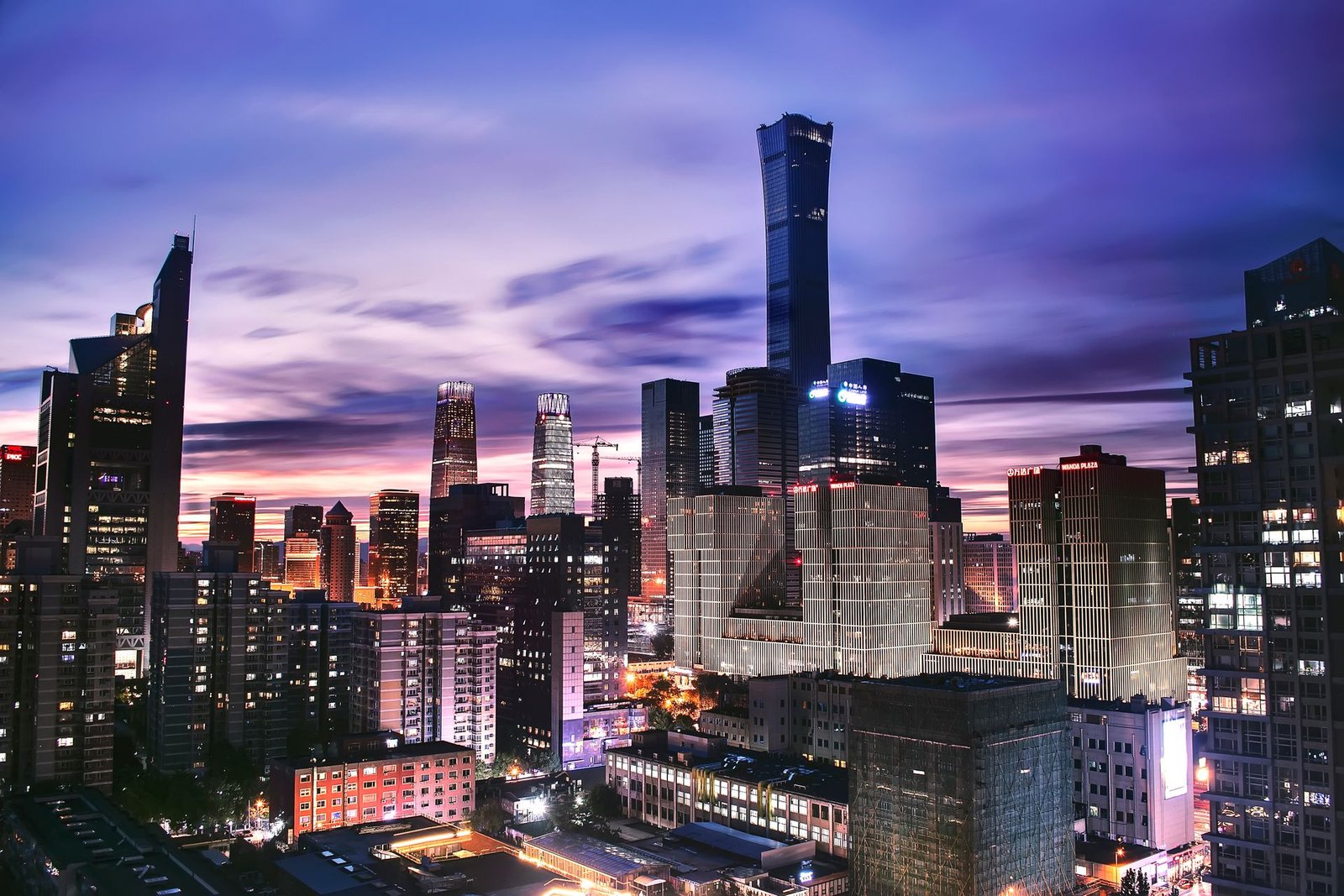
Beijing’s Modern Architecture
Beijing is not only an imperial city.
The modern skyline includes highly distinctive structures such as:
* CCTV Headquarters.
* National Stadium (“Bird’s Nest”).
* National Aquatics Center (“Water Cube”).
* China World Trade Center.
* National Centre for the Performing Arts.
This gives your Beijing content another strong contrast:
Imperial architecture
vs.
21st-century architecture
—
Olympic Park
Beijing Olympic Park contains some of the city’s most recognizable modern architecture.
The Bird’s Nest and Water Cube were built for the 2008 Summer Olympics.
Beijing later became the first city to host both:
Summer Olympics — 2008
and
Winter Olympics — 2022
This gives the city a unique position in Olympic history.
—
Beijing Food
Beijing’s food culture is another major attraction.
Peking Duck
Quanjude is historically associated with Peking duck, although visitors should explore a range of restaurants rather than treating one establishment as representative of the whole city.
The traditional presentation emphasizes:
* Crispy skin.
* Thin pancakes.
* Sweet bean sauce.
* Cucumber.
* Scallions.
—
Zhajiangmian
Beijing-style noodles with soybean paste are another classic local dish.
It is a much more everyday food than the elaborate Peking duck experience.
—
Jiaozi
Dumplings are common throughout northern China and are particularly associated with winter and family meals.
—
Beijing Hotpot
Northern-style hotpot traditionally emphasizes a relatively simple broth and quality ingredients.
Lamb is particularly important.
—
Best Time to Visit Beijing
| Season | Experience |
| —— | —————————————- |
| Spring | Pleasant weather, flowers |
| Summer | Hot, humid, occasional rain |
| Autumn | Clear skies and comfortable temperatures |
| Winter | Cold, dry, occasional snow |
Best Overall
April–May and September–October
Best for Autumn
Late September–October
Best for Great Wall Hiking
April–May and September–October
Autumn is particularly attractive because northern China’s skies can be clearer and the surrounding mountains become colorful.
—
How Many Days Do You Need?
2 Days
A very rushed introduction:
* Forbidden City.
* Tiananmen.
* Temple of Heaven.
* Hutongs.
3 Days
Good introduction to central Beijing.
4 Days
Ideal for most first-time visitors.
5 Days
Add:
* Summer Palace
* Great Wall.
6–7 Days
Best if you want:
* Multiple Great Wall sections.
* Ming Tombs.
* Museums.
* Hutongs.
* Imperial gardens.
* Modern Beijing.
For your website, I’d recommend presenting 5 days as the ideal first-time Beijing itinerary .
—
Suggested 5-Day Beijing Itinerary
Day 1 — Imperial Beijing
Tiananmen Square
↓
Forbidden City
↓
Jingshan Park
↓
Wangfujing / evening
—
Day 2 — Temples & Historic Neighborhoods
Temple of Heaven
↓
Qianmen
↓
Hutongs
↓
Shichahai
—
Day 3 — Summer Palace
Summer Palace
↓
Old Summer Palace
↓
University district / evening
—
Day 4 — Great Wall
Choose:
Mutianyu
or
Badaling
Spend most of the day on the Great Wall.
—
Day 5 — Modern Beijing
Olympic Park
↓
National Stadium
↓
Modern CBD
↓
Evening city exploration
—
Beijing Transportation
Beijing has an extensive subway system , making public transportation particularly useful for tourists.
The city also has:
* Buses.
* Taxis.
* Ride-hailing.
* High-speed rail.
* Domestic flights.
* Bicycle-sharing systems.
For sightseeing, the subway is often the most predictable way to move around the enormous metropolitan area.
—
Beijing Capital Airport
Beijing Capital International Airport is northeast of the central city.
It remains one of the country’s major international aviation hubs.
—
Beijing Daxing International Airport
Beijing Daxing International Airport lies south of the city and is one of the world’s most distinctive large airport projects.
Its enormous terminal was designed around a central hub, allowing relatively short walking distances between major areas.
For your architecture content, Daxing deserves its own article .
—
Beijing’s Climate
Beijing has a monsoon-influenced continental climate .
The four seasons are relatively distinct.
Winter
Cold and dry.
Spring
Mild but can be windy and dusty.
Summer
Hot and humid, with most rainfall.
Autumn
Cooler and generally pleasant.
Autumn is often the most comfortable season for sightseeing.
—
Beijing Travel Tips
* Beijing is enormous; don’t underestimate travel time between attractions.
* Group attractions geographically rather than crossing the entire city repeatedly.
* Reserve major attractions in advance where required.
* Start the Forbidden City early.
* Wear comfortable shoes—the historic sites involve substantial walking.
* Great Wall sections vary dramatically in difficulty.
* Carry identification when traveling.
* Summer can be hot, while winter can be extremely cold.
* Allow additional time for security checks at major public attractions.
* Check current attraction reservation and opening rules before visiting.
—
Frequently Asked Questions
How many days are enough for Beijing?
4–5 days is a good starting point. Add additional days if you want several Great Wall sections and museums.
What is Beijing most famous for?
Beijing is famous for the Forbidden City, Great Wall, Temple of Heaven, imperial history, hutongs and its role as China’s capital .
Is Beijing worth visiting?
Absolutely. It is one of the best places to understand the historical development of China through architecture, urban planning, imperial institutions and modern development.
What is the best month to visit Beijing?
April, May, September and October generally offer some of the most comfortable sightseeing conditions.
Which Great Wall section is best?
For most first-time visitors, Mutianyu is an excellent balance of scenery, accessibility and relatively less urbanized surroundings. Badaling is more heavily developed and convenient.
Is the Forbidden City the same as the Imperial Palace?
Yes. The Forbidden City was the imperial palace complex of the Ming and Qing dynasties and is now commonly known as the Palace Museum .
Can Beijing be combined with the Great Wall?
Yes. The Great Wall should almost always be included in a first Beijing itinerary because several major sections are within reach of the city.
—
Unknown Facts About Beijing
* The name Beijing literally means “Northern Capital” , reflecting China’s historical tradition of naming capitals according to their geographical position.
* Beijing’s historic center was deliberately organized around a powerful north–south central axis , rather than developing purely organically.
* The city provides an extraordinary architectural progression from imperial palaces and temples to socialist monumental architecture and contemporary skyscrapers .
* The Great Wall around Beijing is not a single continuous tourist attraction. Different sections were built, rebuilt and modified during different periods.
* Beijing’s traditional hutong neighborhoods were closely connected to the courtyard-house system known as the *siheyuan*.
* The city’s imperial gardens demonstrate a different philosophy from the formal palace architecture: they deliberately manipulate mountains, water, rocks, vegetation and buildings to create miniature landscapes.
* Beijing’s geographical position between the North China Plain and northern mountains helped make it strategically important for controlling routes between the Chinese heartland and the northern frontier.
* Beijing has hosted both the 2008 Summer Olympics and 2022 Winter Olympics , making it the first city to host both versions of the Games.
* The city has two major international airports, Capital and Daxing , reflecting the enormous scale of modern Beijing.
* Beijing’s historical importance is not confined to the city center. The Great Wall, Ming Tombs, imperial gardens and mountain passes form a larger cultural landscape around the capital.
—
Nearby Destinations
Within Beijing
* Forbidden City
* Tiananmen Square
* Temple of Heaven
* Summer Palace
* Jingshan Park
* Beihai Park
* Shichahai
* Hutongs
* Lama Temple
* Olympic Park
Great Wall Region
* Mutianyu
* Badaling
* Jinshanling
* Simatai
* Jiankou
Historical Sites Outside Central Beijing
* Ming Tombs
* Great Wall mountain passes
* Fragrant Hills
* Tanzhe Temple