Image Source: Ashish Dhavale/ Google Maps
Introduction
The Sandhya Gayatri Temple is a historically significant shrine located in the traditional Himalayan village of Jagatsukh, approximately 6–12 km from Manali, depending on the starting point and route. Set in the scenic Kullu Valley of Himachal Pradesh, this temple is less visited than some of Manali’s better known religious landmarks, yet it offers a fascinating glimpse into the region’s ancient temple architecture, religious traditions and royal history.
Jagatsukh is not simply another village on the road between Manali and Naggar. It was once an important political centre of the Kullu kingdom, and its surviving temples reflect the period when religious institutions, local rulers and village life were closely connected. The Sandhya Gayatri Temple is particularly interesting because architectural and historical studies suggest that its present appearance incorporates elements from different periods.
For travellers interested in heritage, architecture and local culture, the temple offers a quieter alternative to the more heavily visited attractions around Manali.
Historical Background
Jagatsukh was once an important administrative centre of the Kullu kingdom. Historically known as Nast, it served as an early capital before the political centre shifted to Naggar and, later, to Sultanpur in present day Kullu. The village’s former importance is reflected in its cluster of old temples, including the nearby Gaurishankar Temple, dedicated to Lord Shiva and Goddess Parvati.
The history of the Sandhya Gayatri Temple is particularly interesting because its age and architectural development are more complicated than a single construction date suggests. Art historical studies have associated parts of the temple with architectural traditions dating to approximately the 7th or 8th century CE. The structure has undergone rebuilding and alteration, and older sculptural and architectural fragments have been incorporated into later construction.
A historical inscription associated with the temple complex records the name of Raja Udhran Pal and a date corresponding to 1428 CE. This provides an important historical reference for the shrine’s later phase, although it does not mean that every part of the existing structure was built in that year. The temple’s development appears to span multiple periods.
The temple’s long history is therefore best understood through its architectural remains, inscriptions and subsequent rebuilding, rather than through popular claims that it has survived unchanged since a remote mythological age.
The connection with the ancient Kullu kingdom
The temple also helps explain why Jagatsukh remains important to the history of the Kullu Valley. When a settlement serves as a political centre, its religious buildings often become expressions of royal patronage, local identity and artistic traditions. The surviving temples of Jagatsukh provide evidence of the region’s historical connections with broader North Indian temple architecture.
For a visitor, this historical background makes the temple more than a place for prayer. It becomes part of a wider heritage landscape that includes the neighbouring Gaurishankar Temple and other older shrines in the village.
Religious Significance
The temple is associated with Sandhya Gayatri, connecting it with the wider Hindu tradition of Gayatri and the sacred prayers performed at particular times of day.
Gayatri is closely associated with wisdom, spiritual understanding and the illumination of the intellect. The Gayatri Mantra, found in the Vedic tradition, is among the best known Hindu prayers and is traditionally recited during sandhya, the daily periods of prayer and reflection.
The word sandhya refers to a junction or transition. In common Hindu practice, the principal sandhya periods are associated with dawn, midday and dusk, although specific customs differ between traditions. These moments are understood as appropriate times for prayer, meditation and spiritual discipline.
Devotees may visit the temple to seek blessings for:
- spiritual knowledge and wisdom.
- peace of mind and personal well being.
- success in education and learning.
- devotion and a deeper connection with Hindu traditions.
The temple’s religious importance is also connected with the wider sacred landscape of Jagatsukh, where several shrines stand within a relatively small area. Visiting them together helps travellers understand how religious practice has remained woven into village life.
A point worth knowing: The ancient Sandhya Gayatri shrine and the newer Gayatri temple described in some travel accounts are sometimes confused. Historical and architectural sources discuss the old temple complex, while some modern accounts describe a separate shrine built in 1962. When visiting, it is useful to ask locally which structure is being referred to rather than assuming that all references to the Gayatri Temple describe exactly the same building.
Architectural Style
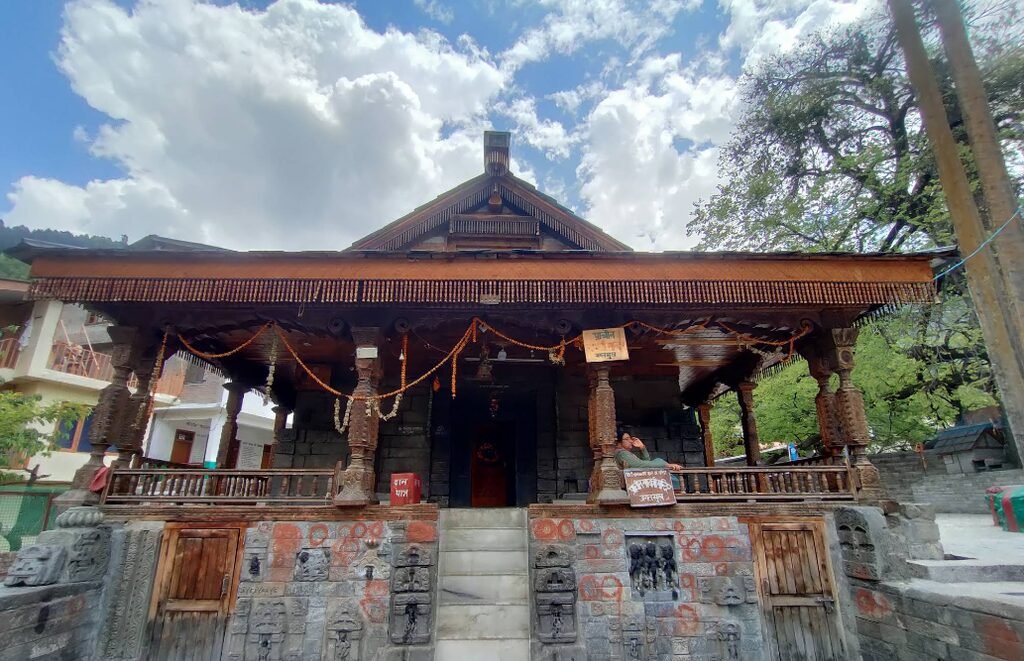
The architecture of the Sandhya Gayatri Temple reflects the layered development of traditional Himalayan religious buildings. Its present form combines stone and wood, while older architectural elements and carved fragments provide clues to earlier phases of construction.
Notable features
- Stone construction combined with wood elements: The use of both materials reflects the architectural traditions found in older temples across the Kullu region.
- Carved architectural details: Stone sculptures and carved elements are important clues to the artistic traditions associated with the temple complex.
- A composite structure: The building has undergone changes over time, and parts of its present appearance belong to later rebuilding rather than a single original construction phase.
- A historic village setting: Its proximity to other old shrines makes it part of a wider architectural and religious landscape.
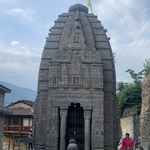
The nearby Gaurishankar Temple is especially important for understanding Jagatsukh’s architectural heritage. It is a smaller stone temple in the shikhara style, characterised by a rising tower above the sanctum. The temple’s sculptural decoration and form connect it with early North Indian temple architecture.
For visitors, the most rewarding approach is to look carefully at the different materials, carvings and structural forms rather than judging the temple only by its overall size. Older temples sometimes preserve important historical evidence in reused stonework and fragments that might otherwise be overlooked.
Cultural Importance
For the people of Jagatsukh, the temple is part of a wider religious and cultural environment in which village shrines, local traditions and community identity remain closely connected.
The Kullu Valley is well known for its devta tradition, in which village deities play important roles in local religious life and community festivals. This tradition is particularly visible during religious gatherings and the region’s famous Kullu Dussehra celebrations. However, the specific rituals and festivals associated with an individual temple should be confirmed locally rather than assumed from the wider customs of the valley.
Jagatsukh’s temples also reveal how religious architecture developed alongside political history. The village’s former status as a capital helps explain why several historically significant shrines are found in the same settlement.
For travellers, this offers an opportunity to experience a side of Himachal Pradesh beyond its mountain scenery. A short walk around the village can reveal traditional houses, local paths, everyday community activity and religious buildings that continue to form part of the settlement’s identity.
When visiting, dress respectfully, follow any instructions given by temple caretakers and ask permission before photographing worshippers or ceremonies.
The Setting of Jagatsukh
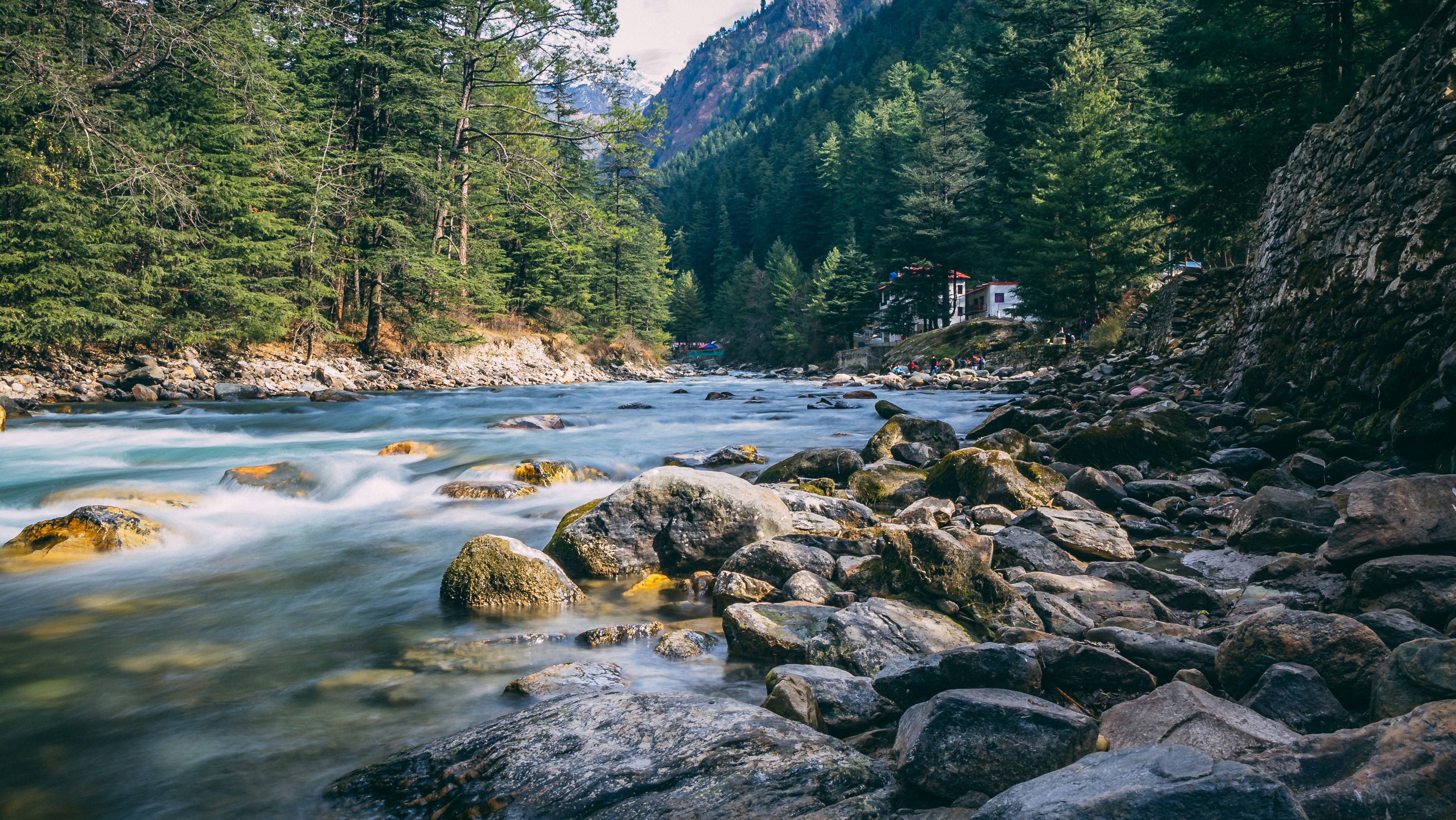
The temple stands within the historic village of Jagatsukh, on the road linking Manali with the wider Kullu Valley. The surrounding landscape combines settled village areas, cultivated land, orchards and views towards the mountains.
The setting offers a different atmosphere from the commercial centre of Manali. Rather than the busy streets and shops around Mall Road, Jagatsukh provides a glimpse of a traditional Himalayan settlement where historic shrines sit alongside the everyday life of the village.
Visitors may encounter:
- Traditional village houses: Buildings and lanes that reflect the settlement’s long history.
- Apple orchards and cultivated fields: Agriculture remains an important part of the wider landscape around Manali.
- Views towards the Himalayan mountains: Visibility depends on weather, season and the precise location within the village.
- Nearby historic temples: The Gaurishankar Temple is an important companion visit for anyone interested in the area’s architectural heritage.
The surrounding landscape changes with the seasons. Spring can bring blossom to orchards, summer offers greener scenery, and autumn may provide clearer mountain views. Winter can bring cold weather and occasional snowfall, although snow is not guaranteed in the village itself.
How to reach Sandhya Gayatri Temple
Jagatsukh is reached by road from Manali along the route towards Naggar. The journey is relatively short compared with excursions to high mountain destinations, making it suitable for a half day of cultural sightseeing.
The reported distance varies between sources, so use the exact temple location on a current map when planning the journey. You can travel by taxi or local transport where available, or combine the visit with other nearby heritage sites. If you are driving, allow time to find a suitable parking place and walk through the village to the shrine.
The temple can be combined with the nearby Gaurishankar Temple and other local attractions. This is more practical than visiting Jagatsukh as a separate long excursion from Manali.
Interesting fact:
Jagatsukh’s historic temples preserve evidence of several architectural periods. Studies of the Sandhya Gayatri Temple have discussed sculptural and structural elements associated with early medieval architecture, while a later inscription refers to Raja Udhran Pal and a date corresponding to 1428 CE. The temple’s present form therefore tells a story of continuity, rebuilding and changing religious patronage across centuries.
The village’s history as an early capital of the Kullu kingdom adds another layer of significance. Together, these features make Jagatsukh an important stop for travellers who want to understand the historical and cultural foundations of the Manali region, rather than seeing it only as a gateway to the mountains.