Image Source:Jacob Antony
Overview
Nestled amidst the serene landscapes of Amarkantak in Madhya Pradesh, Shri Yantra Mandir is one of the region’s most fascinating spiritual and architectural landmarks. Located about 3 km from the Amarkantak Bus Stand, this unique temple attracts devotees, architecture enthusiasts, and curious travelers alike.
Dedicated to Goddess Tripura Sundari, the temple is a physical representation of the sacred Shri Yantra (Sri Chakra), one of the most revered symbols in the Sri Vidya tradition of Hinduism. Unlike conventional temples, Shri Yantra Mandir stands out for its extraordinary geometric design, which blends spirituality, mathematics, and ancient architectural principles into a single breathtaking structure.
The peaceful surroundings and distinctive architecture make it a must-visit destination for anyone exploring Amarkantak, a town renowned as the origin of the sacred Narmada River.
History and Architecture
The construction of Shri Yantra Mandir began in 1991 on the auspicious occasion of Guru Pushya Nakshatra, a highly favorable time according to Hindu astrology. The project was undertaken under the guidance of Mahamandleshwar Atal Peethadheeshwar Swami Sukhdevanand and inspired by the teachings of the revered Sage Agastya. Although the temple was initially expected to be completed within seven to eight years, the scale and complexity of its design made it a much longer undertaking.
What makes the temple truly remarkable is its three-dimensional representation of the Shri Yantra, the sacred geometric diagram central to Sri Vidya worship. Spread across nearly 90,000 square feet, the temple stands on an elevated square platform. The structure is meticulously designed with equal dimensions of length, width, and height, each measuring approximately 52 feet, reflecting the perfect symmetry associated with the Shri Yantra.
The temple’s design is the result of intricate mathematical calculations, precise measurements, and exceptional craftsmanship. It is often regarded as one of the finest examples of sacred geometry in modern Indian temple architecture.
At the heart of the temple stands a beautiful 62-inch idol of Goddess Tripura Sundari, crafted from Ashtadhatu, a traditional alloy of eight metals considered sacred in Hindu traditions. The sanctum radiates a sense of peace and devotion, drawing worshippers seeking spiritual blessings.
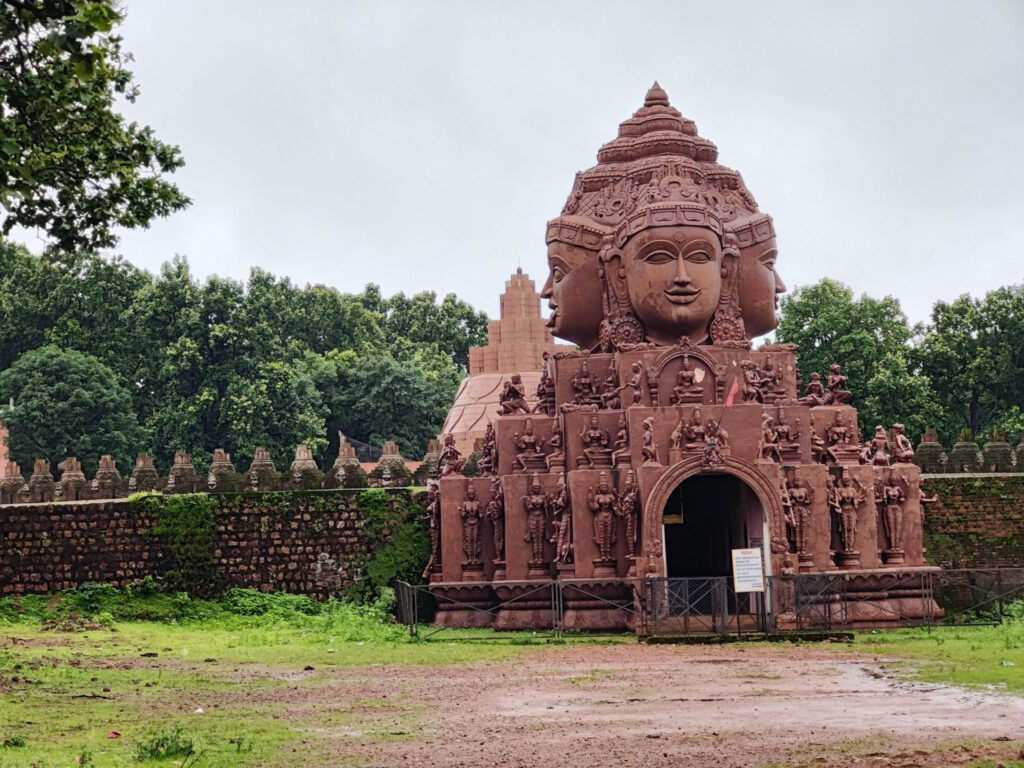
One of the temple’s most striking features is the grand entrance adorned with a massive sculpture depicting the faces of Goddess Lakshmi, Goddess Saraswati, Goddess Kali, and Goddess Bhuvaneshwari. Below these divine forms are beautifully sculpted figures of the 64 Yoginis, accompanied by Lord Ganesha and Lord Kartikeya, creating a visually stunning introduction to the temple complex.
Today, Shri Yantra Mandir serves as both a place of worship and an architectural wonder, showcasing India’s rich spiritual heritage and profound understanding of geometry, symbolism, and sacred design.
How to Reach Shri Yantra Mandir
By Air
The nearest airport is Dr. Babasaheb Ambedkar Airport in Jabalpur, located approximately 230 km away. Taxis and buses are available from Jabalpur to Amarkantak.
By Train
The closest railway stations are Pendra Road Railway Station (around 40 km) and Anuppur Junction (around 70 km). From either station, visitors can hire taxis or use local transport to reach Amarkantak.
By Road
Amarkantak is well connected by road to major cities such as Jabalpur, Bilaspur, Shahdol, Rewa, and Anuppur. Regular buses and private taxis operate to the town. Shri Yantra Mandir is located about 3 km from the main bus stand and can be easily reached by auto-rickshaw or private vehicle.
Nearby Attractions
Narmada Udgam Temple
The sacred source of the Narmada River and one of the most important pilgrimage sites in India.
Kapil Dhara Waterfall
A spectacular waterfall where the Narmada River plunges into a rocky gorge amidst lush greenery.
Doodh Dhara Waterfall
Known for its milky-white cascading waters, this scenic waterfall offers a tranquil escape into nature.
Maa Ki Bagiya
A sacred garden associated with Goddess Narmada, featuring rare plants, peaceful pathways, and religious significance.
Shri Amareshwar Temple
Famous for its massive Shiva Lingam and replicas of all twelve Jyotirlingas, this temple is a popular spiritual destination near Amarkantak.
Jwaleshwar Temple
An ancient Shiva temple surrounded by forests, known for its peaceful atmosphere and religious importance.
Sonmuda View Point
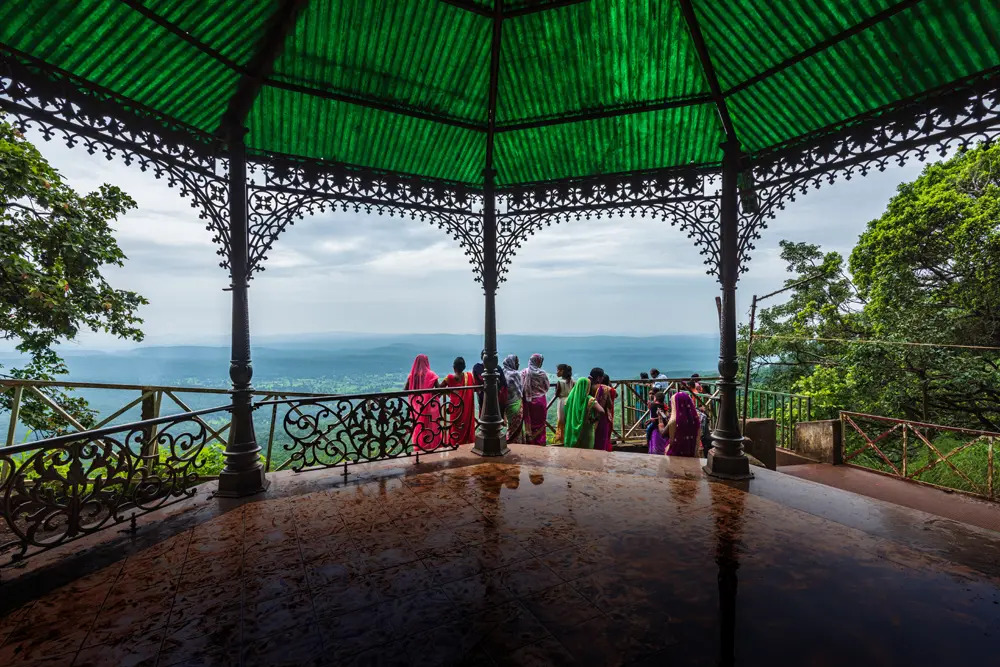
The origin point of the Son River, offering breathtaking views of valleys, forests, and sunrise vistas.
Maps
FAQs
What is Shri Yantra Mandir famous for?
The temple is famous for its massive three-dimensional representation of the Shri Yantra, a sacred symbol in Sri Vidya worship, and its unique geometric architecture.
Who is the presiding deity of the temple?
The temple is dedicated to Goddess Tripura Sundari, one of the principal forms of the Divine Mother in Hinduism.
Where is Shri Yantra Mandir located?
It is situated in Amarkantak, Madhya Pradesh, approximately 3 km from the Amarkantak Bus Stand.
Is there an entry fee to visit the temple?
No, visitors can enter the temple complex free of charge.
What is the best time to visit Shri Yantra Mandir?
The months from October to March offer pleasant weather and are considered the best time to explore Amarkantak and its attractions.
How much time should I plan for a visit?
Most visitors spend 30 minutes to 1 hour exploring the temple and admiring its architecture and spiritual ambiance.
Is photography allowed inside the temple?
Photography policies may vary depending on temple regulations. Visitors should check with the temple authorities before taking photographs.
Can Shri Yantra Mandir be combined with other attractions in Amarkantak?
Yes. It can easily be visited along with Narmada Udgam Temple, Kapil Dhara, Doodh Dhara, Maa Ki Bagiya, Shri Amareshwar Temple, and Sonmuda View Point during a day trip around Amarkantak.