Image Source: Shiva Iyer
About Baz Bahadur Palace
Perched gracefully on the eastern slope of Rewa Kund, Baz Bahadur Palace is one of the most fascinating historical landmarks in Mandu. Surrounded by rolling hills and timeless landscapes, the palace beautifully reflects the artistic brilliance and architectural elegance of the Malwa Sultanate period.
Known for its romantic connection with Queen Roopmati and Sultan Baz Bahadur, the palace is more than just a historical monument—it is a symbol of love, music, art, and royal grandeur. Its spacious courtyards, elegant arches, and scenic setting continue to attract travelers, history enthusiasts, and architecture lovers from across the country.
Historical Background of Baz Bahadur Palace
The palace was originally commissioned in 1508 by Nasir-ud-din, the Sultan of Malwa, as confirmed by the Persian inscription found on the entrance arch. Later, the palace became closely associated with Baz Bahadur, the last independent ruler of Mandu, who ruled between 1555 and 1561.
Baz Bahadur was known not only for his bravery but also for his deep passion for music and poetry. The palace became a cultural center during his reign, hosting musical performances, royal gatherings, and courtly celebrations.
The monument is forever linked to the legendary love story of Baz Bahadur and Roopmati, whose romance remains one of the most celebrated tales in the history of Mandu.
Architecture of Baz Bahadur Palace
Baz Bahadur Palace is admired for its harmonious blend of Rajput and Mughal architectural styles. The structure combines simplicity with elegance, creating a peaceful and regal atmosphere.
One of the most striking features of the palace is its grand entrance, reached through a staircase of around 40 broad steps. The gateway, adorned with slender arches and symmetrical design, creates an immediate sense of magnificence.
The palace terrace is decorated with beautiful chhatris, or elevated domed pavilions, which add charm and balance to the overall architecture. These pavilions not only enhanced the beauty of the palace but also provided scenic viewpoints overlooking the surrounding hills and water bodies.
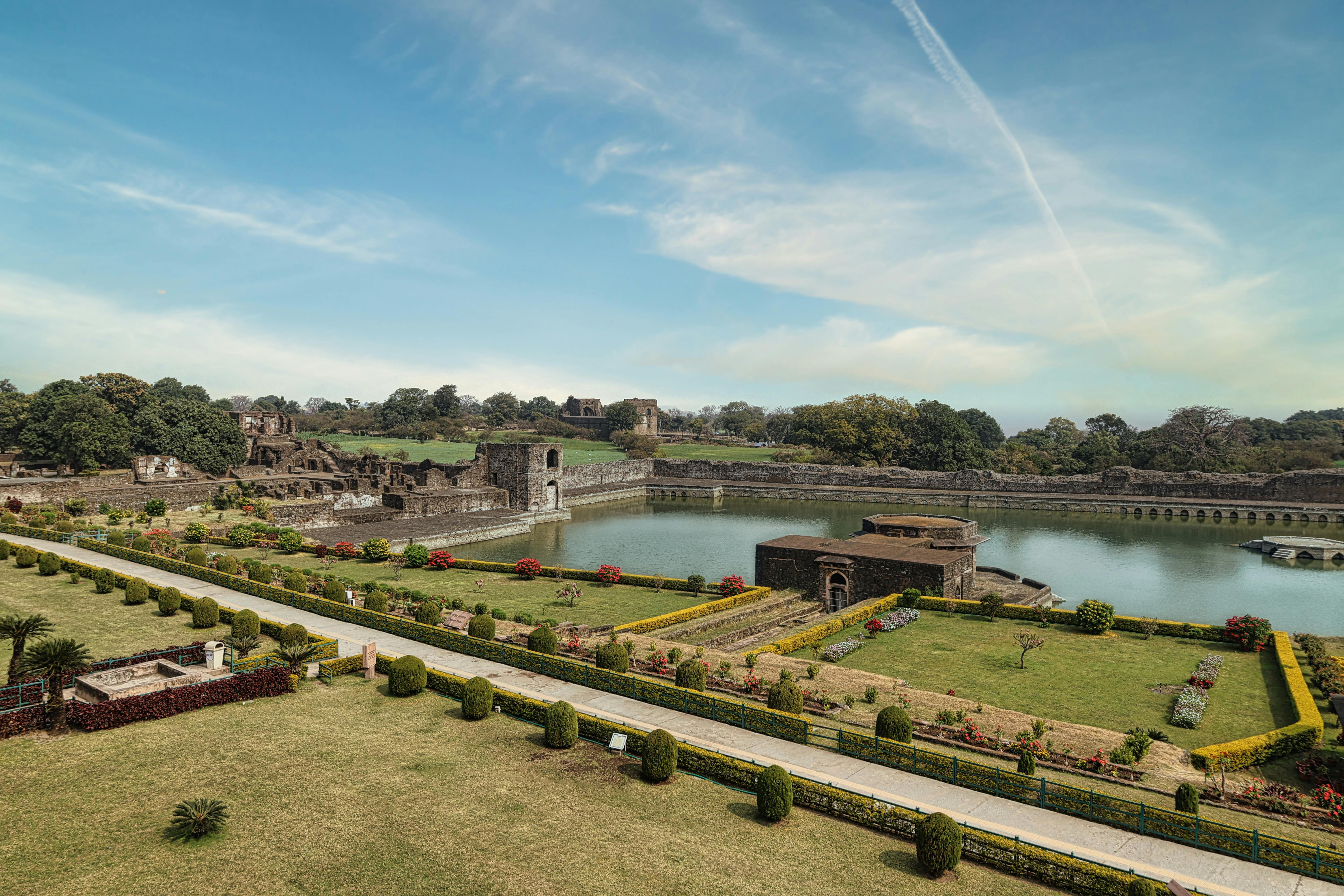
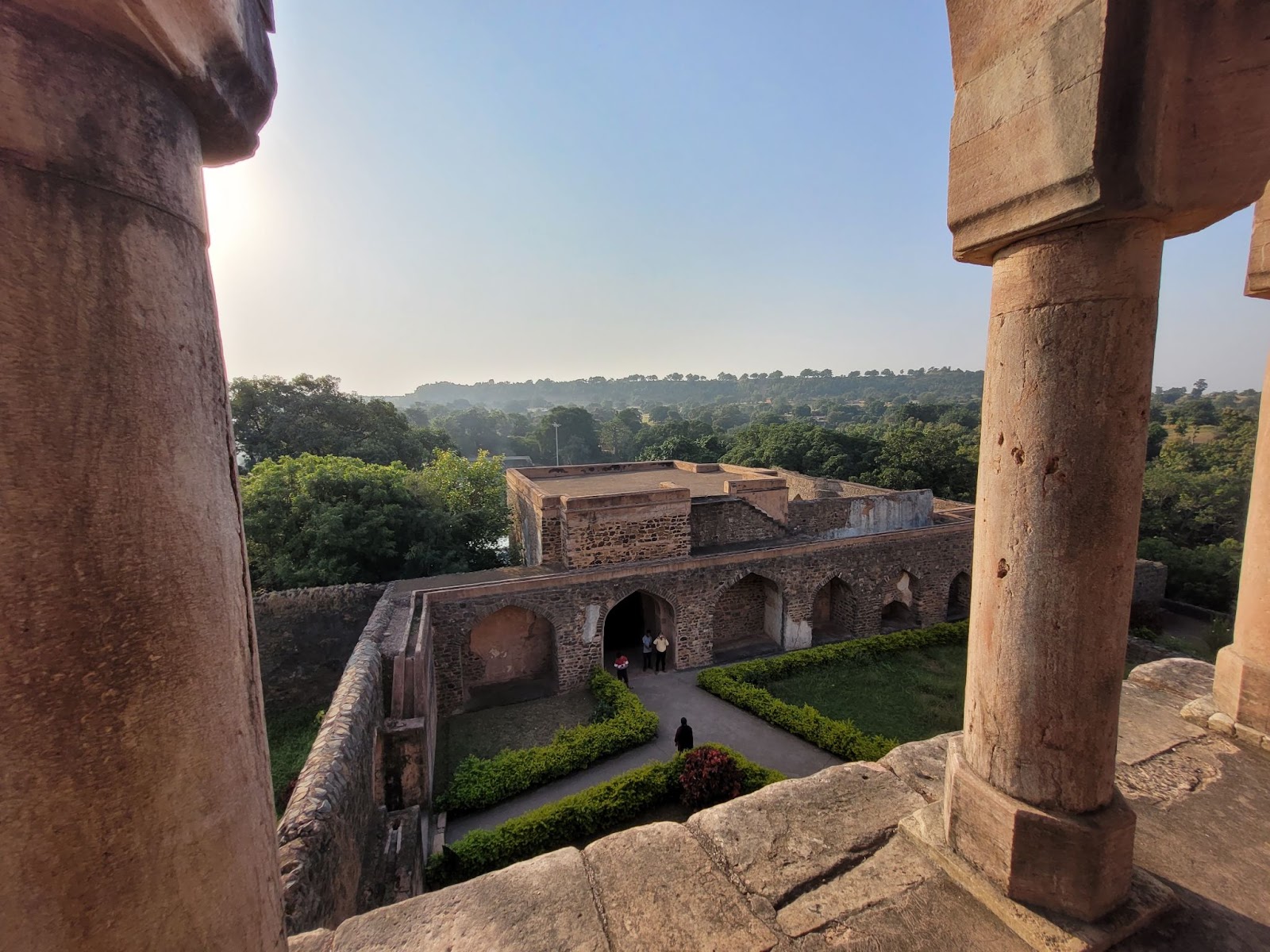
Inside the palace, visitors can explore large halls, spacious chambers, and open courtyards surrounded by rooms on all four sides. At the center lies a stunning cistern that once enhanced both the aesthetics and functionality of the palace complex.
Music and Cultural Importance
Baz Bahadur Palace was not merely a royal residence—it was also a center for music and artistic expression. One of the palace’s large halls was used as a music and dance hall where performances entertained the royal court.
Baz Bahadur himself was a passionate patron of music, and his love for Roopmati, who was also gifted in singing, added to the palace’s cultural legacy. The architecture of the halls was designed to enhance acoustics, allowing music to resonate beautifully through the chambers.
Even today, visitors often imagine the echoes of classical melodies drifting through the ancient corridors.
Water Management System
One of the most impressive aspects of the palace is its advanced water management system. During its prime, water was transported through aqueducts that passed over the arches and carried water from nearby sources to Rewa Kund inside the palace courtyard.
This ingenious engineering reflects the architectural sophistication of medieval Mandu and demonstrates how rulers ensured a steady water supply within the palace complex.
The Love Story of Baz Bahadur and Roopmati
The palace is deeply intertwined with the legendary romance between Baz Bahadur and Roopmati. According to popular stories, Baz Bahadur was captivated by Roopmati’s beauty and melodious voice. Their love story became one of the most famous tales of medieval India.
Roopmati frequently visited Rewa Kund, located near the palace, and the peaceful surroundings of Mandu became a witness to their enduring bond. Even centuries later, the story of their love continues to add emotional depth and charm to the monument.
What to See at Baz Bahadur Palace
Visitors exploring the palace can admire:
- Grand staircases and entrance arches.
- Beautiful chhatris and domed pavilions.
- Spacious courtyards and royal chambers.
- Ancient music and dance halls.
- Scenic views of Mandu’s hills and valleys.
- Traditional Malwa-style architecture.
Walking through the halls and corridors offers a glimpse into the luxurious lifestyle and artistic culture of the Malwa rulers.
Best Time to Visit
The best time to visit Baz Bahadur Palace is between October and March when the weather is pleasant and comfortable for sightseeing. The monsoon season also transforms Mandu into a lush green paradise, making the palace even more picturesque.
Early mornings and evenings are ideal for photography and peaceful exploration.
How to Reach Baz Bahadur Palace
Baz Bahadur Palace is located in Mandu, which is well connected by road.
By Road
Regular buses and taxis are available from Indore, Dhar, and nearby towns.
By Rail
The nearest railway station is Indore Railway Station.
By Air
The nearest airport is Devi Ahilya Bai Holkar Airport.
Nearby Attractions
1. Rani Roopmati Pavilion
Located just a short distance uphill from Baz Bahadur Palace, this iconic monument is associated with the legendary love story of Baz Bahadur and Rani Roopmati. The pavilion offers spectacular views of the Narmada Valley and the surrounding countryside, especially during sunrise and sunset.
2. Rewa Kund
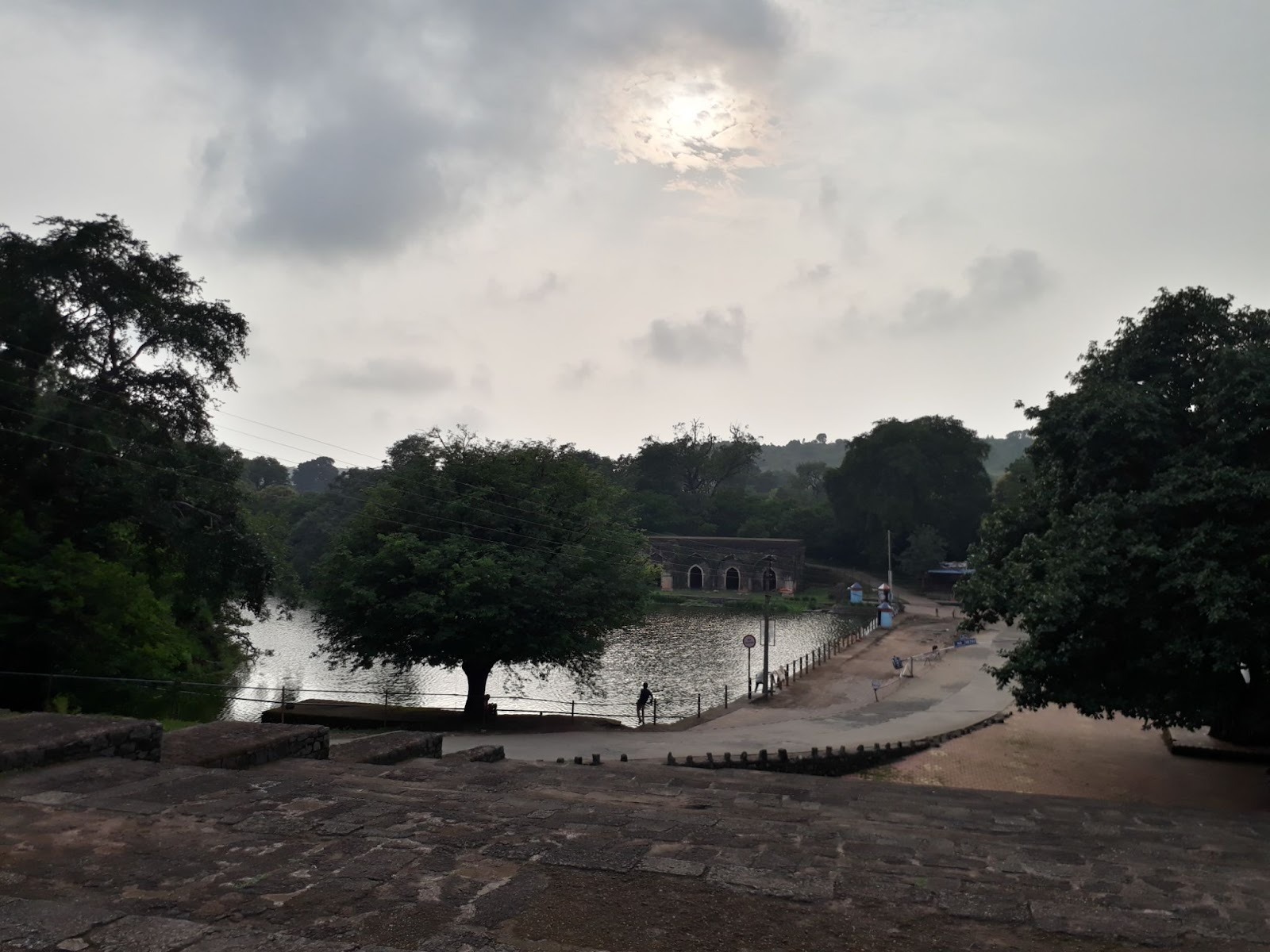
Situated at the base of Rani Roopmati Pavilion, Rewa Kund is a historic reservoir believed to have been constructed by Baz Bahadur to ensure a continuous water supply for Rani Roopmati. The peaceful surroundings make it a pleasant stop for visitors.
3. Jahaz Mahal
One of Mandu’s most famous landmarks, Jahaz Mahal, or the “Ship Palace,” appears to float between two lakes. Its unique architecture and picturesque setting make it a must-visit attraction.
4. Hindola Mahal
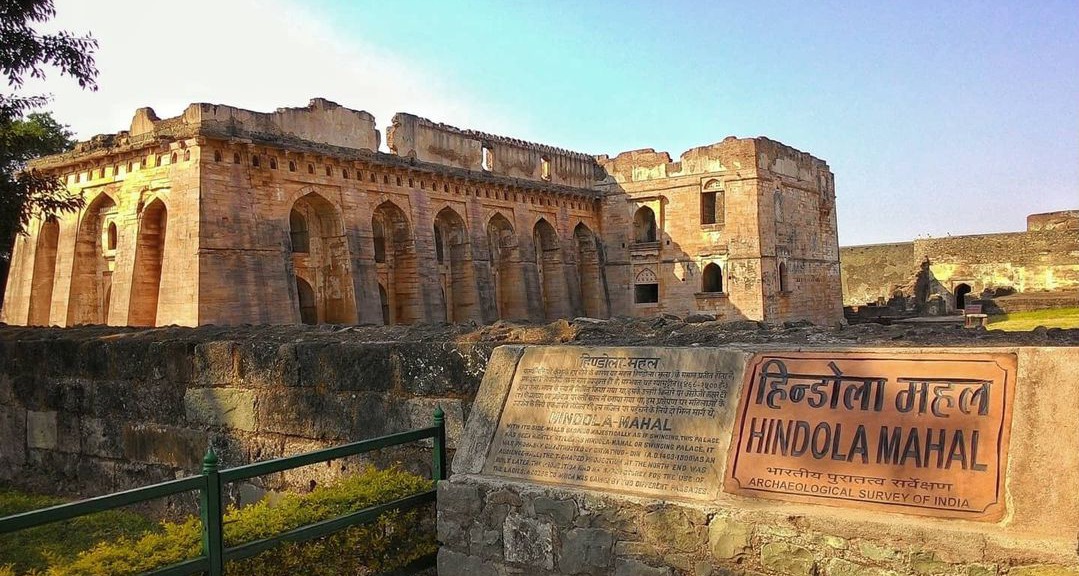
Known as the “Swinging Palace” due to its sloping walls, Hindola Mahal is an impressive example of Afghan-style architecture and was once used as a royal audience hall.
5. Jama Masjid
This grand mosque is among the finest examples of Islamic architecture in central India. Its massive courtyard, elegant domes, and intricate design attract history and architecture enthusiasts alike.
6. Hoshang Shah’s Tomb
Famous for being India’s first marble mausoleum, this monument is believed to have inspired some elements of the Taj Mahal’s design. Its symmetry and craftsmanship are remarkable.
7. Ashrafi Mahal
Located opposite Jama Masjid, Ashrafi Mahal was originally a madrasa and later transformed into a royal mausoleum complex. Its ruins offer fascinating insights into Mandu’s medieval past.
8. Echo Point
A popular natural viewpoint where visitors can experience the echo effect while enjoying scenic views of Mandu’s lush valleys and rocky landscapes.
9. Dai Ka Mahal
This lesser-known yet beautiful structure is believed to have been built for a royal nurse. It showcases elegant Afghan architectural features and a tranquil atmosphere.
10. Nilkanth Mahadev Temple
Nestled amidst natural surroundings, this ancient Shiva temple is known for its sacred spring, peaceful setting, and panoramic views of the nearby valleys.
Why Visit Baz Bahadur Palace?
Baz Bahadur Palace is not just a historical monument—it is a place where architecture, romance, music, and history come together beautifully. Its peaceful atmosphere, scenic surroundings, and fascinating stories make it one of the most memorable attractions in Mandu.
Whether you are a history enthusiast, an architecture admirer, or simply someone who enjoys exploring unique destinations, the palace offers an unforgettable journey into the royal past of medieval India.
Map and Location
5 kilometers from Mandau bus station, on the southern side of Bahadur, is the Rani Roopmatii Pavillion.
Timing
8 am – 6 pm.
Entry fees
Indian – Rs 25.
Foreigner – Rs 300.
FAQs
1. Where is Baz Bahadur Palace located?
Baz Bahadur Palace is located in Mandu, Madhya Pradesh, near Rewa Kund.
2. Who built Baz Bahadur Palace?
The palace was originally commissioned by Nasir-ud-din in 1508 and later became associated with Baz Bahadur.
3. Why is Baz Bahadur Palace famous?
The palace is famous for its beautiful Malwa architecture and the legendary love story of Baz Bahadur and Roopmati.
4. What architectural style does the palace follow?
The palace showcases a blend of Rajput and Mughal architectural styles.
5. What was the purpose of the large hall inside the palace?
The large hall was used as a music and dance hall for royal entertainment and cultural performances.
6. What is Rewa Kund?
Rewa Kund is a historic water reservoir located near the palace and closely linked to Roopmati and Baz Bahadur.
7. What is the best time to visit Baz Bahadur Palace?
The best time to visit is from October to March, although the monsoon season also offers beautiful scenery.
8. Is Baz Bahadur Palace suitable for photography?
Yes, the palace is highly popular among photographers because of its arches, courtyards, panoramic views, and historic charm.