Image Source: jaimin patel
Introduction
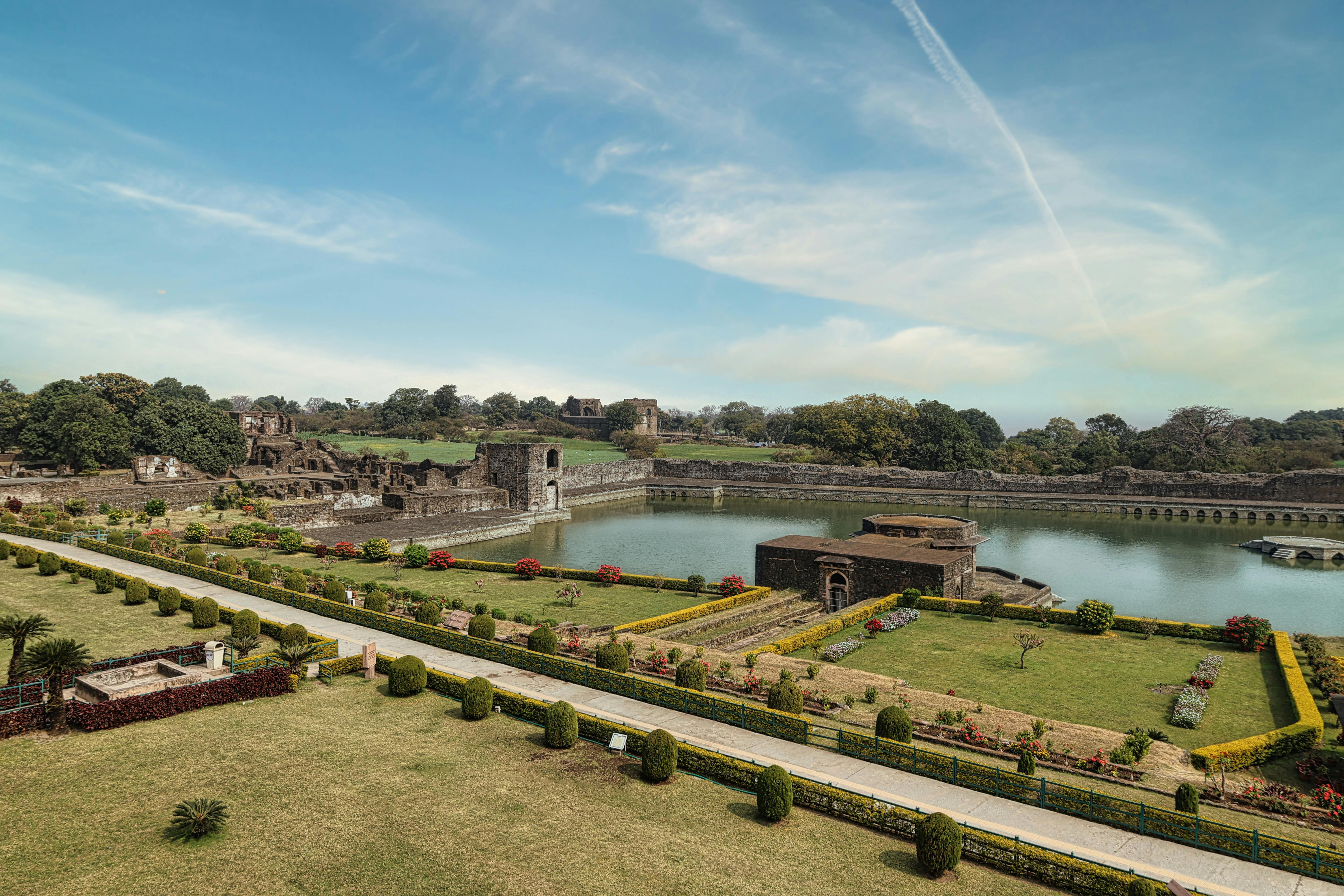
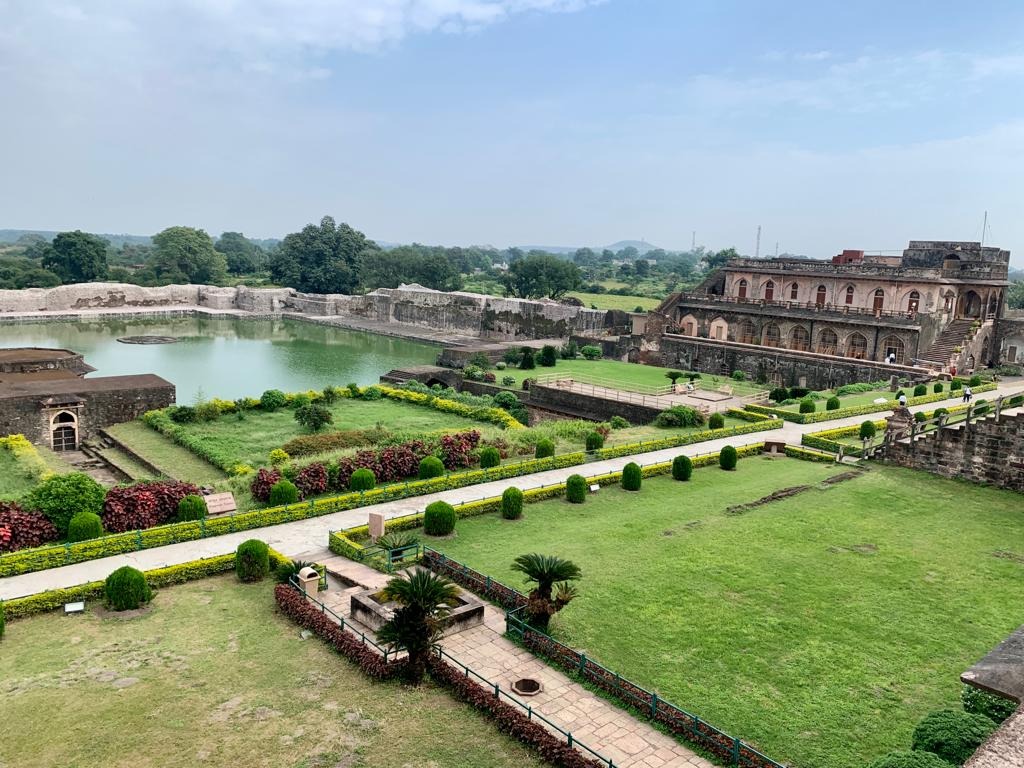
Mandu, the ancient fortified city perched atop the Vindhya Hills of Madhya Pradesh, is famous for its magnificent palaces, pavilions, and fascinating legends. While monuments such as Jahaz Mahal and Hindola Mahal attract most visitors, hidden among these architectural marvels is Nahar Jharokha, a lesser-known yet historically significant structure. Overlooking a spacious courtyard near Hindola Mahal, this royal balcony once served as a platform where rulers addressed their subjects and listened to public grievances. Though modest in appearance compared to Mandu’s grand palaces, Nahar Jharokha offers a fascinating glimpse into the administrative and ceremonial life of the Malwa Sultanate.
History of Nahar Jharokha
Nahar Jharokha is believed to have been an important public audience space during the rule of the Malwa Sultans. The structure was designed to allow the ruler to appear before the public without leaving the safety and privacy of the palace complex. From this elevated balcony, the king could observe gatherings, hear petitions, and communicate with his subjects assembled in the large courtyard below.
Some historians associate the structure with the period when Mughal Emperor Akbar visited Mandu. However, there is no complete consensus regarding its exact date of construction. The tradition of rulers appearing before the public from balconies later became popular in the Mughal Empire, particularly during the reign of Emperor Jahangir and his successors. Nevertheless, audience balconies had already existed in various forms across Indian kingdoms, and Nahar Jharokha may represent an earlier regional adaptation of this architectural tradition.
The name “Nahar Jharokha” translates to “Tiger Balcony.” Historical accounts suggest that a sculpted tiger figure once adorned the balcony, symbolizing royal power and authority. Although the tiger effigy has long disappeared, the name continues to survive and remains an intriguing reminder of the structure’s former grandeur.
Architecture of Nahar Jharokha
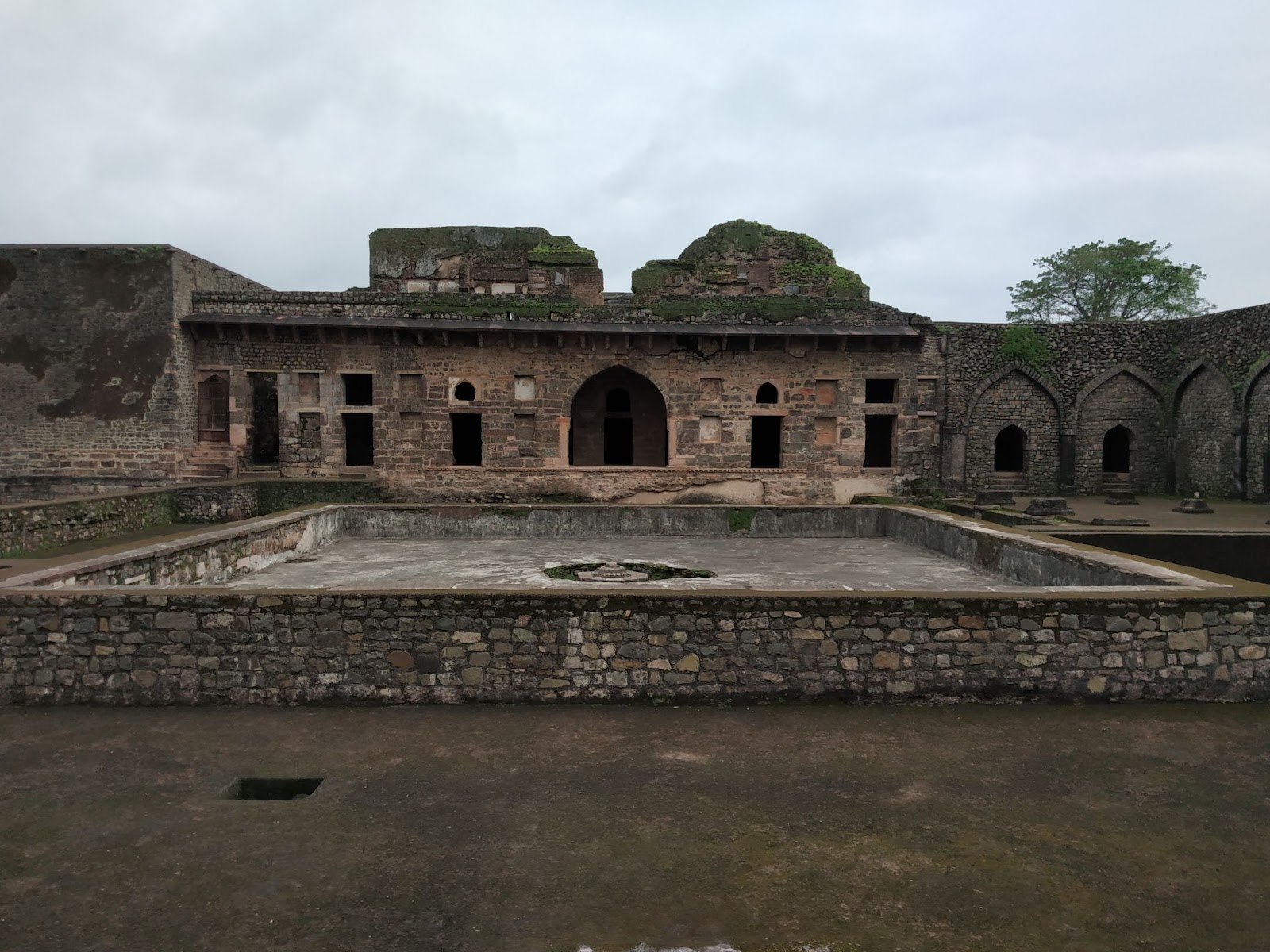
Architecturally, Nahar Jharokha reflects the practical yet elegant style commonly found in Mandu’s medieval monuments. The structure is a two-storey building comprising a ground floor and an upper floor. The lower level is divided into three sections containing halls and chambers that may have served administrative or ceremonial functions.
The upper floor consists of a row of rooms arranged around the balcony area. The chambers are relatively shallow and feature characteristic arches and vaulted roofs that are typical of Malwa Sultanate architecture. The design emphasizes functionality rather than lavish ornamentation, allowing the structure to serve as an effective public audience hall.
The most striking feature is the projecting balcony itself, which overlooks an open courtyard. This large gathering space enabled hundreds of people to assemble before the ruler. From the elevated platform, the king could address his subjects while maintaining visibility and authority. Even today, standing at the balcony offers visitors a sense of how public audiences may have taken place centuries ago.
Significance of Nahar Jharokha
Nahar Jharokha is more than just a balcony; it represents the relationship between ruler and subjects during medieval times. It was a place where governance became visible and accessible. Public audiences allowed people to present grievances, seek justice, and communicate directly with the ruling authority. Such spaces played an important role in strengthening political legitimacy and public trust.
Today, the monument serves as a valuable reminder of Mandu’s administrative history. Although it receives fewer visitors than nearby landmarks, it provides unique insight into the everyday functioning of a medieval kingdom and complements the larger architectural story of Mandu.
How to Reach Nahar Jharokha
Nahar Jharokha is located within the Royal Enclave of Mandu, close to Hindola Mahal and several other major historical attractions.
By Air
The nearest airport is Devi Ahilyabai Holkar Airport in Indore, approximately 100 kilometers from Mandu. From the airport, visitors can hire taxis or take buses to reach Mandu.
By Train
The nearest major railway station is Indore Junction, while Ratlam Junction also serves as a convenient railhead for travelers coming from different parts of India. From either station, taxis and buses are available for Mandu.
By Road
Mandu is well connected by road to Indore, Dhar, and other cities in Madhya Pradesh. Regular buses operate from Indore and Dhar. Once in Mandu, Nahar Jharokha can be easily reached by auto-rickshaw, taxi, or on foot while exploring the Royal Enclave.
Nearby Attractions
Hindola Mahal
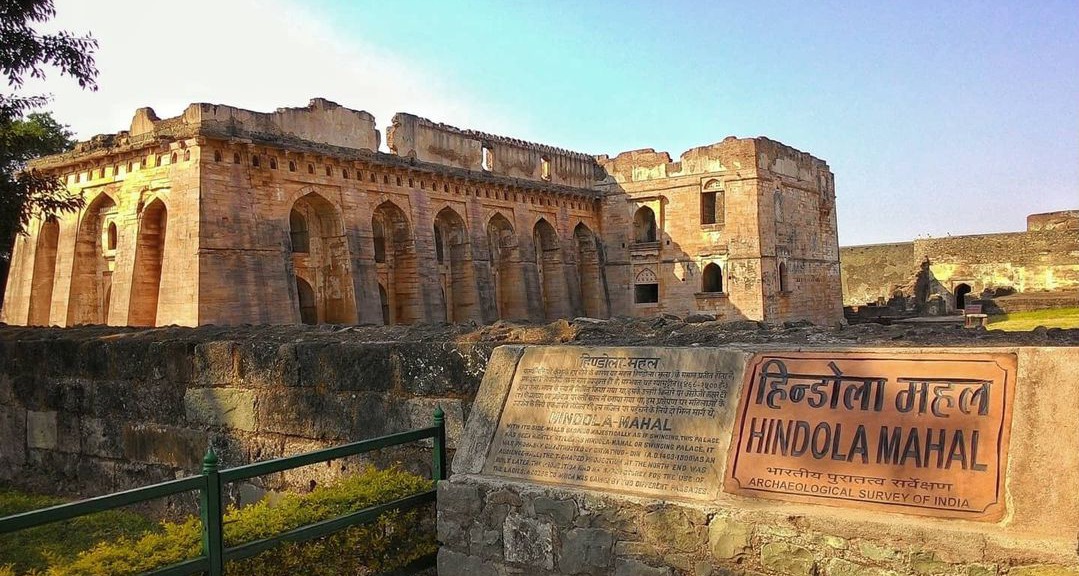
Located just a short walk away, Hindola Mahal is one of Mandu’s most famous monuments. Its massive sloping walls give it the appearance of a swinging structure, which is how it earned its name.
Jahaz Mahal
Perhaps the most iconic building in Mandu, Jahaz Mahal appears to float between two lakes. The palace is renowned for its unique architecture and scenic surroundings.
Champa Baoli
This historic stepwell is known for its cool underground chambers and intricate water management system that once supplied water to the royal complex.
Hoshang Shah’s Tomb
Often regarded as India’s first marble mausoleum, this beautiful monument is believed to have inspired aspects of the design of the Taj Mahal.
Jami Masjid
One of the largest mosques in central India, the Jami Masjid is admired for its grand courtyards, elegant domes, and Afghan-inspired architecture.
Baz Bahadur’s Palace and Rani Roopmati Pavilion
These two monuments are associated with Mandu’s most famous love story and offer spectacular views of the surrounding countryside and the Narmada Valley.
Timing of Nahar Jharokha
6 am – 7 pm.
Entry fees
Indian – Rs 25.
Foreigner – Rs 100.
Maps
FAQs
What is Nahar Jharokha?
Nahar Jharokha is a historic audience balcony located near Hindola Mahal in Mandu, where rulers are believed to have addressed and interacted with their subjects.
Why is it called Nahar Jharokha?
The name means “Tiger Balcony” and is believed to have originated from a tiger effigy that once adorned the structure.
Who built Nahar Jharokha?
The exact builder is uncertain, but the structure is generally associated with the rulers of the Malwa Sultanate.
What was the purpose of the balcony?
The balcony served as a public audience platform from which the ruler could hear petitions and address gatherings in the courtyard below.
Is Nahar Jharokha part of the Mandu Fort complex?
Yes, it is located within Mandu’s Royal Enclave and is closely associated with Hindola Mahal.
How much time is needed to visit Nahar Jharokha?
Most visitors spend around 15 to 30 minutes exploring the structure as part of a broader tour of Mandu.
Is there an entry fee for Nahar Jharokha?
Entry is generally included within the ticket for the Mandu monument complex, though visitors should verify current charges before visiting.
What is the best time to visit Mandu?
The ideal time to visit is between October and March when the weather is pleasant and suitable for sightseeing.
Can photography be done at Nahar Jharokha?
Yes, photography is usually permitted and the monument offers excellent opportunities for architectural and historical photography.
What makes Nahar Jharokha unique?
Its historical role as a royal audience balcony and its connection to Mandu’s administrative and ceremonial traditions make it a unique monument within the city’s heritage landscape.