Image Source: Vishal Gupta
Overview and History
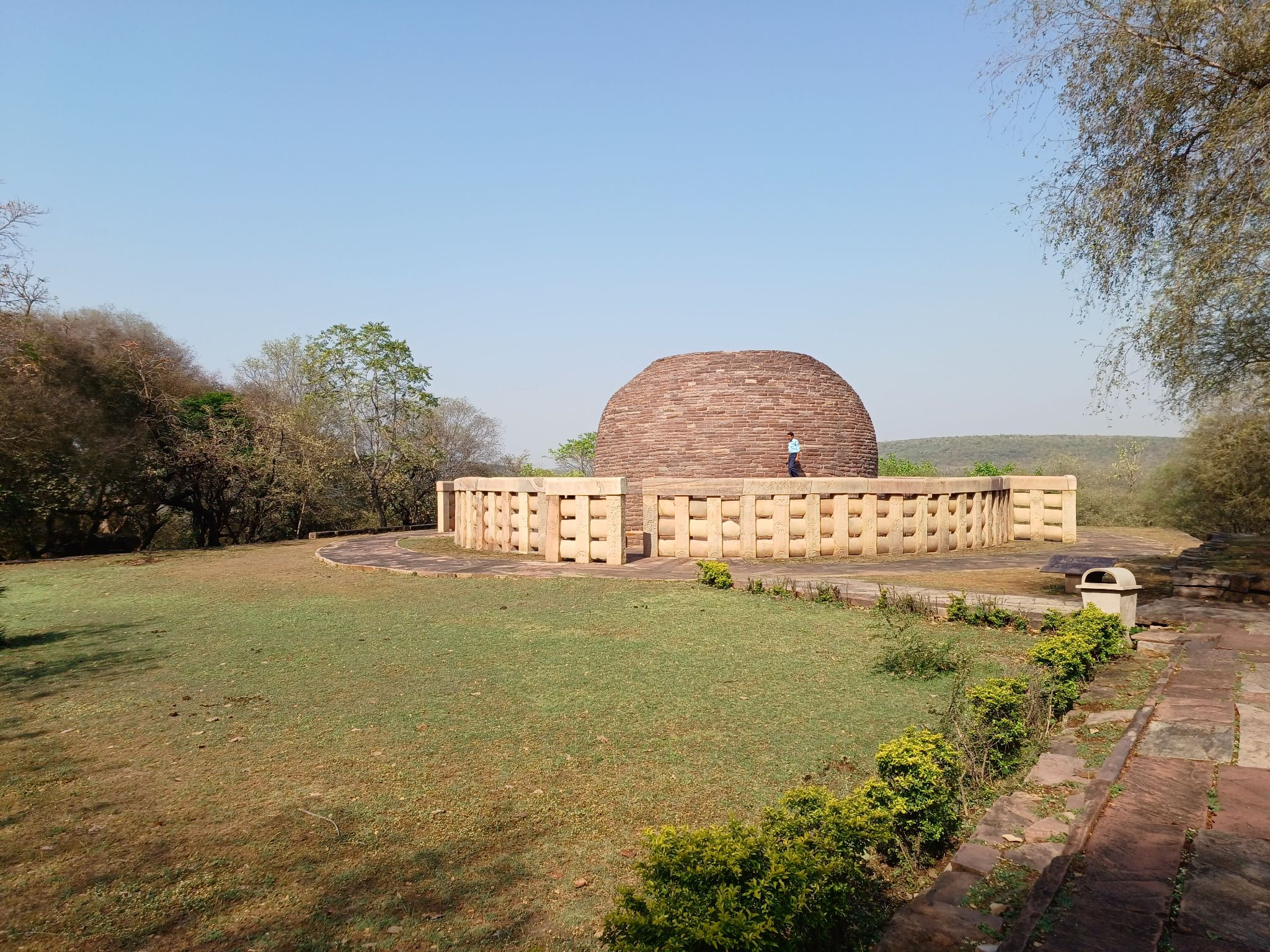
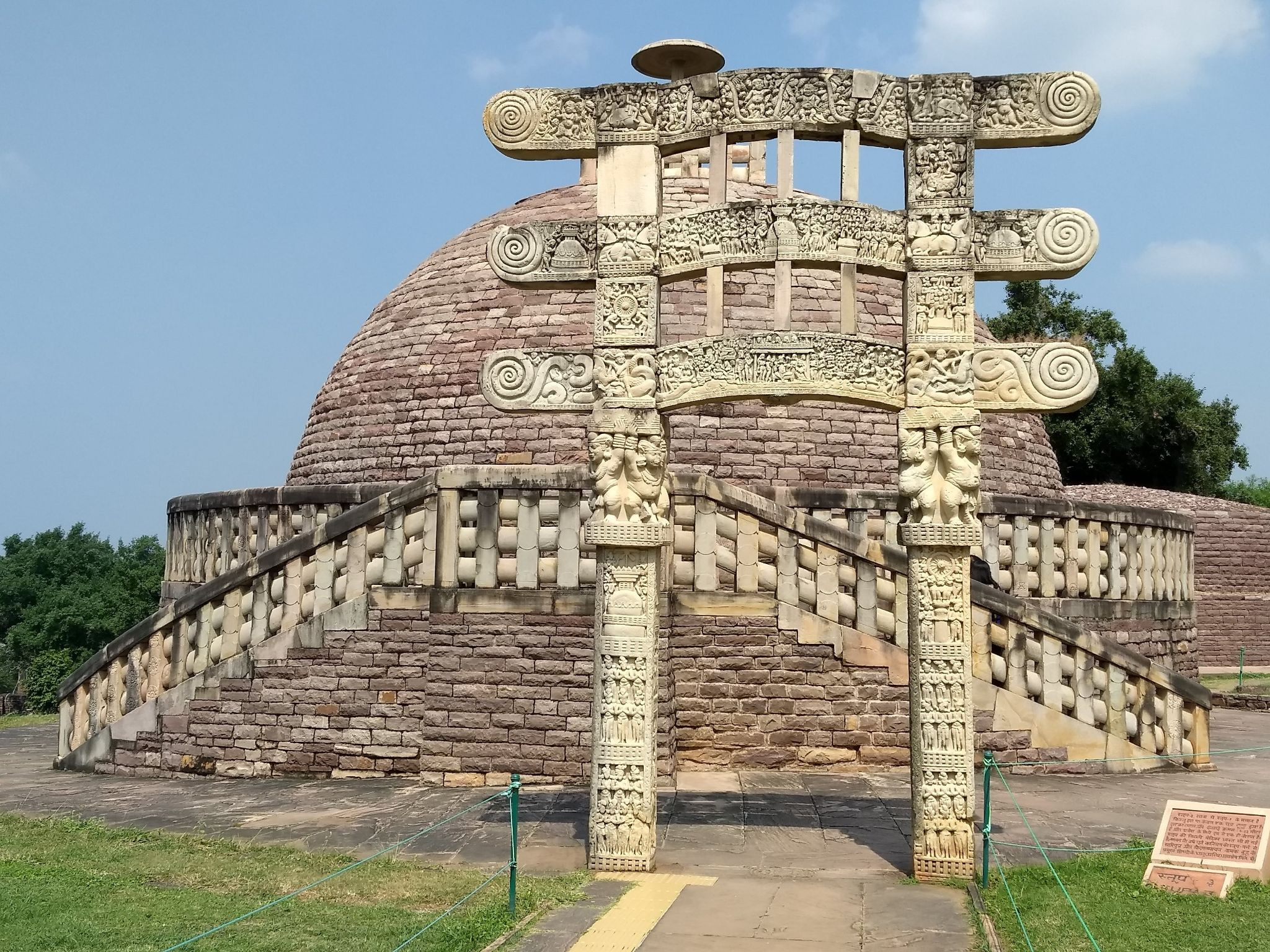
Sanchi, one of the most important Buddhist heritage sites in India, is renowned for its ancient stupas, monasteries, temples, and stone structures that reflect the rich legacy of Buddhism. Among the many fascinating monuments scattered across the Sanchi hill complex, the Great Bowl and the Buddhist Monasteries offer visitors a unique glimpse into the daily lives of Buddhist monks who lived here centuries ago.
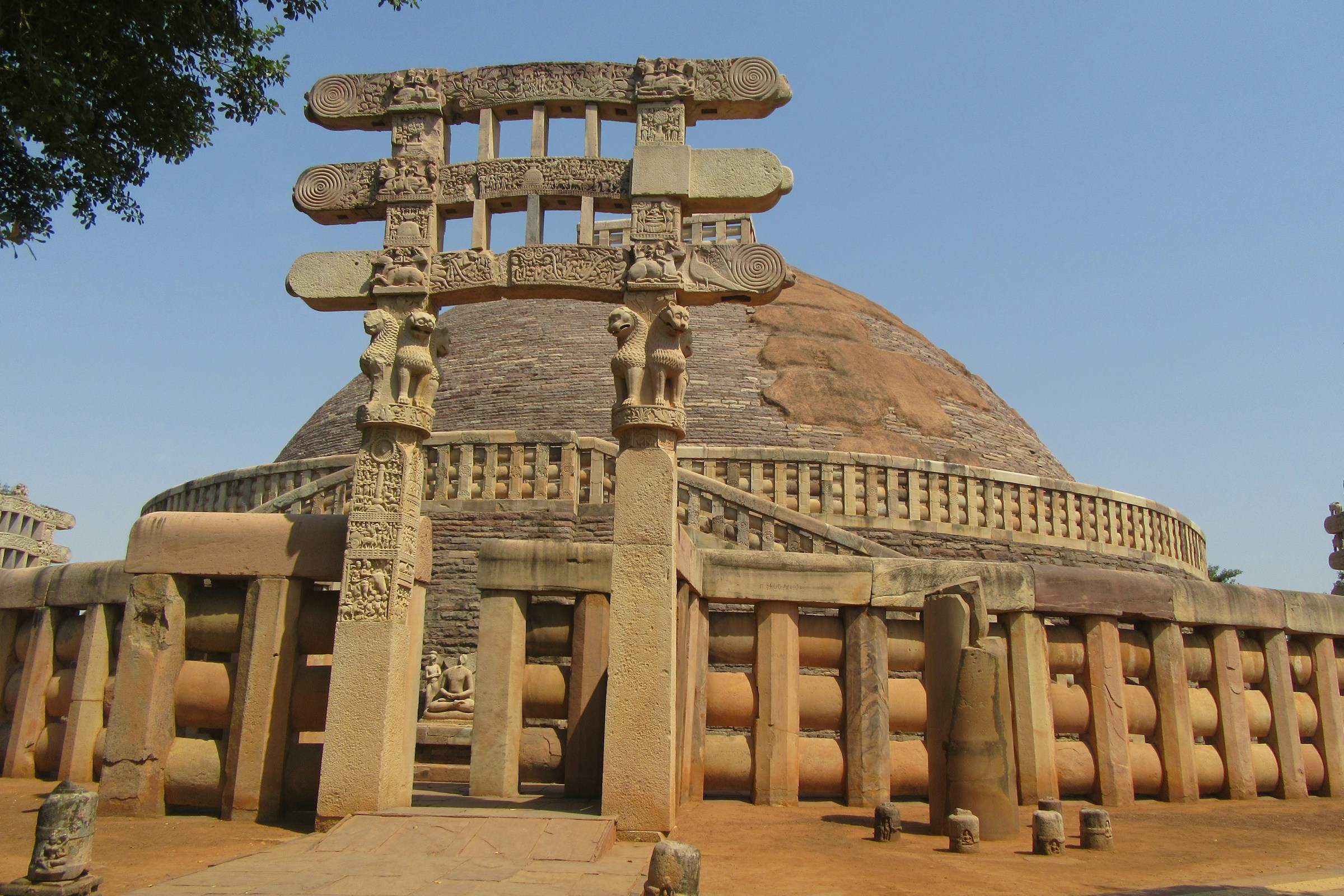
Located about 1.5 km from Sanchi Railway Station, these historical remains are part of the larger Sanchi Group of Monuments, a UNESCO World Heritage Site. While the Great Stupa often attracts the most attention, the Great Bowl and the surrounding monasteries are equally significant for understanding the spiritual and communal life that once flourished in this ancient Buddhist center.
The Great Bowl is a remarkable example of ancient stone craftsmanship. Carved from a single massive block of stone during the Mauryan period, most likely during the reign of Emperor Ashoka, the bowl was used to collect and distribute food offerings among monks living in the monasteries. The structure symbolizes the Buddhist ideals of simplicity, sharing, and detachment from material possessions.
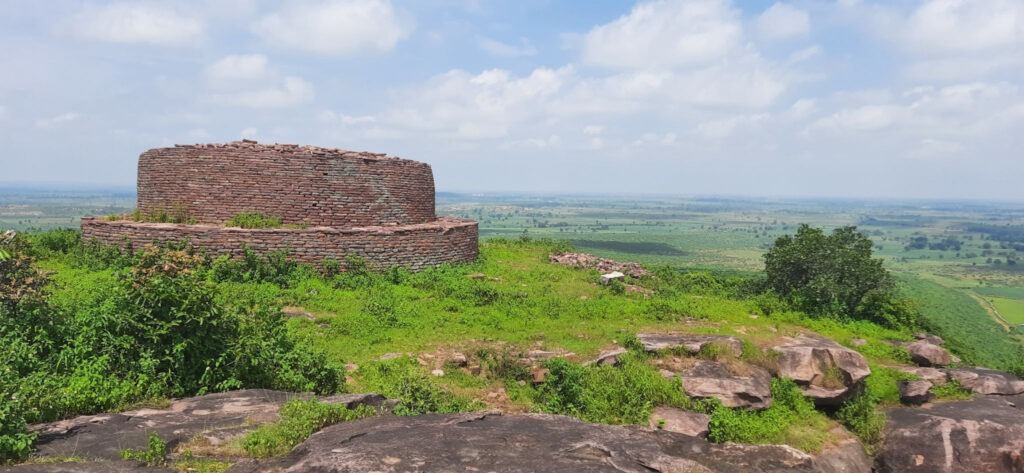
Surrounding the hill were several monasteries that served as residential and spiritual centers for monks. Historical records and archaeological findings suggest that at least seven major monasteries once existed in the Sanchi complex. Among them, Monastery 51, located on the slope leading toward Stupa 2, is one of the most notable.
Monastery 51 was built around an open courtyard and featured a series of monks’ cells arranged around it. Like many monastic structures of its time, it was constructed using a combination of stone foundations and wooden superstructures. Over the centuries, the wooden columns and roofs deteriorated and eventually collapsed, leaving behind the ruins visible today.
The monasteries at Sanchi also reflect an important transitional phase in Indian religious history. Structures such as Monasteries 45 and 47, located on the eastern ridge of the hill, date to a period when Buddhism and Hinduism coexisted and influenced one another. Beautifully carved seated Buddha sculptures found in these monasteries showcase the artistic excellence of the period and add to the site’s cultural and archaeological significance.
Today, the Great Bowl and Buddhist Monasteries stand as silent witnesses to Sanchi’s glorious past, offering visitors an opportunity to explore the spiritual traditions, architectural achievements, and everyday life of one of ancient India’s most important Buddhist centers.
How to Reach
The Great Bowl and Buddhist Monasteries are situated within the Sanchi archaeological complex in Raisen district of Madhya Pradesh.
By Air: The nearest airport is Raja Bhoj Airport in Bhopal, approximately 55 km away. Taxis and buses are readily available from the airport to Sanchi.
By Rail: Sanchi Railway Station is located around 1.5 km from the monument complex. Visitors can easily reach the site by auto-rickshaw or a short walk.
By Road: Sanchi is well connected by road to Bhopal (about 50 km), Vidisha (around 10 km), and other major cities of Madhya Pradesh. Regular buses and private taxis operate throughout the region.
Nearby Attractions
1. Great Stupa No. 1
The most iconic monument in Sanchi, built originally by Emperor Ashoka and later expanded, featuring beautifully carved gateways and Buddhist relics.
2. Ashoka Pillar
Known for its polished sandstone craftsmanship, this pillar is one of the finest examples of Mauryan art.
3. Sanchi Archaeological Museum
A treasure house of sculptures, inscriptions, pillars, and artifacts excavated from the Sanchi complex.
4. Stupa No. 2
Famous for its decorative railings and some of the earliest Buddhist carvings in India.
5. Stupa No. 3
Believed to contain relics of two prominent disciples of Buddha, Sariputta and Mahamoggallana.
6. Buddhist Temple No. 17
One of the earliest surviving temple structures in India, showcasing simple yet elegant Gupta architecture.
7. Udayagiri Caves
Located near Vidisha, these rock-cut caves contain significant Hindu sculptures and inscriptions dating back to the Gupta period.
8. Heliodorus Pillar, Vidisha
An important historical monument erected by a Greek ambassador who embraced Vaishnavism.
Map
FAQs
1. What is the Great Bowl at Sanchi?
The Great Bowl is a large monolithic stone vessel carved from a single rock and believed to have been used for collecting and distributing food offerings among Buddhist monks.
2. Who built the Great Bowl?
It is generally associated with the Mauryan period and is believed to date back to the era of Emperor Ashoka.
3. What were the Buddhist monasteries used for?
The monasteries served as living quarters, study centers, and meditation spaces for Buddhist monks.
4. What is Monastery 51 known for?
Monastery 51 is known for its open courtyard layout and rows of monk cells, providing insight into ancient monastic life.
5. How many monasteries existed at Sanchi?
Archaeological evidence suggests that at least seven major monasteries once existed around the Sanchi hill complex.
6. Are the Great Bowl and monasteries included in the Sanchi ticket?
Yes, they are part of the Sanchi archaeological site and can be visited with the monument entry ticket.
7. How much time is needed to explore the site?
Visitors typically spend 1–2 hours exploring the Great Bowl, monasteries, and nearby monuments.
8. What is the best time to visit Sanchi?
The ideal time is from October to March when the weather is pleasant for sightseeing.
9. Why are Monasteries 45 and 47 significant?
They represent a transitional period when Buddhist and Hindu artistic and religious traditions influenced each other.
10. Is Sanchi a UNESCO World Heritage Site?
Yes, the Sanchi Group of Monuments was designated a UNESCO World Heritage Site in 1989 due to its outstanding historical and cultural importance.