Image Source: Josiah Wadsack
Overview
Shri Lakshmi Narayan Temple is one of the most remarkable and historically significant temples in Orchha, a heritage town in Madhya Pradesh known for its royal palaces and sacred monuments. Dedicated to Goddess Lakshmi, the Hindu deity associated with wealth, prosperity, and fortune, this temple stands among the three major religious landmarks of Orchha. What makes the temple truly distinctive is its unusual combination of temple and fort architecture, making it both a place of worship and a defensive structure.
Unlike traditional Hindu temples that focus purely on spiritual design, Lakshmi Narayan Temple reflects the political and military realities of its time. Its grand structure, artistic interiors, and historical relevance continue to attract devotees, historians, and travelers from across India and beyond.
History of Shri Lakshmi Narayan Temple
The origins of Shri Lakshmi Narayan Temple date back to the reign of King Bir Singh Deo, one of the prominent rulers of Orchha. He initially arranged for the worship and offerings dedicated to Goddess Lakshmi within the temple’s inner sanctum. However, over time, inadequate maintenance and natural deterioration caused the structure to fall into disrepair.
Recognizing the temple’s religious and cultural importance, Raja Prithvi Singh undertook its restoration in 1793. Under his patronage, the temple was reconstructed and restored to much of its former grandeur. This rebuilding effort not only revived the temple’s architectural beauty but also preserved an important symbol of Orchha’s spiritual heritage.
The temple today serves as a reminder of the devotion of Orchha’s rulers and their commitment to preserving sacred spaces despite changing political and social conditions.
Unique Architecture of Lakshmi Narayan Temple
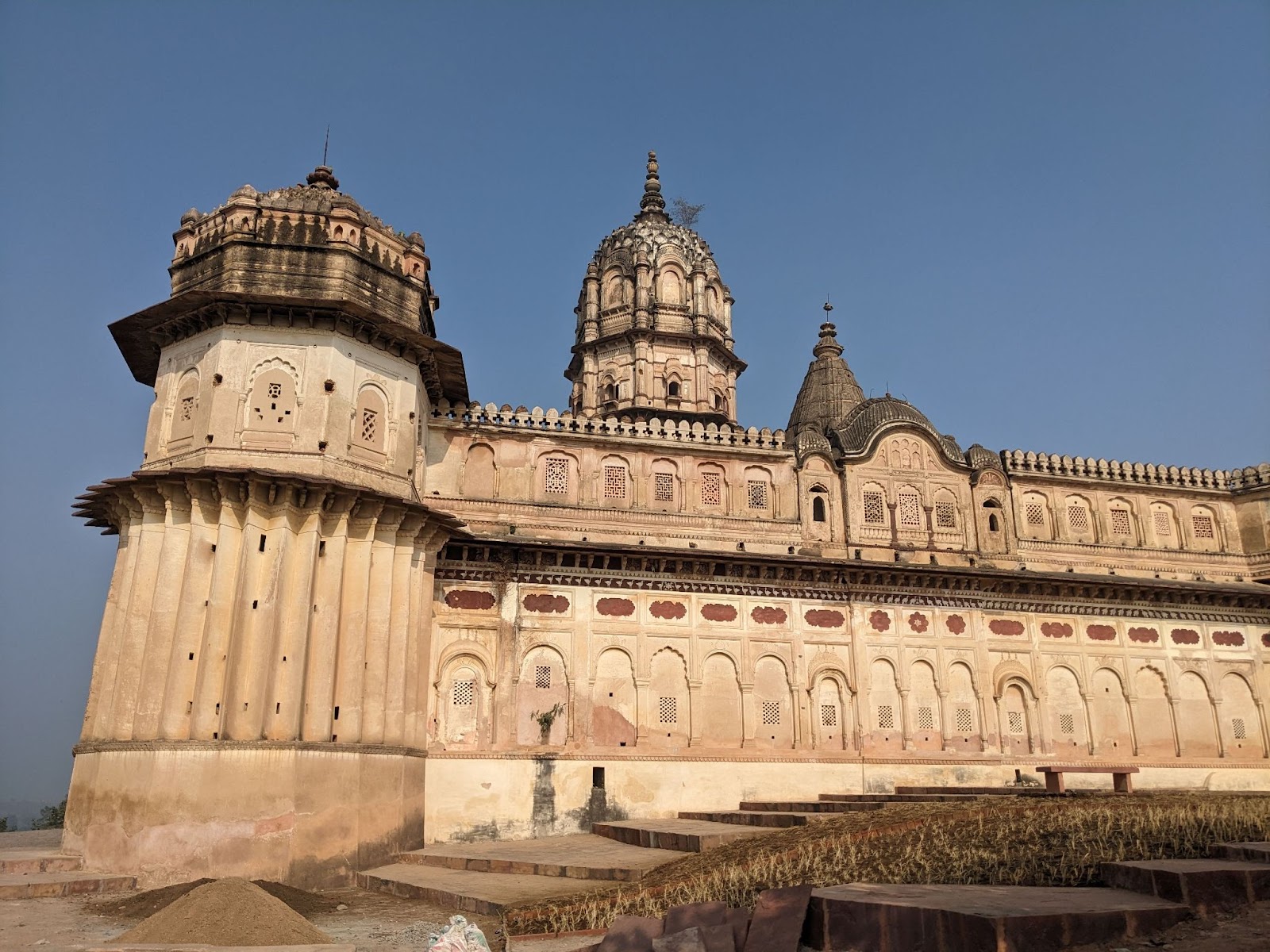
One of the most fascinating aspects of Shri Lakshmi Narayan Temple is its architecture. Unlike conventional temples with towering shikharas and open courtyards, this temple has a rectangular layout resembling a fortified palace or military structure.
The temple features four multi-faceted bastions positioned at each corner, along with provisions for cannons and defensive installations. Built using brick and lime mortar, the walls include cannon slots that were historically used during periods of conflict. These defensive features suggest that the temple was designed not only as a religious site but also as a structure capable of resisting enemy attacks.
This extraordinary fusion of sacred and military architecture makes Lakshmi Narayan Temple one of the most unusual temples in India. Its fort-like appearance reflects the turbulent historical period during which many religious structures also served strategic purposes.
The exterior and interior of the temple are decorated with finely carved geometric patterns and ornamental details. These artistic elements create a striking visual contrast against the massive defensive walls, blending elegance with strength.
Temple Murals and Interior Art
The interiors of Shri Lakshmi Narayan Temple are among its greatest treasures. The walls and ceilings of its halls are covered with exquisite murals and paintings that have survived for centuries.
These paintings depict a wide range of themes, including religious stories, royal life, and historical events. Many murals draw inspiration from the Ram Charita Manasa, the celebrated retelling of the Ramayana composed by Tulsidas. Alongside mythological scenes, the paintings also portray secular subjects and episodes associated with India’s early resistance movements, including references linked to the uprising of 1857.
The vivid colors and detailed craftsmanship give life to these stories, allowing visitors to experience history and mythology through art. Remarkably, despite their age, many of the murals remain in excellent condition, making the temple an important destination for lovers of art and heritage.
Spiritual and Symbolic Elements
The temple also contains symbolic architectural features influenced by Tantric traditions. Certain altar designs are shaped in forms associated with the yoni, symbolizing creation and divine feminine energy. Similarly, aspects of the inner sanctum reflect concepts linked to Tantric worship practices.
These symbolic elements add another layer of depth to the temple’s identity, highlighting the diversity of spiritual beliefs and practices that influenced temple design during that era.
Importance of Lakshmi Narayan Temple Today
Today, Shri Lakshmi Narayan Temple is valued not only as a place of worship but also as an important historical monument. Its distinctive architecture, preserved murals, and association with Orchha’s royal history make it a major attraction for visitors exploring the region.
The temple forms an essential part of Orchha’s cultural landscape and is often visited alongside other historic temples and palaces in the town. Whether one arrives for spiritual reasons, historical curiosity, or architectural appreciation, the temple offers a memorable and enriching experience.
Timings and Entry Fee
Temple Timings: 9:00 AM – 5:00 PM
Entry Fee: Entry is covered under the Orchha Fort Complex admission fee.
Visitors are advised to check local schedules before traveling, as timings or ticket policies may occasionally change.
Maps
How To Reach

By Road:
Orchha is well-connected by road to major cities in Madhya Pradesh, including Bhopal, Indore, Gwalior, and Khajuraho. The nearest bus stand is located in Orchha, which is just a short walk from the temple. Its at a distance of 2 km from the Orchha fort.

By Train:
The nearest railway station to the temple is the Jhansi Railway Station, which is located around 18 km away from Orchha. The Jhansi Railway Station is well-connected to major cities in India, including Delhi, Mumbai, Kolkata, and Chennai. From the Jhansi Railway Station, you can hire a taxi or take a bus to reach the temple.

By Air:
The nearest airport to Orchha is the Gwalior Airport, which is located around 120 km away. The airport is well-connected to major cities in India, including Delhi and Mumbai. From the airport, you can hire a taxi or take a bus to reach the temple.
Nearby Attractions
Chaturbhuj Temple
Located a short distance from the Lakshmi Narayan Temple, Chaturbhuj Temple is one of Orchha’s most recognizable landmarks. Built to house an idol of Lord Rama, the temple features towering spires, massive halls, and panoramic views of the town from its upper levels.
Ram Raja Temple
One of the most unique temples in India, Ram Raja Temple is the only place where Lord Rama is worshipped as a king rather than a deity. The temple attracts thousands of devotees every year and remains the spiritual heart of Orchha.
Orchha Fort Complex
The historic fort complex is the crown jewel of Orchha and includes several magnificent palaces, courtyards, and temples. Overlooking the Betwa River, it showcases the grandeur of Bundela architecture and royal heritage.
Raja Mahal
Situated within the Orchha Fort Complex, Raja Mahal is known for its beautifully preserved murals depicting scenes from Hindu mythology. The palace offers a fascinating glimpse into the artistic traditions of the Bundela rulers.
Jahangir Mahal
Built to commemorate the visit of Mughal Emperor Jahangir, this stunning palace is admired for its blend of Mughal and Rajput architectural styles. Its ornate balconies, domes, and courtyards make it one of Orchha’s most photographed monuments.
Orchha Cenotaphs (Chhatris)
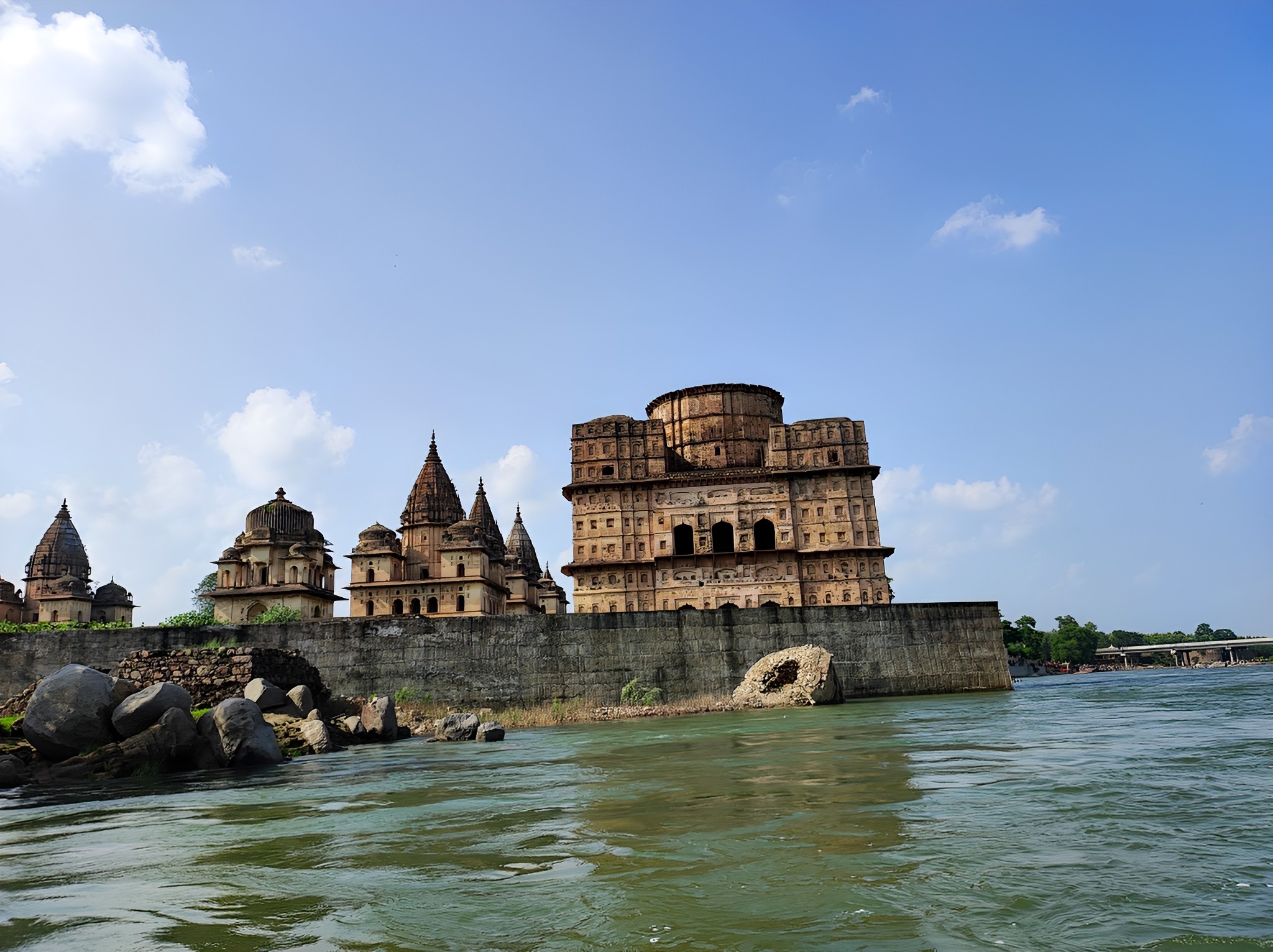
Standing gracefully along the banks of the Betwa River, these royal cenotaphs were built in memory of the Bundela kings. Their striking silhouettes against the river create one of the most iconic views in Orchha.
Betwa River
The Betwa River adds natural beauty to Orchha’s historic landscape. Visitors can enjoy riverside walks, photography, birdwatching, and seasonal rafting activities while taking in views of the fort and cenotaphs.
Phool Bagh
This historic garden was designed as a royal retreat and combines fountains, underground cooling systems, and landscaped greenery. It offers a peaceful escape from the more crowded monuments.
Rai Praveen Mahal
Dedicated to the poetess and musician Rai Praveen, this elegant palace reflects the cultural richness of Orchha during the Bundela period. The structure is known for its simplicity and historical significance.
Orchha Wildlife Sanctuary
Spread along the banks of the Betwa River, the sanctuary is home to various species of birds, deer, and other wildlife. It is an excellent destination for nature lovers looking to complement their heritage tour with outdoor exploration.
FAQs
1. Where is Shri Lakshmi Narayan Temple located?
Shri Lakshmi Narayan Temple is located in Orchha, a historic town in Madhya Pradesh, India.
2. Which deity is worshipped in the temple?
The temple is dedicated to Goddess Lakshmi, the Hindu goddess of wealth, prosperity, and fortune.
3. What makes Lakshmi Narayan Temple unique?
Its architecture is highly unusual because it combines the features of a Hindu temple and a defensive fort, complete with bastions and cannon placements.
4. Who built and restored the temple?
The temple was originally associated with King Bir Singh Deo and was later reconstructed and restored in 1793 by Raja Prithvi Singh.
5. Are the murals inside the temple famous?
Yes, the temple is especially renowned for its ancient murals depicting religious stories, royal life, and historical themes, many of which are still well preserved.
6. What are the temple timings?
The temple is generally open from 9:00 AM to 5:00 PM.
7. Is there a separate entry fee for the temple?
No, entry to Lakshmi Narayan Temple is usually included in the Orchha Fort Complex ticket.
8. Is the temple suitable for history and architecture enthusiasts?
Absolutely. The temple is considered one of Orchha’s most significant heritage monuments and attracts historians, architecture enthusiasts, photographers, and spiritual travelers alike.