Image Source: Akshay Ojha
Overview
Just about 13 km from Jaipur Junction Railway Station, the magnificent Amer Fort—also known as Amber Fort—rises proudly over the historic town of Amer. With its grand gateways, intricate carvings, and hilltop setting, the fort is one of Rajasthan’s most iconic landmarks.
Overlooking the serene Maota Lake, Amer Fort offers a perfect mix of history, architecture, and scenic beauty. It’s not just a monument—it’s an experience that transports you back to the royal era of kings and queens.
History of Amer Fort
The story of Amer begins as early as 967 AD, when it was established by the Meena community and dedicated to Amba. Later, in 1037 AD, the Kachwaha Rajputs took control and ruled the region for several centuries.
The fort as we see it today started taking shape in 1592 under Raja Man Singh I, a trusted general in the court of Akbar and one of his famed Navaratnas. Over time, successive rulers added their own touches, expanding and enhancing the fort’s beauty.
Eventually, in 1727, Sawai Jai Singh II shifted the capital from Amer to Jaipur, marking a significant transition in the region’s history. Even so, Amer Fort continued to stand as a symbol of royal legacy and architectural brilliance.
Architecture of Amer Fort
Amer Fort is a stunning blend of Rajput and Mughal architectural styles. Built mainly from red sandstone and marble, it combines strength with elegance. The fort is divided into four main sections, each with its own courtyard, giving visitors a layered journey through history.
Suraj Pol and Jaleb Chowk
Entry into the fort is through the Suraj Pol (Sun Gate), which opens into the expansive Jaleb Chowk. This courtyard once buzzed with activity, where victorious armies would parade after returning from battles. Its east-facing design allows the first rays of sunlight to fall directly on the gate—hence the name.
Nearby, you’ll find the revered Shila Devi Temple and the beautifully decorated Ganesh Pol, known for its intricate artwork and vibrant colors.
Diwan-i-Am (Hall of Public Audience)
The second courtyard houses the Diwan-i-Am, where the king would meet the general public. The hall is supported by rows of elegant columns—27 in total—each topped with beautifully carved elephant motifs. It was here that people presented their grievances and sought justice.
Royal Quarters and Gardens
Beyond Ganesh Pol lies the private section of the palace, where the royal family lived. This area features symmetrical buildings separated by a charming Mughal-style garden, creating a peaceful and refined atmosphere.
Sheesh Mahal (Mirror Palace)
One of the most mesmerizing parts of the fort is the Sheesh Mahal. Its walls and ceilings are covered with thousands of tiny mirrors arranged in delicate floral patterns. When lit by even a single candle, the entire room sparkles like a star-filled sky—a sight that leaves visitors spellbound.
Sukh Niwas (Hall of Pleasure)
Another highlight is the Sukh Niwas, designed as a cool retreat during Rajasthan’s hot summers. A clever water channel runs through the hall, creating a natural cooling effect—an early example of eco-friendly design. The doors, crafted from sandalwood and ivory, add to its royal charm.
Experience and Highlights
Walking through Amer Fort feels like stepping into a different era. From grand courtyards to hidden passageways, every corner tells a story. The views of Maota Lake from the fort are especially stunning, particularly during sunrise and sunset.
Visitors can also enjoy light and sound shows in the evening, which narrate the fort’s history in an engaging way. For those seeking a more immersive experience, guided tours help uncover fascinating details that you might otherwise miss.
Best Time to Visit
The ideal time to explore Amer Fort is between October and March, when the weather in Jaipur is pleasant. Early mornings or late afternoons are the best times to visit, as the fort looks especially beautiful in soft natural light.
Why Visit Amer Fort?
Amer Fort is not just a historical monument—it’s a masterpiece of design, culture, and storytelling. Whether you’re drawn to its royal history, architectural brilliance, or scenic surroundings, the fort offers an experience that is both enriching and unforgettable.
How to Reach Amer Fort
Amer Fort is located in the historic town of Amer, approximately 11 km from the heart of Jaipur. Thanks to its proximity to the city, reaching the fort is convenient for both local and outstation travelers.
By Air
The nearest airport is Jaipur International Airport, located about 22 km away. Visitors can hire taxis, private cabs, or use app-based ride services to reach the fort comfortably within 40–50 minutes.
By Train
Jaipur Junction Railway Station is the nearest major railhead, situated around 13 km from Amer Fort. Auto-rickshaws, taxis, and local buses are readily available outside the station for onward travel.
By Road
Amer Fort enjoys excellent road connectivity with Jaipur and nearby cities. Regular public buses operate between Jaipur and Amer, while taxis, auto-rickshaws, and private vehicles provide a faster and more comfortable option. The journey from central Jaipur usually takes around 20–30 minutes.
Nearby Attractions of Amer Fort
1. Jaigarh Fort
Standing on a hill overlooking Amer Fort, Jaigarh Fort is known for its massive fortifications, panoramic views, and the famous Jaivana Cannon, one of the largest wheeled cannons ever built.
2. Nahargarh Fort
Perched on the Aravalli Hills, Nahargarh Fort offers stunning views of Jaipur. It is particularly popular during sunset and is a great place to explore the city’s royal history.
3. Panna Meena Ka Kund
Located near the entrance of Amer, this historic stepwell is admired for its symmetrical stairways and unique architectural design, making it a favorite among photographers.
4. Jagat Shiromani Temple
This beautifully carved temple is dedicated to Lord Krishna and is renowned for its intricate architecture and historical connection with the saint-poet Meera Bai.
5. Jal Mahal
Situated in the middle of Man Sagar Lake, Jal Mahal is one of Jaipur’s most picturesque landmarks. While visitors cannot enter the palace, the lakeside views are worth experiencing.
6. Royal Gaitor Tumbas
A collection of royal cenotaphs belonging to the Kachwaha rulers of Jaipur, this peaceful site is known for its detailed carvings and elegant Rajput architecture.
7. City Palace Jaipur
Located in the old city, the City Palace showcases royal courtyards, museums, and historic artifacts that offer insights into Jaipur’s regal past.
8. Hawa Mahal
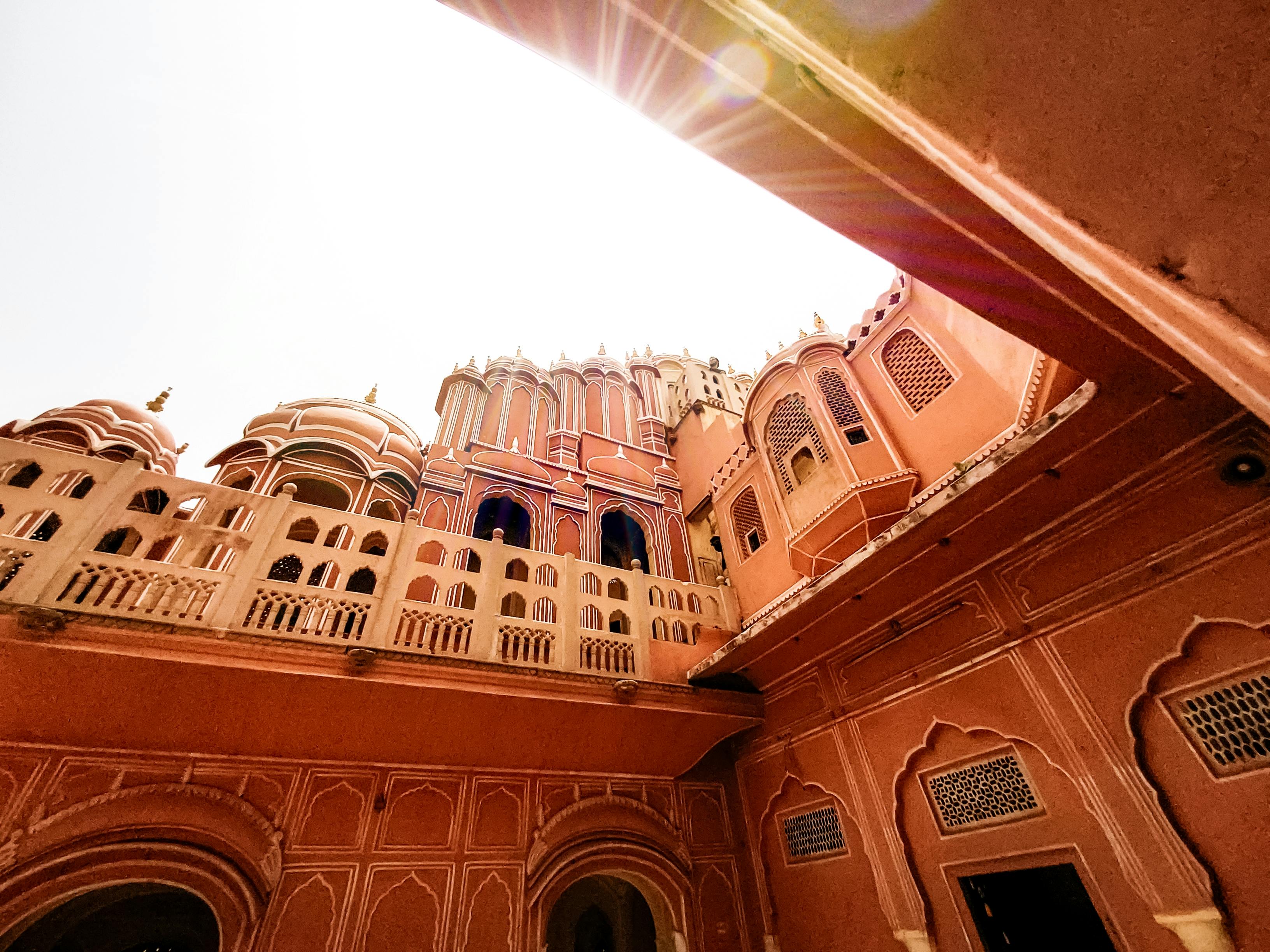
One of Jaipur’s most iconic monuments, Hawa Mahal features a distinctive honeycomb façade with hundreds of windows designed to allow royal women to observe street festivities.
9. Jantar Mantar
A UNESCO World Heritage Site, Jantar Mantar houses a collection of astronomical instruments that were used to study celestial movements and measure time with remarkable accuracy.
10. Great Wall of Amer
Stretching across the surrounding hills, this historic defensive wall offers breathtaking views of the Amer region and is often compared to a miniature version of the Great Wall of China.
Location
Faqs
Q: Is there an entry fee for visiting Amer Fort?
A: The entry fee for Indian citizens is Rs 100, for Indian students, it is Rs 20. And for foreigners, it is Rs 200.
Q: Where is the Amer Fort located?
A: The exact address of Amer Fort is Devisinghpura, Amer, Jaipur, Rajasthan 302001.
Q: Is photography allowed Inside Amer fort?
A: Yes, Photography is allowed.
Q: Is a wheelchair facility available?
A: Yes, Wheelchair facilities are available.
Is a parking facility available?
A: Yes, parking facilities are available for Rs. 400.
Q: How much time does it take to visit Amer Fort?
A: It takes around 2-3 hours.
Q: What is Amer Fort?
A: It’s a magnificent fort that is located in Amber town near Jaipur, Rajasthan. It’s a UNESCO world heritage site.
Q: Who constructed Amer fort?
A: It was constructed by Raja Man Singh I, a trusted general of Emperor Akbar in the 16th century.
Q: What are the major attractions in the Amer Fort?
A: The major attractions are Diwan-e-Aam (Hall of Public Audience), Sheesh Mahal (Mirror Palace), Sukh Niwas (Hall of Pleasure), and the enchanting Ganesh Pol entrance gate.