Image Source: Dhruba jyoti Das
About Shilpgram
Nestled on the outskirts of the beautiful city of Udaipur, Shilpgram is far more than just a tourist attraction. Spread across nearly 70 acres, this vibrant rural arts and crafts complex offers visitors a fascinating journey into the traditional lifestyles, folk cultures, and artistic heritage of western India. The name “Shilpgram” literally means “Crafts Village,” and true to its name, the place celebrates the spirit of rural craftsmanship in its purest form.
Developed as a cultural hub, Shilpgram represents the traditions of four western Indian states — Rajasthan, Gujarat, Maharashtra, and Goa. The complex was designed to preserve disappearing folk traditions and provide local artisans with a platform to showcase their skills. As you walk through the village-like setting, you get the feeling of stepping into a living museum where history, art, music, and everyday rural life come together beautifully.
Traditional Huts That Reflect Rural India
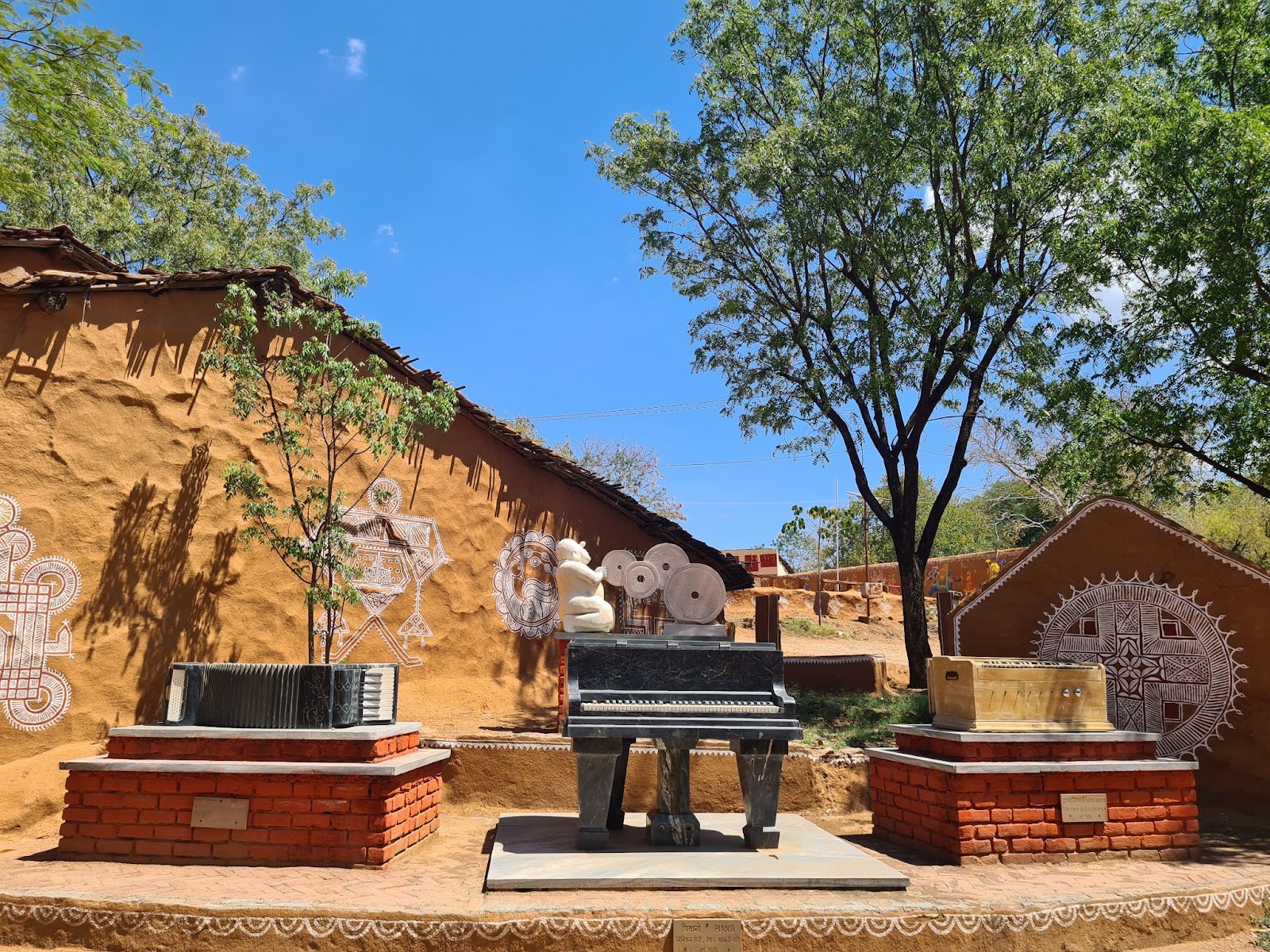
One of the most fascinating aspects of Shilpgram is its collection of traditional huts built in authentic regional styles. Each participating state has constructed huts that mirror the architecture, lifestyle, and artistic identity of its local communities. These structures are not merely decorative displays; they recreate the atmosphere of real rural homes and workshops.
The huts are filled with handcrafted items such as terracotta pottery, wooden carvings, metal crafts, handwoven textiles, embroidered fabrics, tribal ornaments, and decorative household objects. Many displays also include farming tools, musical instruments, and utensils used in everyday village life. Informative signboards help visitors understand the cultural importance and history behind these objects, making the experience educational as well as visually engaging.
The architecture itself is worth admiring. The mud walls, thatched roofs, courtyards, and intricate decorative patterns reflect the diversity of western India’s rural traditions. Every hut tells a different story about the people, climate, occupations, and artistic expressions of the region.
A Cultural Center for Folk Performances
At the heart of Shilpgram lies a large open-air amphitheater that can accommodate around 8,000 people. This impressive venue regularly hosts folk dances, puppet shows, music concerts, and theatrical performances. Visitors often get the opportunity to witness colorful Rajasthani folk dances such as Ghoomar and Kalbelia, along with performances from Gujarat, Maharashtra, and Goa.
The atmosphere becomes especially lively during festivals and cultural evenings, when traditional musicians and dancers bring the entire complex to life. The sound of folk instruments, vibrant costumes, and energetic performances create an unforgettable cultural experience for tourists and art lovers alike.
Workshop Museum and Artisan Interaction
Shilpgram is not just about viewing artifacts behind glass displays. One of its most unique features is the chance to interact directly with artisans. Craftsmen and women from different regions often demonstrate their skills live, including pottery making, weaving, block printing, miniature painting, embroidery, and wood carving.
The workshop museum provides deeper insight into the lives of tribal and folk communities. Visitors can learn how traditional crafts are created, how rural communities preserve their artistic heritage, and how these skills are passed down through generations. Watching artisans at work adds a personal and human touch to the entire experience.
Shilpgram Festival – The Biggest Attraction
The annual Shilpgram Festival, held every year from December 21 to December 31, is undoubtedly the highlight of the complex. During this period, the entire venue transforms into a colorful celebration of Indian folk culture. Artists, craftsmen, musicians, and performers from across the country gather here to participate in exhibitions, performances, and cultural programs.
The festival attracts thousands of visitors, including tourists, photographers, art enthusiasts, and cultural researchers. Temporary stalls sell handmade products such as textiles, jewelry, paintings, pottery, leather goods, and traditional clothing. It is one of the best places in Rajasthan to shop for authentic handicrafts directly from artisans.
The evenings during the festival are particularly magical, with folk music echoing through the amphitheater and beautifully lit stalls creating a festive village atmosphere.
Best Time to Visit Shilpgram
Although Shilpgram remains open throughout the year, the winter months from October to March are considered the best time to visit. The weather in Udaipur during this season is pleasant and comfortable for walking around the expansive complex. Visiting during the Shilpgram Festival in December offers the most vibrant and culturally rich experience.
Timings and Entry Fee
Shilpgram is open daily from 11:00 a.m. to 7:00 p.m., giving visitors plenty of time to explore the exhibits, attend performances, and interact with artisans.
- Entry fee for Indian visitors: ₹30
- Entry fee for foreign tourists: ₹50
(Fees may occasionally change during festivals or special events.)
Why Shilpgram Is Worth Visiting
Shilpgram offers something much deeper than ordinary sightseeing. It gives visitors a rare opportunity to experience India’s rural traditions in an immersive and interactive way. From folk music and handcrafted art to traditional architecture and village culture, every corner of the complex reflects the richness of India’s cultural diversity.
For photographers, culture enthusiasts, students, and travelers seeking authentic experiences, Shilpgram stands as one of the most enriching places to visit in Udaipur.
How to Reach Shilpgram
Shilpgram, also known as the “Craftsmen’s Village,” is located about 3 km west of Fateh Sagar Lake near Havala Village in Udaipur. Spread across nearly 70 acres amidst the Aravalli Hills, it showcases the traditional arts, crafts, architecture, and cultural heritage of western India.
By Air
The nearest airport is Maharana Pratap Airport, approximately 25–26 km away. Taxis and app-based cabs are readily available from the airport and usually take 45–60 minutes to reach Shilpgram.
By Train
The nearest railway station is Udaipur City Railway Station, located about 6–9 km from Shilpgram. Auto-rickshaws, taxis, and local transport are easily available outside the station.
By Road
Shilpgram is well connected to the city center through Rani Road. Visitors can reach the attraction by taxi, auto-rickshaw, private vehicle, or rented scooter. The drive from Fateh Sagar Lake takes only 5–10 minutes.
Nearby Attractions to Shilpgram
Fateh Sagar Lake
Located just a few minutes away, Fateh Sagar Lake is one of Udaipur’s most scenic attractions. Visitors can enjoy boating, lakeside walks, sunset views, and local food stalls along the promenade.
Saheliyon Ki Bari
This historic garden was built for the royal ladies of Mewar and features marble pavilions, fountains, lotus pools, and beautifully landscaped lawns. It is one of Udaipur’s most visited heritage sites.
Maharana Pratap Memorial
Situated on Moti Magri Hill overlooking Fateh Sagar Lake, this memorial features a grand bronze statue of Maharana Pratap and offers panoramic views of the city.
Monsoon Palace
Also known as Sajjangarh Palace, this hilltop palace provides breathtaking views of Udaipur’s lakes, hills, and surrounding countryside. It is especially popular during sunset.
Sajjangarh Wildlife Sanctuary
Located near Monsoon Palace, the sanctuary is home to deer, wild boar, jackals, and numerous bird species. It is an excellent destination for nature lovers and wildlife enthusiasts.
Bharatiya Lok Kala Mandal
This cultural institution preserves Rajasthan’s folk traditions through exhibits of puppets, costumes, musical instruments, and regular folk dance performances.
Rajiv Gandhi Park
A pleasant lakeside park near Fateh Sagar Lake, it offers landscaped gardens, walking paths, and relaxing views of the surrounding hills.
Sukhadia Circle
One of Udaipur’s most popular recreational spots, known for its illuminated fountain, gardens, and lively evening atmosphere.
Bahubali Hills
A favorite destination for photography and short treks, Bahubali Hills offers spectacular views of Badi Lake and the surrounding Aravalli landscape. Many travelers combine it with a visit to Shilpgram and Monsoon Palace.
Badi Lake
Located on the outskirts of Udaipur, Badi Lake is known for its tranquil environment, scenic beauty, and panoramic hill views, making it a great escape from the city’s crowds.
Suggested Itinerary
A popular half-day sightseeing route is:
Shilpgram → Fateh Sagar Lake → Maharana Pratap Memorial → Saheliyon Ki Bari → Monsoon Palace
This circuit combines Udaipur’s rich cultural heritage, scenic lakes, royal history, and panoramic viewpoints into one memorable excursion.
Map of Shilpgram
FAQs
Where is Shilpgram located?
Shilpgram is located near Udaipur in the state of Rajasthan, around 3–4 kilometers west of Fateh Sagar Lake.
What is Shilpgram famous for?
Shilpgram is famous for its traditional rural huts, handicrafts, folk performances, artisan workshops, and the annual Shilpgram Festival.
Which states are represented in Shilpgram?
The complex mainly represents the cultural traditions of Rajasthan, Gujarat, Maharashtra, and Goa.
What can visitors buy at Shilpgram?
Visitors can purchase handmade items such as textiles, pottery, jewelry, wooden crafts, paintings, embroidered fabrics, leather goods, and traditional decorative items.
Is photography allowed inside Shilpgram?
Yes, photography is generally allowed, and the colorful architecture and cultural performances make it a great place for photography enthusiasts.
How much time is needed to explore Shilpgram?
Most visitors spend around 2 to 4 hours exploring the complex, though cultural events and festivals may require more time.
When is the Shilpgram Festival held?
The festival is usually organized every year from December 21st to December 31st.
Is Shilpgram suitable for families and children?
Yes, Shilpgram is family-friendly and educational for children, offering interactive experiences related to art, craft, and culture.