Image Source: Shardul mitragotri
About Kusum Sarovar
Kusum Sarovar is one of the most beautiful and spiritually significant heritage sites in the Braj region. Located on the sacred Govardhan Parikrama route between Govardhan Hill and Radha Kund in Uttar Pradesh, this magnificent sandstone reservoir is closely associated with the divine pastimes of Radha and Lord Krishna. Surrounded by elegant cenotaphs, ancient trees, and peaceful waters, Kusum Sarovar attracts pilgrims, photographers, history enthusiasts, and nature lovers alike.
The name “Kusum” means flower, and according to local tradition, this area was once a lush flower garden where Radha and her companions gathered flowers to prepare garlands for Lord Krishna. It is believed that Krishna often met Radha here, and the two would engage in playful conversations and loving exchanges while she collected blossoms. These cherished stories from Krishna’s life have made Kusum Sarovar one of the most sacred places in Braj.
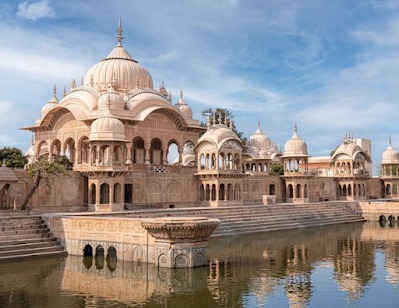
The large rectangular tank measures approximately 450 feet in length and is nearly 60 feet deep. Wide sandstone steps descend gracefully into the water, allowing pilgrims to perform ritual bathing and offer prayers. Even today, the calm waters, reflected monuments, and surrounding greenery create a peaceful atmosphere that encourages visitors to pause and experience the spiritual serenity of the place.
The landscape around Kusum Sarovar is enriched by Kadamba trees, which are traditionally associated with Lord Krishna and frequently mentioned in Braj folklore. Seasonal blooms such as jasmine (Chameli), Champa, Juhi, and Mallika perfume the air during flowering months, adding to the natural beauty that inspired the legends of Radha and Krishna’s meetings.
Kusum Sarovar also holds great importance in the Gaudiya Vaishnava tradition. It is believed that Sri Chaitanya Mahaprabhu, one of the greatest devotees of Lord Krishna, visited this sacred site during his pilgrimage through Braj and took a holy bath in the sarovar. Ancient devotional literature, including the Chaitanya Charitamrita, refers to this sacred water body, highlighting its spiritual significance for Krishna devotees across the world.
History
Although the site has been revered since ancient times, the present structure dates largely to the 18th century. Historical records indicate that the original water reservoir existed as a simple earthen pond for centuries before being developed into the grand monument seen today.
The earliest improvements are traditionally associated with Raja Veer Singh Deo of Orchha, who strengthened and shaped the pond during the 17th century. Later, the rulers of the Bharatpur Jat Kingdom transformed the area into a magnificent architectural complex. Maharaja Suraj Mal developed beautiful gardens around the sarovar for the royal family, while his son Maharaja Jawahar Singh commissioned the impressive sandstone cenotaphs (chhatris) in memory of his father, creating one of the finest examples of Jat architecture in northern India.
Today, Kusum Sarovar stands as both a sacred pilgrimage destination and a protected heritage monument that beautifully combines spirituality, history, and architecture.
Architecture of the Cenotaphs
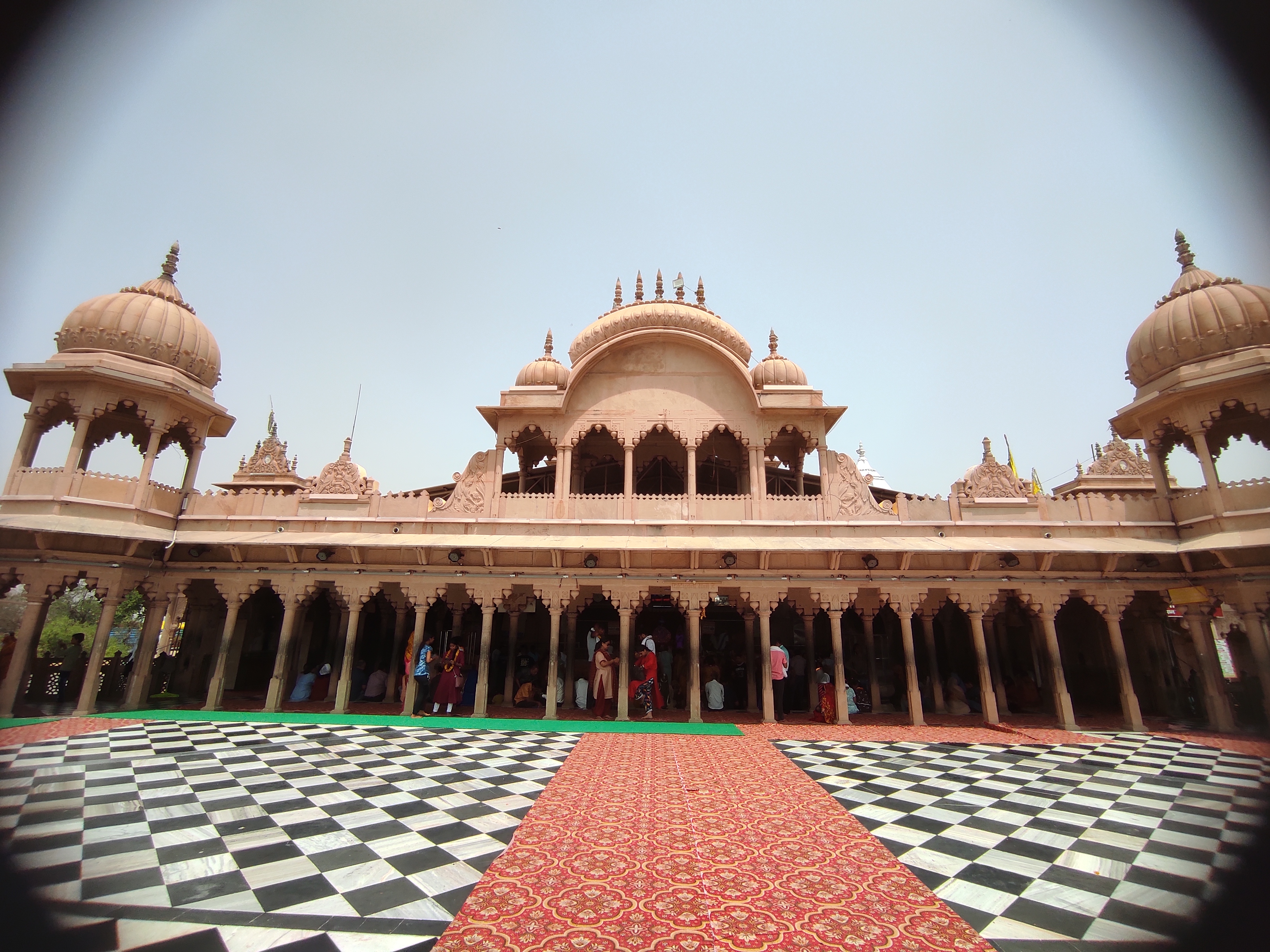
One of the most striking features of Kusum Sarovar is its magnificent group of sandstone chhatris (royal cenotaphs) built in the elegant Rajput-Jat architectural style. Their graceful domes, intricately carved pillars, decorative arches, and symmetrical design are reflected beautifully in the tranquil waters of the reservoir, making the site one of the most photographed landmarks in the Braj region.
The largest cenotaph is dedicated to Maharaja Suraj Mal, one of the greatest rulers of the Bharatpur Kingdom. Its walls are richly decorated with detailed carvings and paintings depicting scenes from the life of Lord Krishna, including episodes from the Bhagavata Purana and various Braj legends.
Nearby stand the beautifully decorated cenotaphs of Queen Kishori and Queen Hansiya, whose interiors feature exquisite frescoes, floral motifs, and murals illustrating Krishna’s divine pastimes alongside scenes from the lives of the Bharatpur rulers. Although some paintings have faded with time, they continue to showcase the remarkable artistic traditions of 18th-century Rajasthan and Braj.
Best Time to Visit
Kusum Sarovar can be visited throughout the year, but the most pleasant months are October to March, when the weather is cool and comfortable for sightseeing and Govardhan Parikrama.
Early mornings and evenings are especially beautiful, as the rising or setting sun casts a golden glow over the sandstone monuments and still waters of the sarovar. During Guru Purnima, Govardhan Puja, Kartik Purnima, Janmashtami, and Radhashtami, the area attracts thousands of devotees participating in religious processions and parikrama.
How to Reach Kusum Sarovar
Kusum Sarovar is located approximately 5 km from Govardhan town, around 8 km from Radha Kund, 22 km from Vrindavan, and nearly 28 km from Mathura.
By Air: The nearest airport is Agra Airport, about 75 km away. Indira Gandhi International Airport, Delhi, around 170 km away, provides better domestic and international connectivity. Taxis and buses are available from both airports.
By Train: The nearest major railway station is Mathura Junction, which is well connected to Delhi, Agra, Jaipur, Mumbai, Kolkata, and several other Indian cities. Visitors can hire taxis, buses, or shared vehicles from the station to reach Kusum Sarovar.
By Road: Kusum Sarovar is easily accessible via the Mathura–Govardhan Road. Regular buses, taxis, auto-rickshaws, and shared tempos operate from Mathura, Vrindavan, Govardhan, and Radha Kund. Many pilgrims also reach the site while performing the 21-kilometre Govardhan Parikrama on foot.
Nearby Attractions
A visit to Kusum Sarovar is often combined with several other important pilgrimage sites in the Braj region.
Govardhan Hill, located just a short distance away, is one of the holiest places associated with Lord Krishna. Devotees perform the sacred Govardhan Parikrama, believing it brings spiritual blessings and fulfills heartfelt wishes.
Radha Kund and Shyam Kund are among the most sacred water bodies in Vaishnavism. According to tradition, these kunds were created by Radha and Krishna after the defeat of the demon Aristasura and remain major pilgrimage destinations throughout the year.
Mansi Ganga is a revered lake in Govardhan believed to have been manifested by Lord Krishna through his divine will. Pilgrims often perform rituals here before beginning the Govardhan Parikrama.
Danghati Temple is one of the most important temples in Govardhan and commemorates the playful episode in which Krishna demanded taxes from the gopis carrying milk and butter.
Jatipura (Mukharvind Temple) is an important stop during the Govardhan Parikrama. Devotees offer milk, sweets, and flowers to the sacred Mukharvind, regarded as the divine face of Govardhan Hill.
About 22 km away, Prem Mandir in Vrindavan is famous for its magnificent white marble architecture, beautifully landscaped gardens, and spectacular evening illumination.
Banke Bihari Temple in Vrindavan is another major pilgrimage destination, attracting thousands of devotees every day with its unique darshan traditions and devotional atmosphere.
Maps
FAQs
1. Why is Kusum Sarovar famous?
Kusum Sarovar is famous for its association with the divine pastimes of Radha and Lord Krishna, its magnificent sandstone cenotaphs, peaceful reservoir, and beautiful heritage architecture.
2. What is the significance of the name Kusum Sarovar?
“Kusum” means flower. According to tradition, this was the flower garden where Radha and her companions gathered flowers and met Lord Krishna.
3. Is there any entry fee?
No. Visitors can enter Kusum Sarovar free of charge.
4. Can visitors take photographs?
Yes. Photography is allowed, and the site is especially popular among photographers because of its stunning architecture and scenic reflections in the water.
5. What is the best time to visit Kusum Sarovar?
The best time is from October to March, while sunrise and sunset offer the most spectacular views. Festivals like Govardhan Puja, Kartik Purnima, and Janmashtami also provide a unique spiritual atmosphere.
6. How much time should visitors spend at Kusum Sarovar?
Most visitors spend 1 to 2 hours exploring the monuments, enjoying the peaceful surroundings, taking photographs, and learning about the site’s historical and religious significance.
7. Is Kusum Sarovar part of the Govardhan Parikrama?
Yes. Kusum Sarovar is one of the most important stops along the sacred Govardhan Parikrama, and thousands of pilgrims visit it during their circumambulation of Govardhan Hill.