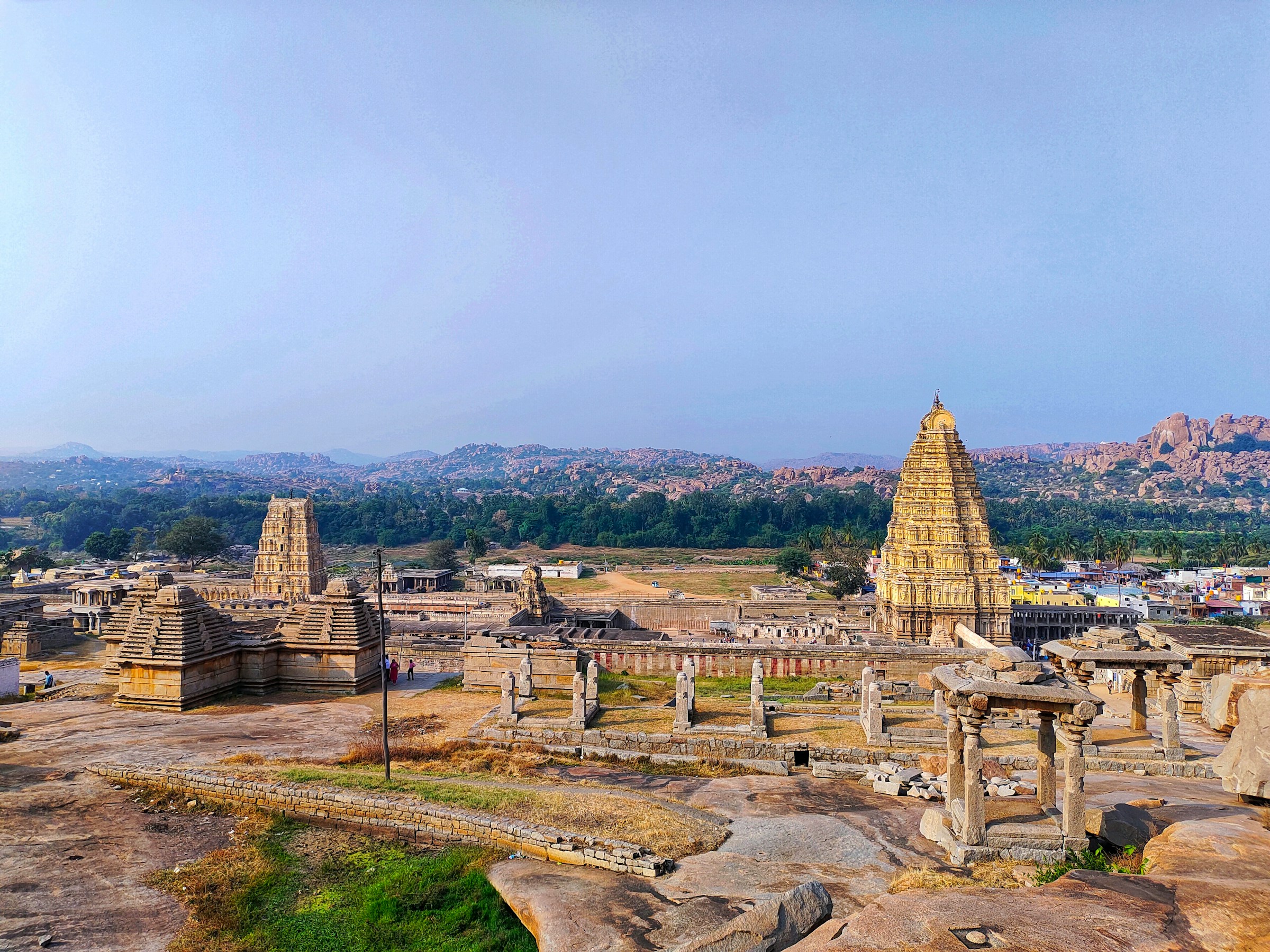
Image Source: RAJESH AD
About Lotus Mahal
Among the many architectural marvels of Hampi, the Lotus Mahal stands out as one of the most graceful and unique structures of the Vijayanagara Empire. Situated within the historic Zenana Enclosure, this elegant pavilion is believed to have been used by the royal women for leisure, meetings, and relaxation. Located around 500 meters from the Hazara Rama Temple, the monument remains one of Hampi’s most photographed attractions.
Its name, “Lotus Mahal,” comes from its distinctive design that resembles a blooming lotus flower. Unlike the predominantly temple-style architecture found elsewhere in Hampi, the Lotus Mahal showcases a fascinating blend of Hindu and Islamic architectural influences, making it a rare and remarkable structure in South India.
Surrounded by fortified walls and lush lawns, the monument offers visitors a glimpse into the luxurious lifestyle of the Vijayanagara royalty while reflecting the artistic excellence of an empire that flourished centuries ago.
Architecture of Lotus Mahal
The Lotus Mahal is an exquisite example of Indo-Islamic architecture, seamlessly blending elements from two distinct traditions. The structure derives its name from its lotus-like appearance, with its arches resembling delicate petals and its central dome taking the shape of a lotus bud.
The two-storied pavilion is symmetrical on all sides and features a central tower that rises above the surrounding sections, adding grandeur to the monument. The lower level displays traditional Hindu architectural elements, while the upper portions exhibit Islamic influences, particularly in the form of ornate arches, domes, and vaulted windows.
One of the most striking features of the Lotus Mahal is its network of elegantly carved arches supported by 24 square pillars. The walls are adorned with intricate motifs, including floral designs, makara toranas (ornamental archways), and depictions of birds, showcasing the remarkable craftsmanship of Vijayanagara artisans.
Indo-Islamic Fusion
The architectural brilliance of Lotus Mahal lies in its harmonious fusion of styles. While the base and towers reflect traditional Hindu aesthetics, the arches and domes reveal strong Islamic influences. This blending of cultures highlights the cosmopolitan nature of the Vijayanagara Empire, which embraced artistic ideas from various regions.
The upper floor features beautiful balconies with arched windows that not only enhance the monument’s elegance but also allow for natural light and ventilation. This fusion of form and function is a testament to the sophisticated engineering skills of the era.
Cooling Innovations
One of the most fascinating aspects of Lotus Mahal is its ingenious cooling system. Hampi experiences intense summer heat, and the architects designed the structure to remain comfortable even during the hottest months.
Water channels were reportedly built into the upper floors and around the arches to circulate cool water through the structure. This innovative system helped regulate the temperature indoors, earning the monument the nickname “Water Mahal” among some historians.
Such advanced architectural planning demonstrates the Vijayanagara Empire’s understanding of climate-responsive design long before modern cooling technologies existed.
Surrounded by Fortifying Walls
Located within the Zenana Enclosure, the Lotus Mahal is surrounded by fortified walls that once safeguarded the royal quarters. The peaceful gardens and open spaces around the structure add to its charm, making it an ideal spot to pause and soak in the grandeur of Hampi’s royal past.
Today, the Lotus Mahal remains one of the best-preserved monuments in Hampi and continues to captivate visitors with its elegance, symmetry, and timeless beauty.
Timings: 8:00 AM to 6:00 PM.
How to Reach Lotus Mahal
Lotus Mahal is located inside the Zenana Enclosure in Hampi, Karnataka, approximately 3 km from the Virupaksha Temple and Hampi Bazaar.
By Air
The nearest airport is Jindal Vijayanagar Airport at Toranagallu, about 40 km away. Visitors can hire taxis from the airport to reach Hampi. Hubballi Airport, around 165 km away, serves as another convenient option.
By Rail
The closest railway station is Hosapete (Hospet) Junction, situated around 13 km from Hampi. From the station, taxis, auto-rickshaws, and buses are available to reach the monument.
By Road
Hampi is well connected by road to Bengaluru, Ballari, Hubballi, and Mysuru. KSRTC and private buses regularly operate services to Hampi and Hosapete. Once in Hampi, visitors can explore the monuments by bicycle, scooter, auto-rickshaw, or on foot.
Nearby Attractions
Elephant Stables
Located right next to the Lotus Mahal, the Elephant Stables once housed the royal elephants and are famous for their impressive domed architecture.
Zenana Enclosure
This historic complex is believed to have been the residential area for royal women and contains several important monuments.
Hazara Rama Temple
Known for its intricate Ramayana carvings, this temple served as the private shrine of the Vijayanagara kings.
Queen’s Bath
A magnificent bathing complex featuring Indo-Islamic architecture and an elegant central pool.
Mahanavami Dibba
A grand ceremonial platform used by Vijayanagara rulers during royal festivities and celebrations.
Virupaksha Temple
One of India’s oldest active temples, dedicated to Lord Shiva and considered the spiritual heart of Hampi.
Vittala Temple
Famous for its iconic Stone Chariot and musical pillars, this temple is among Hampi’s most celebrated landmarks.
Maps
Located at a distance of 500 m from the Hazara Rama Temple and 3.5 km from the Hampi Bus Stand, this iconic structure is a harmonious blend of Indo-Islamic styles.
FAQs
1. Why is it called Lotus Mahal?
The structure gets its name from its lotus-shaped design, particularly its arches and central dome that resemble a blooming lotus flower.
2. What was the purpose of Lotus Mahal?
The Lotus Mahal is believed to have been used by the royal women of the Vijayanagara Empire as a place for relaxation and gatherings.
3. Is Lotus Mahal part of a UNESCO World Heritage Site?
Yes, Lotus Mahal is part of the Group of Monuments at Hampi, which is recognized as a UNESCO World Heritage Site.
4. Is there an entry fee to visit Lotus Mahal?
Entry to Lotus Mahal is typically included in the ticket for the Royal Enclosure monuments of Hampi.
5. What is special about the architecture of Lotus Mahal?
Its unique blend of Hindu and Islamic architectural styles, along with its cooling system and lotus-inspired design, makes it one of Hampi’s most distinctive monuments.
6. How much time should I spend at Lotus Mahal?
Visitors generally spend 30–45 minutes exploring the monument and nearby attractions.
7. What is the best time to visit Lotus Mahal?
The best time to visit is between October and February, when the weather is pleasant and ideal for sightseeing.
8. Can photography be done at Lotus Mahal?
Yes, photography is allowed, and the monument is especially beautiful during the early morning and late afternoon hours.