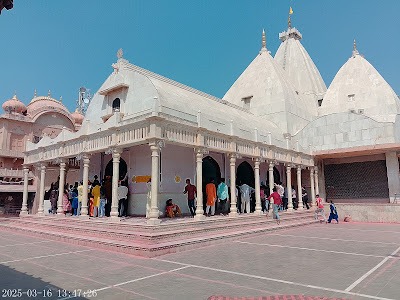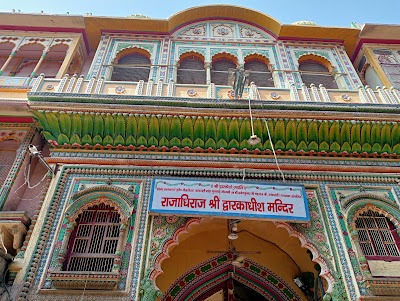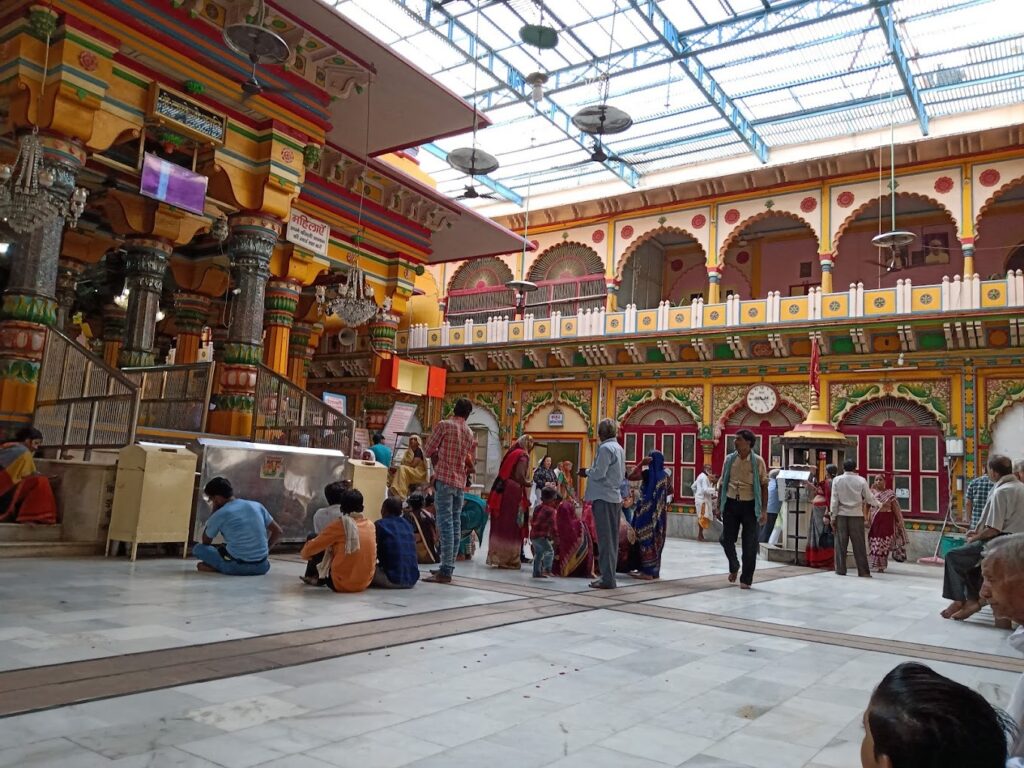
Image Source: Abhishek Srivastava
About Dwarakadhish Temple
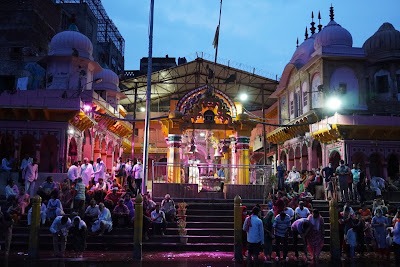
Located in the heart of Mathura on the banks of the sacred Yamuna River, the Dwarakadhish Temple is one of the city’s most revered and visited temples. Dedicated to Lord Krishna in his royal form as the King of Dwarka, the temple is a major spiritual destination for devotees and tourists alike. It is also popularly known as Jagat Mandir and Nija Mandir.
Situated close to Vishram Ghat in the bustling lanes of the old city, the temple is an important part of the Braj pilgrimage circuit. Throughout the year, thousands of devotees visit to seek blessings, while festivals transform the temple into a vibrant center of devotion, music, and colorful decorations. The temple’s beautiful architecture, lively atmosphere, and rich history make it one of the must-visit landmarks in Mathura.
History of Dwarakadhish Temple
The temple is dedicated to Lord Dwarakadhish, a regal manifestation of Lord Krishna as the ruler of the ancient city of Dwarka. According to Hindu traditions, an earlier shrine at this site is believed to have been established by Vajranabha, the great-grandson of Lord Krishna, who is said to have built several temples across the Braj region to preserve Krishna’s legacy.
However, historians attribute the present temple to Seth Gokuldas Parikh, the treasurer of the Gwalior State, who commissioned its construction in 1814 CE. A devoted follower of Lord Krishna, he built the temple to promote Krishna worship in Mathura. After his death, the temple’s development and maintenance were continued by his descendants.
Today, the temple remains one of the most important Vaishnavite shrines in North India and is managed by followers of the Pushtimarg tradition, established by the philosopher and saint Vallabhacharya. Daily rituals, devotional singing, and elaborate offerings continue according to centuries-old customs, preserving the temple’s spiritual heritage.
Architecture of Dwarakadhish Temple
The Dwarakadhish Temple is admired for its elegant blend of Rajasthani and Braj architectural styles. Although the temple does not possess towering South Indian-style gopurams, its beautifully carved entrance, spacious courtyard, and richly ornamented interiors reflect remarkable craftsmanship.
The temple rises over five stories and is supported by 72 intricately carved sandstone pillars, each displaying delicate floral motifs and traditional decorative patterns. The walls and ceilings feature colorful paintings depicting episodes from Lord Krishna’s life, including scenes from the Bhagavata Purana and other sacred texts.
The sanctum houses a striking 2.25-foot-tall black stone idol of Lord Dwarakadhish, depicted with four hands carrying the conch (Shankha), discus (Sudarshana Chakra), mace (Gada), and lotus (Padma). Beside him is the beautifully adorned idol of Radha Rani, while several other shrines within the temple complex are dedicated to various Hindu deities.
The temple is especially famous for its elaborate floral decorations, silver ornaments, and seasonal adornments that change throughout the year according to different festivals and religious occasions.
Festivals and Best Time to Visit
The Dwarakadhish Temple remains lively throughout the year, but it becomes truly spectacular during major Hindu festivals.
Janmashtami, celebrating the birth of Lord Krishna, is the grandest festival here. Thousands of devotees gather to witness midnight prayers, devotional singing, and beautifully decorated idols. The atmosphere is filled with chants, music, and immense spiritual energy.
Another unique celebration is Hindola Utsav, observed during the monsoon months of Shravan. During this festival, the deity is seated on artistically decorated swings that change every day. These swings are crafted from flowers, silver, mirrors, glass, and colorful fabrics, attracting devotees from across the country.
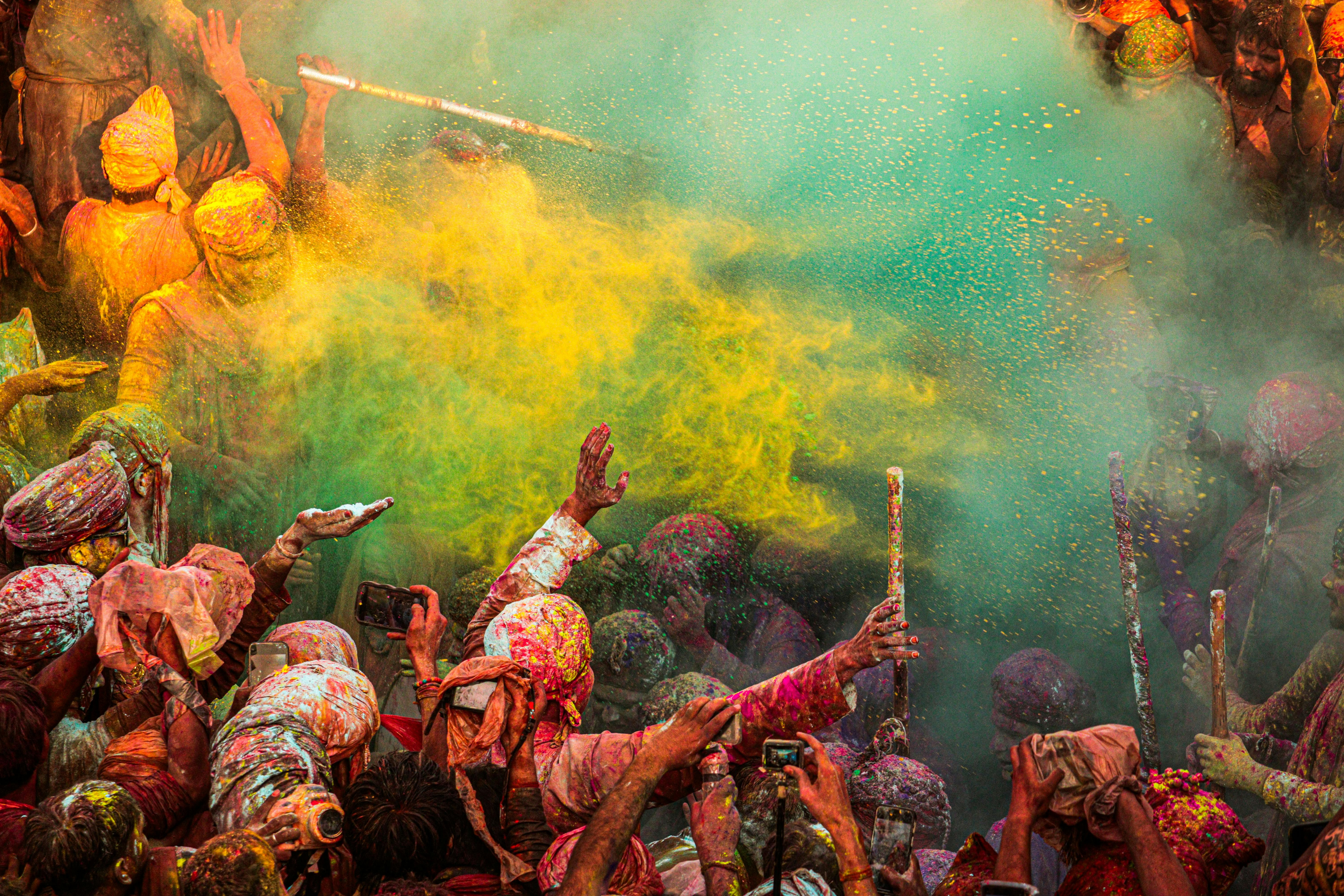
The temple is equally vibrant during Holi, especially the famous Braj Holi celebrations, when devotional songs, flowers, and colors create an unforgettable experience. Festivals like Diwali, Radhashtami, Annakut, and Govardhan Puja also witness large gatherings.
The best time to visit is between October and March, when the weather is pleasant for sightseeing. However, travelers interested in experiencing Mathura’s vibrant religious culture should consider visiting during Janmashtami or Holi.
Temple Timings
The temple generally remains open during the following hours:
- Morning: 7:00 AM to 1:00 PM.
- Evening: 5:00 PM to 9:30 PM.
Timings may vary slightly during festivals and special religious ceremonies, so visitors should verify the schedule before planning their visit.
How to Reach Dwarakadhish Temple
By Air
The nearest airport is Agra Airport, located around 60 km from Mathura. However, most travelers prefer arriving via Indira Gandhi International Airport, Delhi, approximately 170 km away, due to better connectivity. From either airport, taxis and buses are readily available.
By Train
The temple is about 4 km from Mathura Junction Railway Station, one of North India’s busiest railway stations. Auto-rickshaws, cycle-rickshaws, battery-operated e-rickshaws, and taxis are easily available outside the station and take around 15–20 minutes to reach the temple.
By Road
Mathura is well connected by the Yamuna Expressway and National Highway 19 (NH-19). Regular buses operate from Delhi, Agra, Jaipur, Aligarh, and other nearby cities. Private taxis and self-drive vehicles also provide convenient access.
Since the temple is located in the narrow lanes of the old city near Vishram Ghat, visitors may need to walk a short distance after parking their vehicles. Early morning visits are recommended to avoid heavy crowds and traffic.
Nearby Attractions
Vishram Ghat
Located just a short walk from the temple, Vishram Ghat is the most sacred bathing ghat in Mathura. According to tradition, Lord Krishna rested here after defeating Kansa. Evening Yamuna Aarti and boat rides make this one of the city’s most serene locations.
Shri Krishna Janmabhoomi Temple
One of the holiest pilgrimage sites in India, this temple complex marks the believed birthplace of Lord Krishna. It attracts millions of devotees every year and is a central attraction in Mathura.
Kans Qila
Situated on the banks of the Yamuna, Kans Qila is an ancient fort traditionally associated with King Kansa. Although much of the fort has deteriorated, it remains an important historical landmark.
Government Museum, Mathura
Established in 1874, this museum houses one of India’s finest collections of sculptures from the Kushan and Gupta periods, ancient coins, terracotta artifacts, and archaeological discoveries from the Braj region.
Dwarkadhish Ghat and Yamuna River
Visitors can enjoy peaceful walks along the ghats, participate in evening prayers, or take a traditional boat ride on the Yamuna River while exploring the spiritual atmosphere surrounding the temple.
Gita Mandir
Located on the outskirts of Mathura, Gita Mandir is famous for its beautifully engraved verses from the Bhagavad Gita carved onto marble walls and its peaceful surroundings.
Vrindavan
Only about 12 km from Mathura, Vrindavan is home to famous temples such as Banke Bihari Temple, Prem Mandir, ISKCON Temple, and Radha Raman Temple, making it an ideal day trip after visiting Dwarakadhish Temple.
Maps
FAQs
1. Why is Dwarakadhish Temple famous?
The temple is famous for its beautiful idol of Lord Krishna as the King of Dwarka, its historical significance, stunning architecture, and grand celebrations during Janmashtami, Holi, and Hindola Utsav.
2. Where is Dwarakadhish Temple located?
It is situated near Vishram Ghat on the banks of the Yamuna River in the old city area of Mathura, Uttar Pradesh.
3. What are the temple timings?
The temple is generally open from 7:00 AM to 1:00 PM and 5:00 PM to 9:30 PM, though timings may vary on festival days.
4. Is photography allowed inside the temple?
Photography inside the main sanctum is generally restricted. Visitors should follow the instructions of the temple authorities regarding cameras and mobile phones.
5. Which festival is the best time to visit?
Janmashtami, Hindola Utsav, Holi, and Diwali are among the most vibrant times to visit, while the months from October to March offer the most comfortable weather for sightseeing.
6. How far is the temple from Mathura Junction?
The temple is approximately 4 km from Mathura Junction Railway Station and can be reached in about 15–20 minutes by auto-rickshaw or taxi.
7. Is there a dress code for visitors?
There is no strict dress code, but modest and respectful clothing is recommended as the temple is an important place of worship.
8. Can the temple be visited along with Vrindavan in one day?
Yes. Since Vrindavan is only about 12 km away, many visitors combine Dwarakadhish Temple, Shri Krishna Janmabhoomi, Vishram Ghat, and major temples of Vrindavan in a single day pilgrimage.