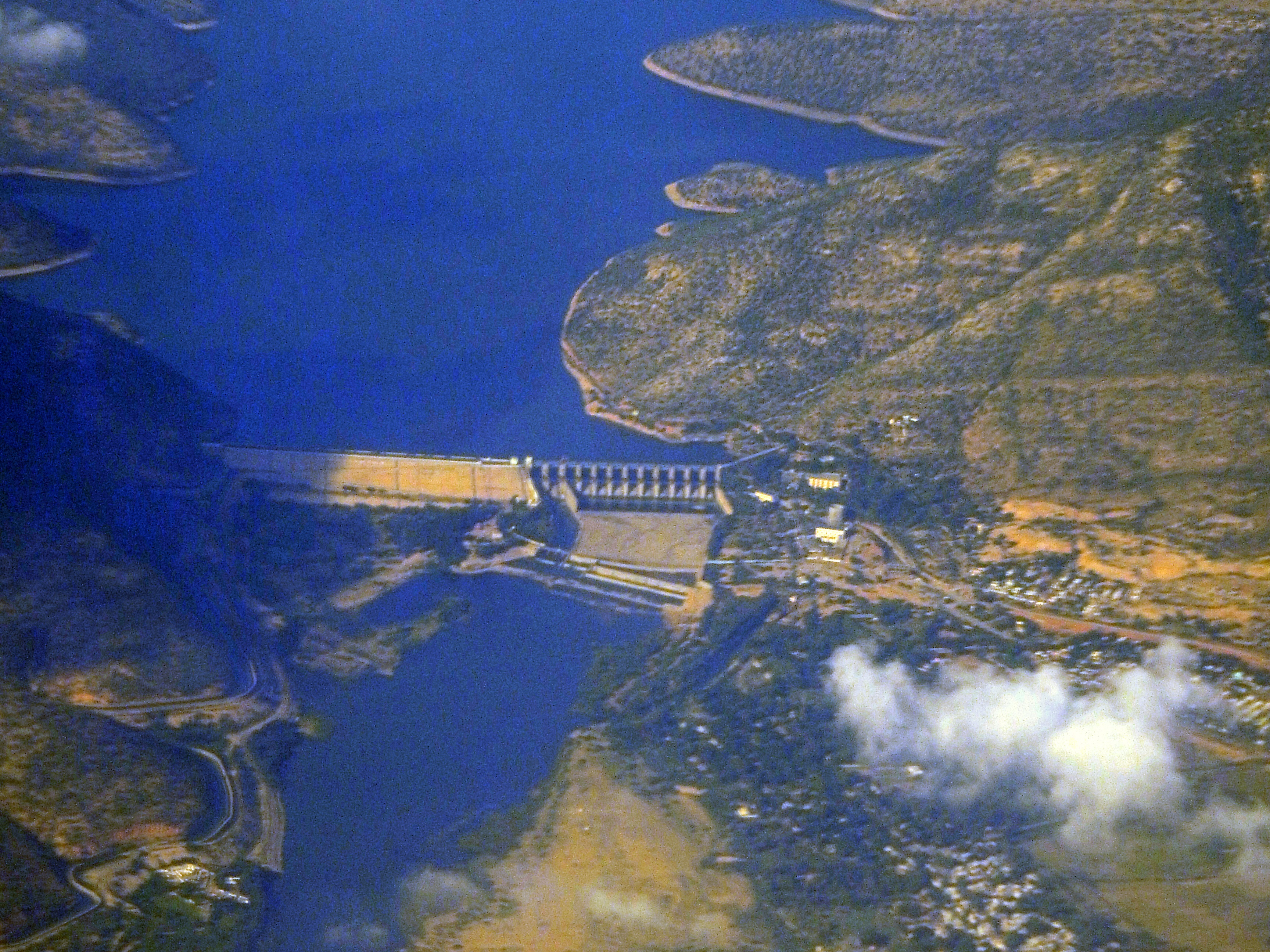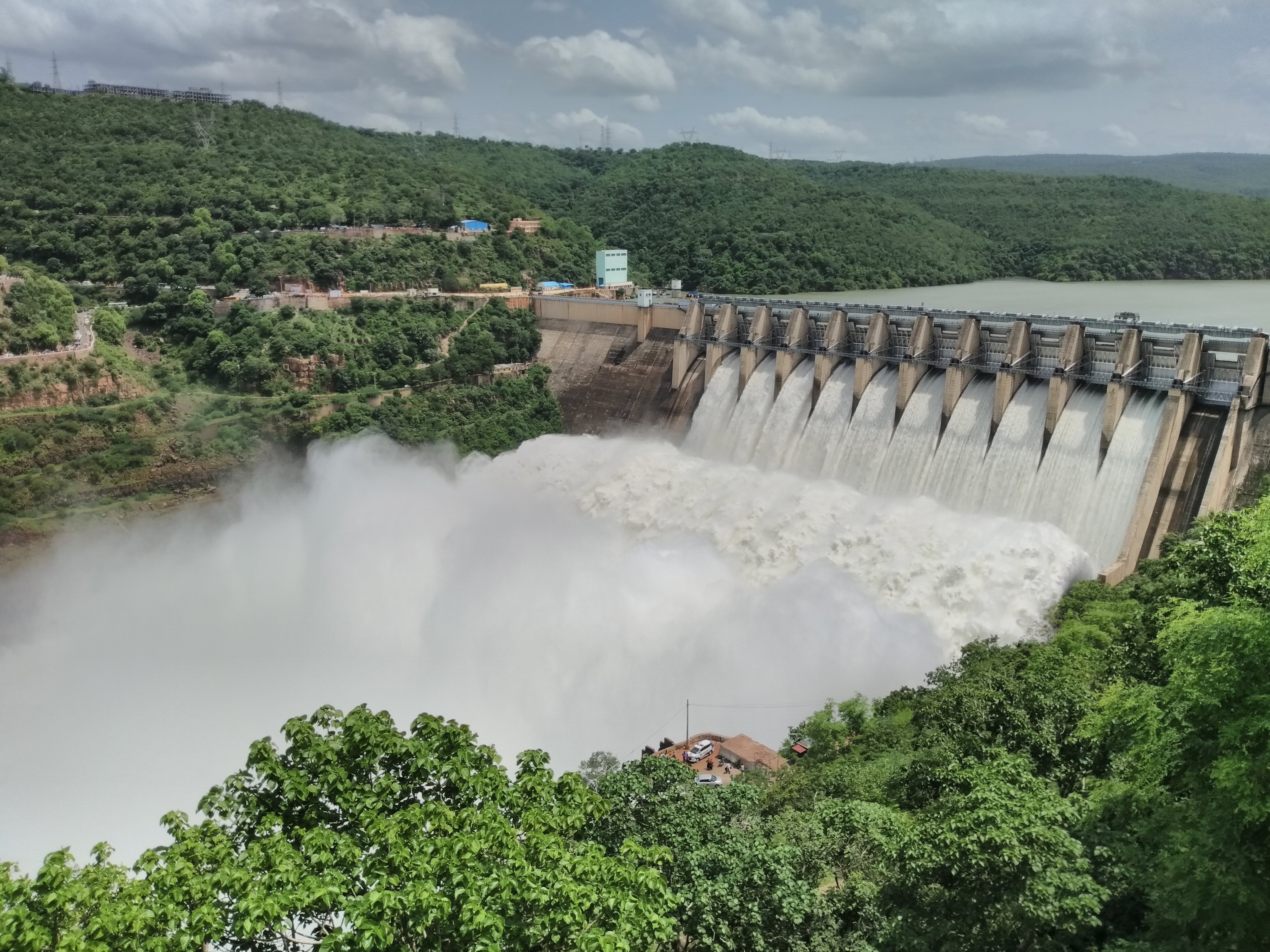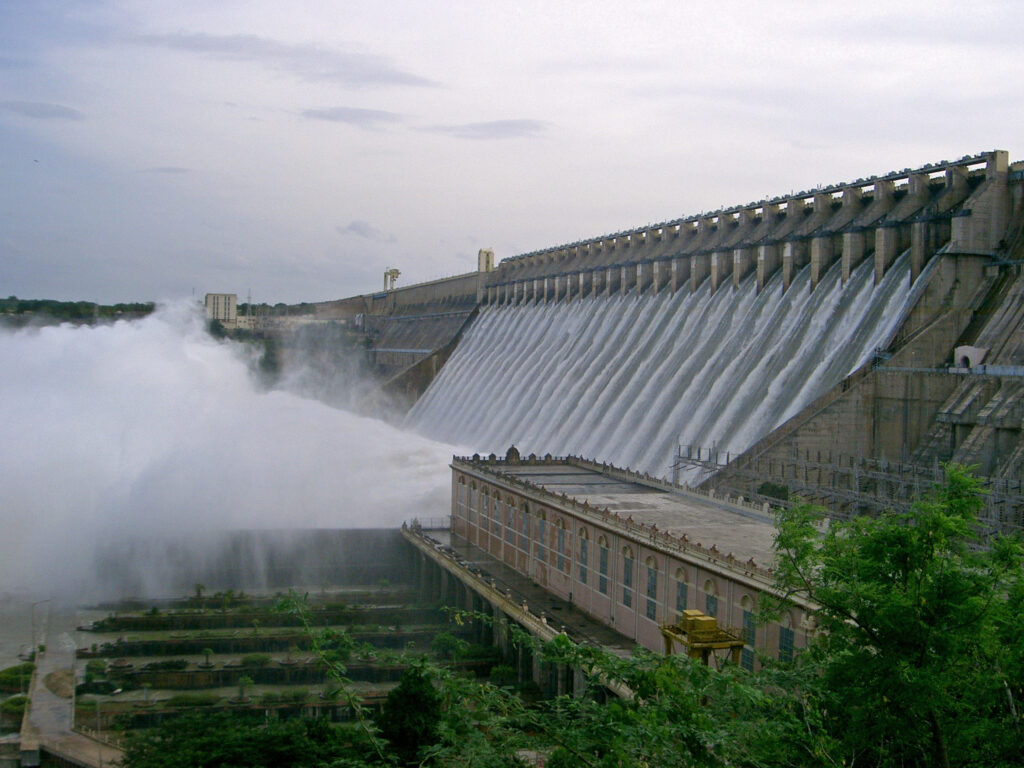
Image Source: Sumanthk
About Nagarjuna Sagar Dam
The Nagarjuna Sagar Dam, built across the Krishna River, is one of the largest masonry dams in the world and a proud landmark of Andhra Pradesh and Telangana. Located between Nalgonda district (Telangana) and Palnadu district (Andhra Pradesh), the dam is not only a massive engineering achievement but also a lifeline for irrigation, drinking water, and power generation.
Completed in 1967, the project was a symbol of independent India’s focus on large-scale infrastructure and has since played a crucial role in transforming the agricultural landscape of the Krishna basin.
Architecture
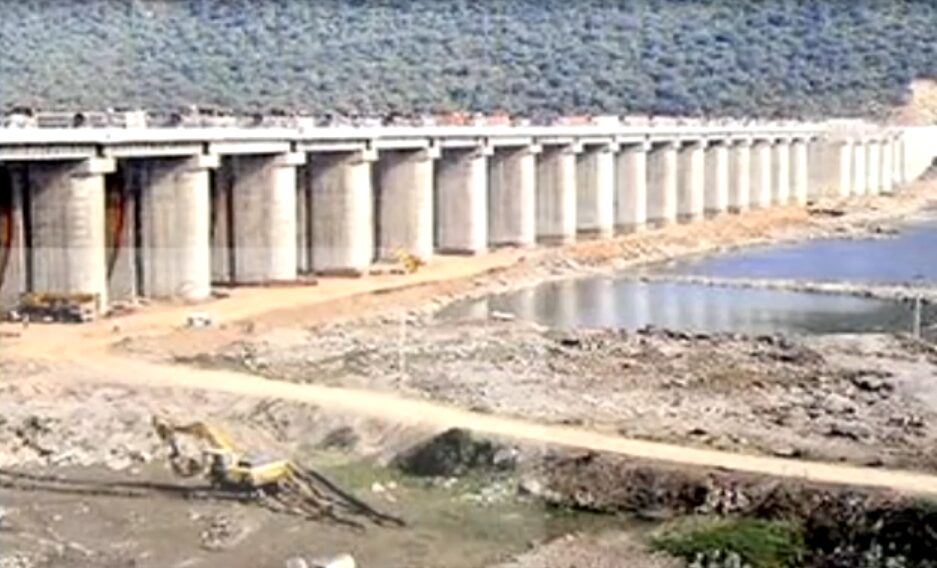
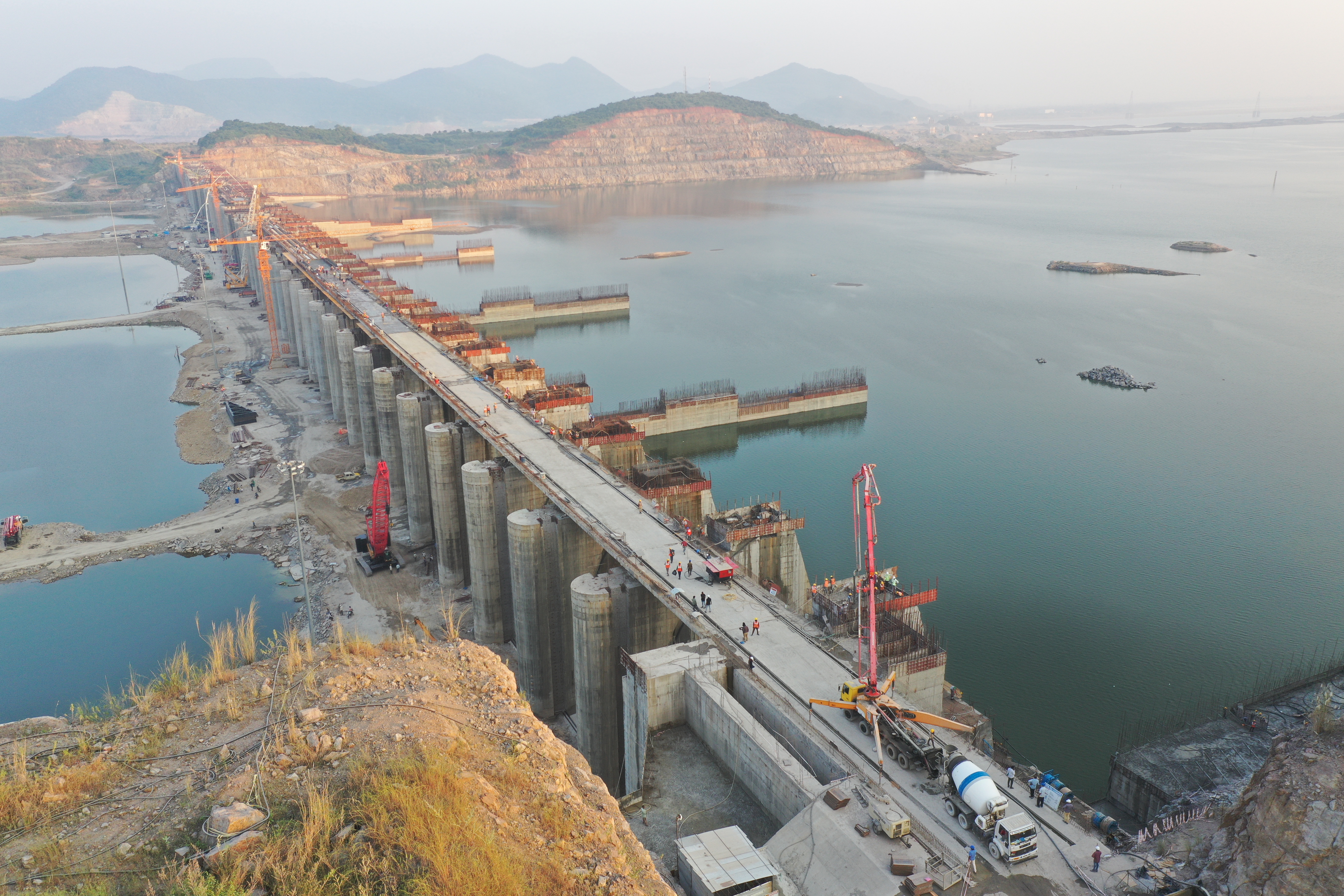
The Nagarjuna Sagar Dam is renowned for its sheer size and design. Constructed as a masonry dam, it stands 124 meters (407 ft) high and stretches across 1.6 kilometers (5,315 ft), making it one of the longest dams in India.
The reservoir, known as Nagarjuna Sagar Reservoir, is among the largest in the country with a gross storage capacity of 312 tmc ft (thousand million cubic feet). The dam has 26 crest gates that regulate the flow of the Krishna River, releasing spectacular water flows during monsoon, which have become a tourist attraction in themselves. It also houses a hydroelectric power plant with a capacity of nearly 815 MW, contributing significantly to the power supply of Andhra Pradesh and Telangana.
Importance and Benefits
The dam has been a boon for agriculture, irrigating millions of acres in Guntur, Prakasam, Nalgonda, and Krishna districts, ensuring year-round cultivation of crops like paddy, cotton, and pulses. It provides drinking water to several towns, including Hyderabad, and is vital in meeting the growing demands of urban areas.
The hydropower generation from the project has reduced dependency on thermal energy, making it an eco-friendly contributor to regional development. Beyond its utility, the dam stands as a symbol of progress and cooperation between Andhra Pradesh and Telangana.
Tourism and Attractions
Nagarjuna Sagar is not only about engineering but also about heritage and natural beauty. The Nagarjuna Sagar Reservoir, with its vast expanse of blue waters surrounded by lush green hills, is a scenic spot that draws tourists year-round.
Boating facilities allow visitors to reach the Nagarjunakonda Island, which houses a museum and excavated Buddhist sites dating back to the 2nd–3rd century CE. During the monsoon, when the gates are lifted, the sight of water gushing down in massive volumes creates a breathtaking spectacle, making it one of the most visited tourist attractions in both Andhra Pradesh and Telangana.
How to Reach Nagarjuna Sagar Dam
By Road: The dam is well-connected by road and lies about 150 km from Hyderabad, 100 km from Guntur, and 170 km from Vijayawada. Regular APSRTC and TSRTC buses, as well as private taxis, operate to Nagarjuna Sagar.
By Rail: The nearest railway station is Macherla (24 km), while Nalgonda (100 km) and Guntur (100 km) provide better connectivity to major cities.
By Air: The closest airport is Rajiv Gandhi International Airport, Hyderabad (165 km), from where tourists can take buses or cabs.
Nearby Attractions to Visit from Nagarjuna Sagar Dam


4
1. Nagarjunakonda
Located on an island in the Nagarjuna Sagar reservoir, Nagarjunakonda is one of India’s most important Buddhist heritage sites. Visitors can take a boat ride from Nagarjuna Sagar to explore ancient monasteries, stupas, inscriptions, and a museum housing relics dating back to the 3rd century. The boat journey itself offers stunning views of the reservoir and surrounding hills.
2. Ethipothala Falls
About 15 km from the dam, Ethipothala Falls is a spectacular waterfall cascading nearly 70 feet amidst lush greenery. The site also features viewpoints, a crocodile breeding center, and a small temple, making it one of the most visited attractions in the region.
3. Buddhavanam
Spread across hundreds of acres near the dam, Buddhavanam is a Buddhist heritage theme park showcasing the life and teachings of Buddha through sculptures, gardens, stupas, and meditation spaces. It is a must-visit destination for history and spirituality enthusiasts.
4. Anupu
Anupu is an archaeological reconstruction site featuring an ancient Buddhist university, amphitheater, and monastery structures. It offers a glimpse into the educational and cultural life of the ancient Ikshvaku period.
5. Nallamala Forest
The vast Nallamala forest region surrounding Nagarjuna Sagar provides scenic landscapes, wildlife habitats, and excellent opportunities for nature photography and eco-tourism. Boat cruises often pass through picturesque stretches of these forests.
Google Maps
FAQs
1. What is Nagarjuna Sagar Dam famous for?
Nagarjuna Sagar Dam is famous for being one of the world’s largest masonry dams and a major irrigation and hydroelectric project built across the Krishna River.
2. Which river flows through Nagarjuna Sagar Dam?
The dam is constructed across the Krishna River, one of South India’s most important rivers.
3. What is the best time to visit Nagarjuna Sagar Dam?
The monsoon and post-monsoon months (July to October) are considered the best time, especially when the dam gates are opened and water gushes through the spillways.
4. Is boating available at Nagarjuna Sagar?
Yes. Regular boating and cruise services operate on the reservoir, including trips to Nagarjunakonda Island when water levels permit.
5. How much time is needed to explore Nagarjuna Sagar Dam?
A typical visit to the dam takes around 1–2 hours, while a complete trip including nearby attractions may require a full day.
6. Is there an entry fee for visiting Nagarjuna Sagar Dam?
The dam area is generally open to visitors, though charges may apply for boating, museum visits, or special tourism activities.
7. Can families visit Nagarjuna Sagar Dam?
Yes. The destination is ideal for families, photographers, history enthusiasts, and nature lovers due to its combination of scenic beauty and heritage attractions.
8. How far is Nagarjunakonda from the dam?
Nagarjunakonda is located in the reservoir and can be reached by a boat ride of approximately 45 minutes from the boating point near the dam.
9. Are there accommodation facilities near Nagarjuna Sagar?
Yes. Several hotels, resorts, and tourism guest houses are available around Nagarjuna Sagar for overnight stays, making it a popular weekend getaway.
10. Why is Nagarjuna Sagar important historically?
The region is associated with ancient Buddhist civilization and the philosopher Acharya Nagarjuna. Many archaeological remains discovered during dam construction were relocated to Nagarjunakonda Island for preservation.